100% de satisfacción garantizada Inmediatamente disponible después del pago Tanto en línea como en PDF No estas atado a nada 4.2 TrustPilot
logo-home
Examen

Test Bank for Understanding Pathophysiology, 7th Edition

Puntuación
-
Vendido
-
Páginas
34
Grado
A+
Subido en
20-09-2025
Escrito en
2025/2026

Test Bank for Understanding Pathophysiology, 7th Edition Eukaryotic cell - Correct Answer Contains supercoiled DNA and histones." "Complementary Base Pairing - Correct Answer A pairs with T; C pairs with G." "Translation - Correct Answer RNA directs protein synthesis into polypeptides." "Transcription - Correct Answer DNA specifies messenger RNA sequence." "Nondisjunction - Correct Answer Failure of chromosomes to separate during meiosis." "Polyploid Cell - Correct Answer Cell with more than 23 pairs of chromosomes." "Diploid Cell - Correct Answer Cell with 46 chromosomes in 23 pairs." "Euploid Cell - Correct Answer Cell with multiples of the normal chromosome number." "Haploid Cell - Correct Answer Cell with one member of each chromosome pair." "Tetraploidy - Correct Answer Condition with 92 chromosomes in euploid cells." "Triploidy - Correct Answer Zygote with three copies of each chromosome." "Aneuploidy - Correct Answer Cell not containing multiples of 23 chromosomes." "Partial Trisomy - Correct Answer Condition with an extra portion of a chromosome." "Reciprocal Translocation - Correct Answer Exchange of material between two different chromosomes." "Nucleus - Correct Answer Membrane-bound structure housing DNA in eukaryotes." "Respiration - Correct Answer Process of absorbing oxygen to produce energy." "Nucleolus - Correct Answer Region within nucleus containing genetic material." "Integral membrane proteins - Correct Answer Dissolve bilayer to remove attached proteins." "Ligands - Correct Answer Molecules that bind to plasma membrane receptors." "Fibronectin - Correct Answer Extracellular matrix protein decreased in metastatic cancer." "Cell junction - Correct Answer Structure allowing direct communication between adjacent cells." "Paracrine signaling - Correct Answer Local chemical mediators affecting nearby cells." "Enzyme affinity - Correct Answer High attraction of enzymes to specific substrates." "Metabolic absorption - Correct Answer Cellular process of nutrient uptake for energy." "Cell adhesion molecules - Correct Answer Proteins that help cells stick to each other." "Glycoproteins - Correct Answer Proteins with carbohydrate chains, marking cell identity." "Gap junction - Correct Answer Channels allowing communication between adjacent cells." "Desmosome - Correct Answer Structure providing mechanical stability between cells." "Tight junction - Correct Answer Barrier preventing leakage between epithelial cells." "Mitochondria - Correct Answer Organelles responsible for cellular respiration." "Ribosomes - Correct Answer Sites of protein synthesis within the cell." "Cytoplasm - Correct Answer Fluid component of the cell, excluding nucleus." "Collagen - Correct Answer Structural protein in extracellular matrix, providing support." "Elastin - Correct Answer Protein allowing elasticity in tissues." "Alpha cells - Correct Answer Pancreatic cells that secrete glucagon." "Beta cells - Correct Answer Pancreatic cells that secrete insulin." "Paracrine signaling - Correct Answer Local chemical mediators quickly taken up or destroyed." "Enzyme affinity - Correct Answer Each enzyme has high affinity for a substrate." "ATP deficiency - Correct Answer Lack of ATP impairs muscle contraction." "Citric acid cycle - Correct Answer Phase producing most ATP in catabolism." "Phases of catabolism - Correct Answer Includes digestion, glycolysis, oxidation, citric acid cycle." "Anaerobic glycolysis - Correct Answer Occurs without oxygen for continued muscle performance." "Diffusion - Correct Answer Movement of solute from high to low concentration." "Electrolytes - Correct Answer Electrically charged molecules essential for bodily functions." "Oncotic pressure - Correct Answer Determined by concentration of plasma proteins." "Hydrostatic pressure - Correct Answer Force of fluid against a cell membrane." "Active transport - Correct Answer Movement of molecules against a concentration gradient." "Osmosis - Correct Answer Movement of water across a semipermeable membrane." "Glycolysis - Correct Answer Initial phase of glucose metabolism producing ATP." "Oxidation - Correct Answer Phase of catabolism involving electron transfer." "Muscle fatigue - Correct Answer Result of ATP depletion after strenuous exercise." "Substrate - Correct Answer Specific substance converted to product by enzyme." "Carbohydrate metabolism - Correct Answer Process of breaking down carbohydrates for energy." "Fluid concentration - Correct Answer Measured in mOsm/kg for body fluids." "Colloid osmotic pressure - Correct Answer Another term for oncotic pressure." "Energy transfer - Correct Answer Mechanism by which nutrients convert to ATP." "Solute concentration - Correct Answer Refers to the amount of solute in a solution." "Metabolic absorption - Correct Answer Process of cells taking in nutrients." "Respiration - Correct Answer Cellular process of converting nutrients to energy." "Osmolality - Correct Answer Concentration of molecules per weight of water." "Osmolarity - Correct Answer Concentration of molecules per volume of solution." "Osmotic Pressure - Correct Answer Hydrostatic pressure opposing osmotic water movement." "Oncotic Pressure - Correct Answer Pressure from plasma proteins affecting fluid movement." "Hydrostatic Pressure - Correct Answer Pressure exerted by fluid in blood vessels." "Osmosis - Correct Answer Fluid movement from high to low concentration." "Diffusion - Correct Answer Passive solute movement from high to low concentration." "Active Transport - Correct Answer Energy-requiring movement against concentration gradient." "ATPase - Correct Answer Enzyme facilitating sodium and potassium transport." "Symport - Correct Answer Transport of Na+ and Ca2+ in same direction." "Uniport - Correct Answer Transport of a single molecule across membrane." "Antiport - Correct Answer Transport of molecules in opposite directions." "Endocytosis - Correct Answer Process of engulfing substances into the cell." "Pinocytosis - Correct Answer Ingestion of fluids and solutes via small vesicles." "Phagocytosis - Correct Answer Ingestion of large particles, like bacteria." "Exocytosis - Correct Answer Process of expelling substances from the cell." "M Phase - Correct Answer Cell cycle phase of nuclear and cytoplasmic division." "G1 Phase - Correct Answer Period between M phase and DNA synthesis start." "S Phase - Correct Answer Phase of DNA synthesis in the cell cycle." "G2 Phase - Correct Answer Phase of RNA and protein synthesis before mitosis." "Resting Membrane Potential - Correct Answer Electrical potential difference across a cell membrane." "Action Potential - Correct Answer Rapid change in membrane potential initiating nerve impulse." "Depolarization - Correct Answer Membrane potential shift from negative to positive." "Depolarization - Correct Answer Membrane potential becomes positive due to sodium influx." "Action Potential - Correct Answer Rapid change in membrane potential for nerve signal." "Resting Membrane Potential - Correct Answer Electrical charge of a cell at rest, typically -70 mV." "Sodium Gates - Correct Answer Channels that open to allow Na+ into the cell." "Potassium Gates - Correct Answer Channels that regulate K+ movement, not involved in action potential." "Platelet-Derived Growth Factor (PDGF) - Correct Answer Stimulates production of connective tissue cells." "Anaphase - Correct Answer Phase where centromeres split and chromatids separate." "Cytokines - Correct Answer Regulate tissue growth and development, promoting cell growth." "Nerve Cell Function - Correct Answer Conductivity is a chief function of nerve cells." "Basic Tissue Types - Correct Answer Include nerve, epithelial, connective, and muscle tissues." "Prokaryotes - Correct Answer Lack organelles and nuclear membrane encasing genetic material." "DNA Components - Correct Answer Consist of phosphate, deoxyribose, and nitrogenous bases." "Voltage Change - Correct Answer Triggers ion movement affecting membrane potential." "Intracellular Ion - Correct Answer Predominantly Na+ in resting membrane potential context." "Extracellular Ion - Correct Answer Predominantly K+ in resting membrane potential context." "Chromatid - Correct Answer Identical halves of a duplicated chromosome." "Centromere - Correct Answer Region where sister chromatids are joined together." "Cell Cycle - Correct Answer Series of phases that cells go through for division." "Epidermal Cells - Correct Answer Cells that make up the outer layer of skin." "Fibroblast Cells - Correct Answer Cells that produce collagen and other fibers." "Homeostasis - Correct Answer Maintenance of stable internal conditions in organisms." "Cellular Membrane - Correct Answer Barrier that encloses the contents of a cell." "Histones - Correct Answer Proteins that help package DNA in eukaryotic cells." "DNA Components - Correct Answer Deoxyribose, phosphate, and nitrogenous bases." "Frameshift Mutation - Correct Answer Insertion or deletion altering amino acid sequence." "Base Pair Substitution - Correct Answer Mutation where one base pair replaces another." "Silent Mutation - Correct Answer Mutation with no effect on amino acids." "Intron Mutation - Correct Answer Mutation affecting non-coding RNA sequences." "DNA Base Components - Correct Answer Adenine, cytosine, guanine, and thymine." "Inversion - Correct Answer Chromosomal segment reversed within the chromosome." "Termination - Correct Answer End of protein synthesis process." "Translocation - Correct Answer Interchange of genetic material between chromosomes." "Inversion - Correct Answer Chromosomal rearrangement with reversed fragment order." "Down Syndrome - Correct Answer Aneuploidy of the twenty-first chromosome." "Chromosomal Mosaic - Correct Answer Presence of two or more different cell lines." "Mosaic Disease - Correct Answer Mild form of disease due to chromosomal mosaicism." "Maternal Nondisjunction - Correct Answer Most common cause of Down syndrome." "Risk Factor for Down Syndrome - Correct Answer Pregnancy in women over age 35." "Turner Syndrome - Correct Answer Condition with a single X chromosome present." "Klinefelter Syndrome - Correct Answer Disorder with XXY chromosome configuration." "Cri du Chat Syndrome - Correct Answer Deletion of part of chromosome 5 causes severe retardation." "Penetrance - Correct Answer Proportion of individuals expressing a genotype." "Expressivity - Correct Answer Variation in phenotype among individuals with the same genotype." "Trisomy - Correct Answer Presence of an extra chromosome in cells." "Paternal Age - Correct Answer Not a primary risk factor for Down syndrome." "Chromosomal Deletion - Correct Answer Loss of a segment of DNA from a chromosome." "Neurofibromatosis - Correct Answer Genetic disorder with variable expressivity." "Homologous Chromosome - Correct Answer Chromosomes that are similar in shape and size." "Karyotype - Correct Answer A display of an individual's chromosomes." "Aneuploidy - Correct Answer Abnormal number of chromosomes in a cell." "Fetal Mutagens - Correct Answer Substances causing mutations during fetal development." "Genetic Disease Carrier - Correct Answer Individual with one copy of a mutated gene." "Mental Retardation - Correct Answer Significant limitations in intellectual functioning." "Chromosomal Abnormality - Correct Answer Any change in the normal structure or number of chromosomes." "Fragile X Syndrome - Correct Answer Genetic disorder caused by a break in a chromosome." "Penetrance - Correct Answer Percentage of individuals with genotype showing phenotype." "Dominance - Correct Answer Observable traits affecting risk of transmission." "Recessiveness - Correct Answer Silent strains with reduced occurrence risk." "Cystic fibrosis - Correct Answer Autosomal recessive disorder caused by gene mutation." "Prader-Willi syndrome - Correct Answer Condition exemplifying genomic imprinting effects." "Duchenne muscular dystrophy - Correct Answer X-linked recessive disorder affecting muscle function." "Consanguinity - Correct Answer Mating between related individuals increasing recessive disorders." "X-inactivation - Correct Answer Permanent inactivation of one X chromosome in females." "Genomic imprinting - Correct Answer Methylation changes affecting gene expression based on parent." "Obligate carriers - Correct Answer Individuals with affected parents and children carrying mutation." "Klinefelter syndrome - Correct Answer Condition with XXY karyotype causing male developmental issues." "Polygenic trait - Correct Answer Trait resulting from interaction of several genes." "Multifactorial inheritance - Correct Answer Trait influenced by both genes and environmental factors." "Germline mosaicism - Correct Answer Multiple mutations occurring within the same family." "Turner syndrome - Correct Answer Condition with absent homologous X chromosome in females." "Short stature - Correct Answer Common feature of Turner syndrome and other conditions." "Widely spaced nipples - Correct Answer Characteristic physical trait in Turner syndrome." "Reduced carrying angle - Correct Answer Elbow feature associated with Turner syndrome." "Down syndrome - Correct Answer Genetic disorder with distinct physical characteristics." "Cri du chat syndrome - Correct Answer Condition marked by severe mental retardation and microcephaly." "Height increase - Correct Answer Gradual growth trend in human population over time." "Aneuploid karyotype - Correct Answer Abnormal number of chromosomes in an individual." "XXY karyotype - Correct Answer Klinefelter syndrome's chromosomal makeup." "Cri du chat syndrome - Correct Answer Genetic disorder with low birth weight and microcephaly." "Klinefelter syndrome - Correct Answer Condition with small testes and breast development." "Multifactorial trait - Correct Answer Characteristic influenced by multiple genes and environment." "Polygenic trait - Correct Answer Trait resulting from multiple genes acting together." "Crossing over - Correct Answer Exchange of genetic material between homologous chromosomes." "Recombination - Correct Answer New arrangements of alleles during genetic processes." "DNA polymerase - Correct Answer Primary enzyme for DNA replication and proofreading." "Introns - Correct Answer Non-coding sequences spliced out of mRNA." "Exons - Correct Answer Coding sequences retained in functional mRNA." "Anticodon - Correct Answer Three-nucleotide sequence on tRNA complementary to mRNA." "Huntington disease - Correct Answer Genetic disorder with delayed onset of symptoms." "Recurrence risk - Correct Answer Likelihood of family members inheriting a genetic disease." "Expressivity - Correct Answer Variation in phenotype among individuals with genotype." "Silent mutation - Correct Answer Mutation that does not change amino acid sequence." "Frameshift mutation - Correct Answer Mutation altering amino acid sequence due to base change." "Spontaneous mutation - Correct Answer Mutation occurring without external mutagen exposure." "Missense mutation - Correct Answer Mutation causing a change in one amino acid." "Proband - Correct Answer First diagnosed individual in a pedigree chart." "Carrier - Correct Answer Individual with disease gene but phenotypically normal." "Codominance - Correct Answer Condition where both alleles are expressed in phenotype." "Metaplasia - Correct Answer Replacement of one mature cell type by another." "Anaplasia - Correct Answer Loss of cellular differentiation and function." "Hyperplasia - Correct Answer Increase in the number of cells." "Dysplasia - Correct Answer Abnormal changes in cell size and shape." "Hormonal hyperplasia - Correct Answer Cell growth due to hormonal changes." "Compensatory hyperplasia - Correct Answer Cell growth to compensate for loss." "Vacuoles - Correct Answer Membrane-bound vesicles containing cellular debris." "Lipofuscin - Correct Answer Yellow-brown pigment associated with aging." "Bronchial epithelium - Correct Answer Lining of the bronchial tubes." "Endometrial changes - Correct Answer Alterations in the uterine lining due to hormones." "Cellular adaptation - Correct Answer Changes in cells in response to stimuli." "Polypeptide - Correct Answer Chain of amino acids synthesized from mRNA." "Cloverleaf structure - Correct Answer Shape of tRNA molecule essential for protein synthesis." "Muscular dystrophy - Correct Answer Disorder primarily affecting males, causing muscle degeneration." "X-linked recessive disorders - Correct Answer Traits more common in males; inherited through females." "Carrier females - Correct Answer Females who transmit X-linked traits without symptoms." "Affected father - Correct Answer Transmits X-linked traits to all daughters." "Generational skipping - Correct Answer X-linked traits can skip generations in families." "Environmental stressors - Correct Answer Factors increasing risk of epigenetic cancer modifications." "Housekeeping genes - Correct Answer Essential genes active in all body cells." "Transcriptionally active - Correct Answer Genes that are continuously expressed in cells." "Prader-Willi syndrome - Correct Answer Inherited from father; causes obesity and mental retardation." "Angelman syndrome - Correct Answer Inherited from mother; characterized by severe mental retardation." "Chromosome 15 imprinting - Correct Answer Abnormal imprinting leads to Prader-Willi or Angelman syndrome." "Neural stem cells - Correct Answer Cells that differentiate into functional neurons." "Ethanol impact - Correct Answer Impairment of neural stem cell differentiation into neurons." "Methylation - Correct Answer Chemical modification affecting gene expression and function." "Cystic fibrosis - Correct Answer Genetic disorder affecting both males and females." "Neurofibromatosis - Correct Answer Genetic condition with tumors affecting both genders." "Klinefelter syndrome - Correct Answer Chromosomal disorder affecting males with extra X chromosome." "Gene transmission - Correct Answer Process by which genetic traits are passed to offspring." "Seizure disorder - Correct Answer Condition present in Angelman syndrome but not Prader-Willi." "Mental retardation - Correct Answer Cognitive impairment seen in both syndromes." "Hypotonia - Correct Answer Reduced muscle tone, common in Prader-Willi syndrome." "Short stature - Correct Answer Common physical characteristic of Prader-Willi syndrome." "Obesity - Correct Answer Excess body weight, prevalent in Prader-Willi syndrome." "MLH1 - Correct Answer Gene involved in DNA damage repair." "HNPCC - Correct Answer Hereditary nonpolyposis colorectal cancer." "Totipotent - Correct Answer Ability to differentiate into any somatic cell." "5-Azacytidine - Correct Answer Promising treatment for pancreatic cancer." "Epigenetics - Correct Answer Study of heritable changes in gene expression." "Beckwith-Wiedemann syndrome - Correct Answer Increased risk of developing cancer." "Cytosine-guanine dinucleotide - Correct Answer DNA sequence associated with Fragile X syndrome." "DUX4 gene - Correct Answer Gene linked to fascioscapulohumeral muscular dystrophy." "IGF2 - Correct Answer Gene downregulated in Russell-Silver syndrome." "Histone-modifying proteins - Correct Answer Proteins influencing gene expression through chromatin structure." "Congenital heart disease - Correct Answer Condition linked to histone-modifying protein mutations." "Methylation - Correct Answer Epigenetic modification affecting gene expression." "Epigenetic abnormalities - Correct Answer Changes in gene expression not caused by DNA sequence." "In utero nutrition - Correct Answer Nutrition affecting epigenetic states during fetal development." "Screening tools - Correct Answer Methods for early cancer diagnosis using epigenetics." "Cancer predisposition - Correct Answer Increased likelihood of developing cancer." "DNA damage accumulation - Correct Answer Result of inactive MLH1 leading to tumors." "Chromosome 11p15.5 - Correct Answer Region associated with IGF2 downregulation." "Cleft palate - Correct Answer Congenital condition not linked to histone mutations." "Acephalous - Correct Answer Congenital condition not linked to histone mutations." "Webbed digits - Correct Answer Congenital condition not linked to histone mutations." "Digestive disturbance - Correct Answer Side effect of 5-azacytidine treatment." "Obesity - Correct Answer Excess body fat leading to health risks." "Asthma - Correct Answer Chronic inflammatory disease affecting airways." "Cardiovascular disease - Correct Answer Heart and blood vessel disorders." "Diabetes - Correct Answer Metabolic disorder causing high blood sugar." "Crohn's disease - Correct Answer Inflammatory bowel disease affecting digestive tract." "Nutritional deprivation - Correct Answer Lack of essential nutrients during development." "Muscular atrophy - Correct Answer Decrease in muscle cell size." "Atrophy - Correct Answer Shrinkage of cells or tissues." "Physiologic atrophy - Correct Answer Normal decrease in cell size during development." "Pathologic atrophy - Correct Answer Decrease in cell size due to disease." "Hypertrophy - Correct Answer Increase in cell size due to stress." "Metabolic disease - Correct Answer Disorders affecting metabolic processes." "Pathologic hyperplasia - Correct Answer Abnormal cell growth due to hormonal imbalance." "Compensatory hyperplasia - Correct Answer Adaptive regeneration of cells after tissue loss." "Dysplasia - Correct Answer Abnormal changes in cell size and organization." "Ischemia - Correct Answer Reduced blood supply causing oxygen deprivation." "Necrosis - Correct Answer Cell death with severe swelling and organelle breakdown." "Apoptosis - Correct Answer Programmed cell death through self-destruction." "Karyorrhexis - Correct Answer Fragmentation of the nucleus into smaller particles." "Sodium-potassium pump - Correct Answer Membrane protein regulating sodium and potassium levels." "Endoplasmic reticulum dilation - Correct Answer Swelling affecting protein synthesis in cells." "Atherosclerosis - Correct Answer Buildup of plaques in arterial walls." "Hepatocellular cancer - Correct Answer Liver cancer often linked to hepatitis C." "Metaplasia - Correct Answer Reversible replacement of one cell type by another." "Atrophy - Correct Answer Decrease in cell size due to disuse or injury." "Hypertrophy - Correct Answer Increase in cell size from increased workload." "Cellular adaptation - Correct Answer Reversible changes in response to stressors." "Free radicals - Correct Answer Uncharged atoms with unpaired electrons causing damage." "Chemical toxicity - Correct Answer Harmful effects from exposure to toxic substances." "Hypoxic injury - Correct Answer Tissue damage due to lack of oxygen." "Cell swelling - Correct Answer Accumulation of water within injured cells." "Ribosome detachment - Correct Answer Loss of ribosomes leading to reduced protein synthesis." "Calcium accumulation - Correct Answer Excess calcium within cells due to injury." "Progressive cell injury - Correct Answer Gradual deterioration of cellular function and structure." "Reperfusion Injury - Correct Answer Damage occurring after blood flow restoration." "Oxidative Stress - Correct Answer Formation of radicals causing membrane damage." "Vacuolation - Correct Answer Cellular swelling not linked to reperfusion." "Intracellular Calcium - Correct Answer Increased levels causing cell death by apoptosis." "Lipid Acceptor Proteins - Correct Answer Bind triglycerides, leading to fatty liver." "Carbon Monoxide Poisoning - Correct Answer Symptoms include headache, nausea, and weakness." "Lead Exposure Symptoms - Correct Answer Convulsions and delirium, not primarily nausea." "Ethanol Exposure Effects - Correct Answer CNS effects, not affecting whole family." "Mercury Poisoning Symptoms - Correct Answer CNS effects without nausea and vomiting." "Irreversible Cell Injury - Correct Answer Involves increased intracellular calcium levels." "Subdural Hematoma - Correct Answer Blood collection between dura mater and brain." "Epidural Hematoma - Correct Answer Blood between skull and dura mater." "Contusion - Correct Answer Bleeding into skin or underlying tissues." "Abrasion - Correct Answer Superficial skin removal due to friction." "Incised Wound - Correct Answer Cut longer than it is deep." "Stab Wound - Correct Answer Penetrating injury deeper than it is long." "Puncture Wound - Correct Answer Made by a sharp object without edges." "Chopping Wound - Correct Answer Combination of sharp and blunt force injury." "Gunshot Wound - Correct Answer Injury from firearm, can be contact range." "Contact Range Entrance Wound - Correct Answer Wound with seared edges from muzzle contact." "Intermediate Range Entrance Wound - Correct Answer Wound with some soot but not seared edges." "Indeterminate Range Entrance Wound - Correct Answer Wound with unclear distance from firearm." "Exit wound - Correct Answer Wound unlikely due to single seared edges." "Intermediate range entrance wound - Correct Answer Surrounded by gunpowder tattooing or stippling." "Indeterminate range entrance wound - Correct Answer Bullet penetrates without soot or gunpowder." "Manual strangulation - Correct Answer Causes hyoid bone fractures by neck squeezing." "Chemical asphyxiation - Correct Answer Breathing problems without causing bone fractures." "Choking asphyxiation - Correct Answer Leads to tissue swelling, not fractures." "Ligature strangulation - Correct Answer Horizontal neck mark, no fracture pattern." "Cellular swelling - Correct Answer Result of sodium and water entering cells." "Decreased oncotic pressure - Correct Answer Does not contribute to cellular swelling." "Russell bodies - Correct Answer Excess protein aggregates in multiple myeloma." "Kidney dysfunction - Correct Answer Monitored for protein accumulation in myeloma." "Albinism - Correct Answer Inability to convert tyrosine to DOPA." "Melanin - Correct Answer Pigment responsible for skin and hair color." "Hemosiderin - Correct Answer Causes color changes in bruises like black eye." "Transferrin - Correct Answer Transport protein for iron in the bloodstream." "Bilirubin - Correct Answer Yellow-green pigment derived from hemoglobin." "Albumin - Correct Answer Serum protein maintaining cellular integrity." "Liquefactive necrosis - Correct Answer Occurs in brain due to rich enzymes." "Hydrolytic enzymes - Correct Answer Enzymes that digest cellular debris in necrosis." "Karyorrhexis - Correct Answer Nuclear fragmentation indicating cellular injury." "DOPA - Correct Answer Intermediate in melanin biosynthesis from tyrosine." "Kidney function impairment - Correct Answer Result of ingesting corrosive substances like batteries." "Fractures of hyoid bone - Correct Answer Indicative of manual strangulation injuries." "Coagulative necrosis - Correct Answer Tissue death from hypoxia, affecting kidneys and heart." "Ammonia accumulation - Correct Answer Toxic buildup not linked to necrosis types." "Caseous necrosis - Correct Answer Cheese-like tissue death from tuberculosis infection." "Liquefactive necrosis - Correct Answer Tissue turning liquid due to ischemic brain injury." "Autonecrosis - Correct Answer Cellular self-digestion not caused by infection." "Gas gangrene - Correct Answer Infection of tissue by Clostridium species." "Fat necrosis - Correct Answer Cell dissolution from lipase enzymes in tissues." "Wet gangrene - Correct Answer Tissue death with neutrophil invasion causing liquefaction." "Gangrenous necrosis - Correct Answer Death of tissue from severe hypoxic injury." "Apoptosis - Correct Answer Programmed cell death distinct from necrosis." "Physiologic apoptosis - Correct Answer Normal process of cell death in body." "Infection-induced apoptosis - Correct Answer Cell death triggered by viral infections like hepatitis." "Pyknosis - Correct Answer Nuclear shrinkage into a dense mass of material." "Aging - Correct Answer Time-dependent loss of structure and function." "Rigor mortis - Correct Answer Muscle stiffening occurring 6-14 hours post-mortem." "Livor mortis - Correct Answer Purple discoloration of skin after death." "Algor mortis - Correct Answer Body cooling after death." "Hypoxia - Correct Answer Deficiency of oxygen in tissues." "Clostridium bacteria - Correct Answer Bacteria causing gas gangrene." "Tuberculosis - Correct Answer Infection leading to caseous necrosis." "Neutrophils - Correct Answer White blood cells involved in inflammation." "Cellular aging - Correct Answer Accumulation of injuries over time." "Gangrene - Correct Answer Tissue death from severe hypoxic injury." "Algor mortis - Correct Answer Postmortem reduction of body temperature." "Urinalysis - Correct Answer Test to detect cellular injury via urine." "Cellular injury - Correct Answer Damage to cells affecting their function." "Proteinuria - Correct Answer Excess protein in urine indicating cellular injury." "Frailty - Correct Answer Increased vulnerability to falls and disease." "Sarcopenia - Correct Answer Loss of muscle mass associated with aging." "Somatic death - Correct Answer Death of the whole person." "Cellular aging - Correct Answer Aging at the cellular level with decreased function." "Confirmation of somatic death - Correct Answer Requires cessation of respiration and circulation." "Livor mortis - Correct Answer Postmortem pooling of blood in tissues." "Cardioprotective mechanisms - Correct Answer Heart protection from light to moderate alcohol." "High-density lipoprotein (HDL) - Correct Answer Cholesterol that helps prevent heart disease." "Clot formation prevention - Correct Answer Reduced risk of blood clots." "Platelet aggregation reduction - Correct Answer Decreased clumping of blood cells." "Blood pressure decrease - Correct Answer Lowering of arterial pressure." "Lead ingestion - Correct Answer Toxic exposure affecting multiple organ systems." "Hematopoietic system - Correct Answer Tissues responsible for blood cell production." "Intravascular fluid - Correct Answer Fluid within blood vessels, including plasma." "Total body water - Correct Answer Approximately two-thirds of body weight." "Body water volume for 70 kg - Correct Answer Total volume is about 42 liters." "Intracellular fluid (ICF) - Correct Answer Fluid contained within cells." "Extracellular fluid (ECF) - Correct Answer Fluid outside of cells." "Interstitial fluid - Correct Answer Fluid between cells and outside blood vessels." "Dehydration Risk - Correct Answer Elderly have decreased muscle mass leading to dehydration." "Total Body Water - Correct Answer Elderly individuals have lower total body water volume." "Oncotic Pressure - Correct Answer Pressure exerted by proteins in plasma." "Liver Failure - Correct Answer Condition causing decreased plasma albumin production." "Osmotic Forces - Correct Answer Forces determining water movement between compartments." "Interstitial Space - Correct Answer Area between cells where fluid accumulates." "Capillary Hydrostatic Pressure - Correct Answer Pressure that drives fluid out of capillaries." "Capillary Oncotic Pressure - Correct Answer Pressure that pulls fluid into capillaries." "Fluid Movement Experiment - Correct Answer Testing effects of Starling forces on fluid dynamics." "Sodium Balance - Correct Answer Water balance is closely related to sodium levels." "Cerebral Edema - Correct Answer Localized edema occurring in the brain." "Pitting Edema - Correct Answer Edema that leaves an indentation when pressed." "Generalized Edema - Correct Answer Uniform distribution of fluid in interstitial spaces." "Increased Interstitial Oncotic Pressure - Correct Answer Attracts water from capillaries to interstitial space." "Decreased Interstitial Oncotic Pressure - Correct Answer Keeps water in capillaries, preventing edema." "Increased Capillary Hydrostatic Pressure - Correct Answer Facilitates fluid movement to interstitial space." "Antidiuretic Hormone - Correct Answer Regulates water balance in the body." "Fluid Balance Principle - Correct Answer Water balance follows osmotic gradients of salts." "Chronic Renal Failure - Correct Answer Condition leading to fluid retention and edema." "High-Protein Diet - Correct Answer Increases albumin, maintaining oncotic pressure." "Hydrostatic Pressure - Correct Answer Pressure exerted by fluid within blood vessels." "Edema Causes - Correct Answer Increased capillary hydrostatic pressure leads to edema." "Localized Edema - Correct Answer Fluid accumulation in a specific area." "Pitting edema - Correct Answer Skin indentation from applied pressure." "Lymphedema - Correct Answer Swelling in interstitial spaces, especially extremities." "Antidiuretic hormone (ADH) - Correct Answer Regulates water balance; secreted with increased plasma osmolality." "Plasma osmolality - Correct Answer Concentration of solutes in plasma; affects ADH secretion." "Aldosterone - Correct Answer Hormone increasing blood volume via sodium and water reabsorption." "Natriuretic hormones - Correct Answer Regulate sodium balance, not affecting calcium or potassium." "Hypertonic intravenous solution - Correct Answer Causes fluid movement into extracellular space, leading to dehydration." "Hypernatremia - Correct Answer Elevated sodium levels due to dehydration." "Hyperkalemia - Correct Answer Excess potassium in blood, often linked with acidosis." "Potassium deficits - Correct Answer Long-term low potassium can damage renal tissue." "Renal sodium reabsorption - Correct Answer Process promoted by aldosterone to increase blood volume." "Increased urine Na+ levels - Correct Answer Expected finding in adrenal cortex hormone-secreting tumors." "Decreased blood K+ levels - Correct Answer Result of aldosterone promoting potassium excretion." "Intracellular dehydration - Correct Answer Occurs when hypertonic solutions draw fluid out of cells." "Fluid replacement therapy - Correct Answer Administering fluids to correct severe dehydration." "ECF volume - Correct Answer Extracellular fluid volume; increases with aldosterone secretion." "CNS monitoring - Correct Answer Important for patients with long-term potassium deficits." "Generalized edema - Correct Answer Swelling throughout the body, not a trigger for ADH." "Acute acidosis - Correct Answer Condition that can lead to hyperkalemia." "Decreased renal blood flow - Correct Answer Not a stimulus for ADH secretion." "Increased serum potassium - Correct Answer Not directly stimulated by aldosterone secretion." "Localized edema - Correct Answer Not caused by aldosterone; affects overall blood volume." "Fluid shift - Correct Answer Movement of fluid between intracellular and extracellular compartments." "Hypokalemia - Correct Answer Low potassium levels causing muscle weakness and cardiac issues." "Causes of Hypokalemia - Correct Answer Laxative abuse, diarrhea, renal disorders, intestinal drainage." "Hyperkalemia - Correct Answer High potassium levels leading to muscle cramping and diarrhea." "Causes of Hyperkalemia - Correct Answer Acidosis causes potassium to shift into extracellular fluid." "Oliguria - Correct Answer Reduced urine output, a sign of hyperkalemia." "Carbonic Acid/Bicarbonate Buffer - Correct Answer Major plasma buffering system for acid-base balance." "Volatile Acids - Correct Answer Acids that can be converted to gas, like CO2." "Acid-Base Regulation - Correct Answer Managed by lungs through elimination of carbon dioxide." "Metabolic Alkalosis - Correct Answer Condition caused by excessive loss of chloride." "Renal Failure - Correct Answer Associated with both hyperkalemia and metabolic acidosis." "Respiratory Acidosis - Correct Answer Caused by pulmonary disorders affecting CO2 levels." "Muscle Weakness - Correct Answer Common symptom of hypokalemia affecting physical strength." "Diuretic Use - Correct Answer Typically leads to hypokalemia rather than hyperkalemia." "Primary Hyperaldosteronism - Correct Answer Condition associated with hypokalemia, not hyperkalemia." "Hydrogen Ions - Correct Answer Accumulate in ICF during acidosis, affecting potassium levels." "Excessive Thirst - Correct Answer Manifestation of hypokalemia, not hyperkalemia." "Diarrhea - Correct Answer Common symptom of hyperkalemia, not constipation." "Insulin Secretion - Correct Answer Helps lower potassium levels in cells." "Renal Compensation - Correct Answer Ineffective during acid loss from vomiting." "Acidosis Symptoms - Correct Answer Muscle cramping and restlessness can indicate acidosis." "Buffer Systems - Correct Answer Operate throughout the body to maintain pH balance." "Cushing Syndrome - Correct Answer Results in hypernatremia, not directly related to potassium." "Hypoaldosteronism - Correct Answer Leads to hyponatremia, not metabolic alkalosis." "Metabolic Acidosis - Correct Answer Condition where body produces excess acid." "Respiratory Acidosis - Correct Answer Condition caused by hypoventilation and CO2 retention." "Hyperventilation - Correct Answer Increased breathing rate to expel CO2." "Aldosterone - Correct Answer Hormone that conserves water, not acidosis compensation." "Pneumonia - Correct Answer Lung infection leading to hypoventilation." "Decreased pH - Correct Answer Indicates acidosis in blood tests." "Increased CO2 - Correct Answer Sign of respiratory acidosis when elevated." "Normal Bicarbonate - Correct Answer Indicates no metabolic acidosis present." "Kidney Excretion of H+ - Correct Answer Compensatory mechanism for respiratory acidosis." "Elevated pH - Correct Answer Indicates alkalosis in blood tests." "Decreased PCO2 - Correct Answer Sign of respiratory alkalosis when low." "Renal Compensation - Correct Answer Kidneys adjust bicarbonate levels in response." "Water Intoxication - Correct Answer Caused by excessive ADH secretion." "Symptoms of Cerebral Edema - Correct Answer Include confusion and muscle twitching." "Innate Immunity - Correct Answer First line of defense present at birth." "Collectins - Correct Answer Proteins produced by the lungs for immunity." "Confusion - Correct Answer Symptom of water intoxication from ADH." "Weakness - Correct Answer Common symptom associated with water intoxication." "Nausea - Correct Answer Possible symptom of excessive ADH secretion." "Muscle Twitching - Correct Answer Neurological symptom from water intoxication." "Increased Reflexes - Correct Answer Not associated with water intoxication." "Respiratory Compensation - Correct Answer Body's response to metabolic acidosis." "Prolonged Exhalations - Correct Answer Not effective for chronic respiratory acidosis." "Innate immunity - Correct Answer First line of defense against pathogens." "Inflammatory response - Correct Answer Body's reaction to injury or infection." "Diapedesis - Correct Answer Process of leukocytes moving through blood vessel walls." "Interferons (IFNs) - Correct Answer Proteins that respond to viral infections." "Interferons (IFNs) - Correct Answer Cytokines that protect against viral infections." "Interleukin-1 - Correct Answer Cytokine responsible for fever production." "Interleukin-10 - Correct Answer Cytokine that decreases immune response." "Chronic hepatitis C - Correct Answer Long-term liver infection often treated with IFNs." "Lobar pneumonia - Correct Answer Lung infection characterized by advanced inflammatory response." "Fibrinous exudate - Correct Answer Thick fluid present in pneumonia inflammation." "Serous fluid - Correct Answer Watery fluid, like that in blisters." "Purulent exudate - Correct Answer Fluid characterized by pus or abscess." "Hemorrhagic exudate - Correct Answer Fluid filled with erythrocytes or blood." "Acute phase reactants - Correct Answer Plasma proteins increased during inflammation." "Opsonins - Correct Answer Proteins that enhance phagocytosis of bacteria." "Antibodies - Correct Answer Proteins produced by the immune system." "Phagolysosomes - Correct Answer Cell structures that destroy bacteria." "Granuloma formation - Correct Answer Localized inflammatory response to infection." "Degranulation - Correct Answer Release of substances from mast cells." "Blood clots - Correct Answer Solid masses formed to stop bleeding." "Exudate production - Correct Answer Fluid accumulation due to inflammation." "Toxoplasmosis - Correct Answer Infection potentially from contaminated sand." "IV drug user - Correct Answer Individual at risk for hepatitis C." "Adaptive immunity - Correct Answer Specific immune response developed over time." "Specific immunity - Correct Answer Targeted response to particular antigens." "Epithelial cells - Correct Answer Cells that form protective barriers in the body." "Biochemical secretions - Correct Answer Substances that trap and kill microorganisms." "Earwax - Correct Answer Biochemical secretion that protects against infections." "Gastric acid - Correct Answer Substance that aids in food breakdown." "Lactobacillus - Correct Answer Beneficial bacteria in the vaginal flora." "Clostridium difficile - Correct Answer Bacteria causing severe intestinal infections." "Vaginosis - Correct Answer Vaginal infection often due to bacterial imbalance." "Inflammatory process - Correct Answer Prevents infection and further tissue damage." "Edema - Correct Answer Swelling due to fluid accumulation at injury site." "Mast cell - Correct Answer Cell that initiates inflammatory response." "Degranulation - Correct Answer Release of substances from mast cells during inflammation." "Chemotaxis - Correct Answer Directed migration of leukocytes towards infection." "Endocytosis - Correct Answer Process of engulfing substances by cells." "Opsonization - Correct Answer Marking pathogens for destruction by immune cells." "Opportunistic infection - Correct Answer Infection occurring when immune defenses are weakened." "Leukocytes - Correct Answer White blood cells involved in immune response." "Margination - Correct Answer Process of leukocytes adhering to blood vessel walls." "Diapedesis - Correct Answer Movement of leukocytes through blood vessel walls." "Vasodilation - Correct Answer Widening of blood vessels to increase blood flow." "Increased vascular permeability - Correct Answer Allows fluid and immune cells to exit blood vessels." "Margination - Correct Answer Leukocytes adhere to endothelial cells in vessels." "Diapedesis - Correct Answer Cells emigrate through loosened cell junctions." "Neutrophils - Correct Answer Predominant phagocytes arriving within 6-12 hours post-injury." "Eosinophils - Correct Answer Cells that limit and control inflammation." "Leukotrienes - Correct Answer Activators of the inflammatory response." "Monocytes - Correct Answer Enter later to replace leukocytes in inflammation." "Prostaglandins - Correct Answer Inhibit pain and increase vascular permeability." "Histamine - Correct Answer Promotes vasodilation during inflammatory response." "Complement System - Correct Answer Activated by a series of proenzymes." "Clotting System - Correct Answer Involves proenzyme activation during inflammation." "Kinin System - Correct Answer Shares activation characteristics with complement and clotting." "Classical Pathway - Correct Answer Activated by antigen-antibody complexes in complement system." "Bradykinin - Correct Answer Increases vascular permeability during inflammation." "Phagocytosis - Correct Answer Process of engulfing and destroying pathogens." "Chemotaxis - Correct Answer Movement of cells towards chemical signals." "Vascular Permeability - Correct Answer Ability of blood vessels to allow substances to pass." "Inflammatory Mediators - Correct Answer Substances that initiate and regulate inflammation." "Pain Mechanism - Correct Answer Prostaglandins directly affect nerve pain receptors." "Immune Complex Formation - Correct Answer Interaction of antibodies with antigens." "Vasoconstriction - Correct Answer Narrowing of blood vessels, reducing blood flow." "Innate Immune Response - Correct Answer Immediate, non-specific defense against pathogens." "Neutrophil Chemotaxis - Correct Answer Movement of neutrophils towards sites of infection." "Fibrin - Correct Answer End product of the clotting system." "Plasmin - Correct Answer Activates the complement cascade." "Collagen - Correct Answer Involved in wound healing processes." "Factor X - Correct Answer First step in the clotting cascade." "Alternative pathway - Correct Answer Activated by lipopolysaccharides on bacteria." "Classical pathway - Correct Answer Activated by antibodies in acquired immunity." "Lectin pathway - Correct Answer Independent of antibodies; activated by plasma proteins." "Kinin pathway - Correct Answer Involved in coagulation processes." "C1 esterase inhibitor - Correct Answer Deficient in hereditary angioedema cases." "Carboxypeptidase - Correct Answer Degrades kinins in the body." "Opsonins - Correct Answer Molecules that enhance phagocytosis of pathogens." "Eosinophils - Correct Answer Primary defense cells against parasitic infections." "Tumor necrosis factor-alpha - Correct Answer Causes muscle wasting in cancer patients." "Margination - Correct Answer Process where leukocytes adhere to capillary walls." "Exudation - Correct Answer Formation of pus during inflammatory response." "Interleukin-1 - Correct Answer Triggers fever during bacterial infections." "Interleukin-6 - Correct Answer Stimulates growth and differentiation of blood cells." "Neutrophils - Correct Answer Phagocytic cells responding to infections." "Monocytes - Correct Answer Precursor cells to macrophages, involved in immunity." "Macrophages - Correct Answer Long-term defense cells against infections."

Mostrar más Leer menos
Institución
Pathophysiology
Grado
Pathophysiology


Ups! No podemos cargar tu documento ahora. Inténtalo de nuevo o contacta con soporte.

Escuela, estudio y materia

Institución
Pathophysiology
Grado
Pathophysiology

Información del documento

Subido en
20 de septiembre de 2025
Número de páginas
34
Escrito en
2025/2026
Tipo
Examen
Contiene
Preguntas y respuestas

Temas

Vista previa del contenido

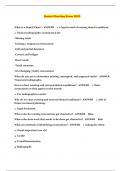
Test Bank for Understanding
Pathophysiology, 7th Edition
Eukaryotic cell - Correct Answer Contains supercoiled DNA and histones."


"Complementary Base Pairing - Correct Answer A pairs with T; C pairs with G."


"Translation - Correct Answer RNA directs protein synthesis into polypeptides."


"Transcription - Correct Answer DNA specifies messenger RNA sequence."


"Nondisjunction - Correct Answer Failure of chromosomes to separate during meiosis."


"Polyploid Cell - Correct Answer Cell with more than 23 pairs of chromosomes."


"Diploid Cell - Correct Answer Cell with 46 chromosomes in 23 pairs."


"Euploid Cell - Correct Answer Cell with multiples of the normal chromosome number."


"Haploid Cell - Correct Answer Cell with one member of each chromosome pair."


"Tetraploidy - Correct Answer Condition with 92 chromosomes in euploid cells."


"Triploidy - Correct Answer Zygote with three copies of each chromosome."


"Aneuploidy - Correct Answer Cell not containing multiples of 23 chromosomes."


"Partial Trisomy - Correct Answer Condition with an extra portion of a chromosome."


"Reciprocal Translocation - Correct Answer Exchange of material between two different
chromosomes."

,"Nucleus - Correct Answer Membrane-bound structure housing DNA in eukaryotes."


"Respiration - Correct Answer Process of absorbing oxygen to produce energy."


"Nucleolus - Correct Answer Region within nucleus containing genetic material."


"Integral membrane proteins - Correct Answer Dissolve bilayer to remove attached proteins."


"Ligands - Correct Answer Molecules that bind to plasma membrane receptors."


"Fibronectin - Correct Answer Extracellular matrix protein decreased in metastatic cancer."


"Cell junction - Correct Answer Structure allowing direct communication between adjacent
cells."


"Paracrine signaling - Correct Answer Local chemical mediators affecting nearby cells."


"Enzyme affinity - Correct Answer High attraction of enzymes to specific substrates."


"Metabolic absorption - Correct Answer Cellular process of nutrient uptake for energy."


"Cell adhesion molecules - Correct Answer Proteins that help cells stick to each other."


"Glycoproteins - Correct Answer Proteins with carbohydrate chains, marking cell identity."


"Gap junction - Correct Answer Channels allowing communication between adjacent cells."


"Desmosome - Correct Answer Structure providing mechanical stability between cells."


"Tight junction - Correct Answer Barrier preventing leakage between epithelial cells."


"Mitochondria - Correct Answer Organelles responsible for cellular respiration."


"Ribosomes - Correct Answer Sites of protein synthesis within the cell."

,"Cytoplasm - Correct Answer Fluid component of the cell, excluding nucleus."


"Collagen - Correct Answer Structural protein in extracellular matrix, providing support."


"Elastin - Correct Answer Protein allowing elasticity in tissues."


"Alpha cells - Correct Answer Pancreatic cells that secrete glucagon."


"Beta cells - Correct Answer Pancreatic cells that secrete insulin."


"Paracrine signaling - Correct Answer Local chemical mediators quickly taken up or
destroyed."


"Enzyme affinity - Correct Answer Each enzyme has high affinity for a substrate."


"ATP deficiency - Correct Answer Lack of ATP impairs muscle contraction."


"Citric acid cycle - Correct Answer Phase producing most ATP in catabolism."


"Phases of catabolism - Correct Answer Includes digestion, glycolysis, oxidation, citric acid
cycle."


"Anaerobic glycolysis - Correct Answer Occurs without oxygen for continued muscle
performance."


"Diffusion - Correct Answer Movement of solute from high to low concentration."


"Electrolytes - Correct Answer Electrically charged molecules essential for bodily functions."


"Oncotic pressure - Correct Answer Determined by concentration of plasma proteins."


"Hydrostatic pressure - Correct Answer Force of fluid against a cell membrane."


"Active transport - Correct Answer Movement of molecules against a concentration gradient."

, "Osmosis - Correct Answer Movement of water across a semipermeable membrane."


"Glycolysis - Correct Answer Initial phase of glucose metabolism producing ATP."


"Oxidation - Correct Answer Phase of catabolism involving electron transfer."


"Muscle fatigue - Correct Answer Result of ATP depletion after strenuous exercise."


"Substrate - Correct Answer Specific substance converted to product by enzyme."


"Carbohydrate metabolism - Correct Answer Process of breaking down carbohydrates for
energy."


"Fluid concentration - Correct Answer Measured in mOsm/kg for body fluids."


"Colloid osmotic pressure - Correct Answer Another term for oncotic pressure."


"Energy transfer - Correct Answer Mechanism by which nutrients convert to ATP."


"Solute concentration - Correct Answer Refers to the amount of solute in a solution."


"Metabolic absorption - Correct Answer Process of cells taking in nutrients."


"Respiration - Correct Answer Cellular process of converting nutrients to energy."


"Osmolality - Correct Answer Concentration of molecules per weight of water."


"Osmolarity - Correct Answer Concentration of molecules per volume of solution."


"Osmotic Pressure - Correct Answer Hydrostatic pressure opposing osmotic water
movement."


"Oncotic Pressure - Correct Answer Pressure from plasma proteins affecting fluid
movement."

$14.99
Accede al documento completo:

100% de satisfacción garantizada
Inmediatamente disponible después del pago
Tanto en línea como en PDF
No estas atado a nada

Conoce al vendedor

Seller avatar
Los indicadores de reputación están sujetos a la cantidad de artículos vendidos por una tarifa y las reseñas que ha recibido por esos documentos. Hay tres niveles: Bronce, Plata y Oro. Cuanto mayor reputación, más podrás confiar en la calidad del trabajo del vendedor.
Smith01 Chamberlain College Of Nursing
Seguir Necesitas iniciar sesión para seguir a otros usuarios o asignaturas
Vendido
70
Miembro desde
4 año
Número de seguidores
10
Documentos
562
Última venta
2 semanas hace
Excellence Bank

On my page you will find latest exam questions with verified answers to help in your revision. Having graduated recently, I believe I have an up-to-date materials and information that will provide you with what you require for the upcoming exams. I cover a wide range of subjects in my research and put together quality materials on this page. I am always available to help others excel.

4.7

18 reseñas

5
14
4
3
3
1
2
0
1
0

Recientemente visto por ti

Por qué los estudiantes eligen Stuvia

Creado por compañeros estudiantes, verificado por reseñas

Calidad en la que puedes confiar: escrito por estudiantes que aprobaron y evaluado por otros que han usado estos resúmenes.

¿No estás satisfecho? Elige otro documento

¡No te preocupes! Puedes elegir directamente otro documento que se ajuste mejor a lo que buscas.

Paga como quieras, empieza a estudiar al instante

Sin suscripción, sin compromisos. Paga como estés acostumbrado con tarjeta de crédito y descarga tu documento PDF inmediatamente.

Student with book image

“Comprado, descargado y aprobado. Así de fácil puede ser.”

Alisha Student

Preguntas frecuentes