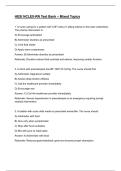
HESI NCLEX-RN Test Bank – Mixed Topics
1. A nurse caring for a patient with CHF notes 2+ pitting edema in the lower extremities.
The priority intervention is:
A) Encourage ambulation
B) Administer diuretics as prescribed
C) Limit fluid intake
D) Apply warm compresses
Answer: B) Administer diuretics as prescribed
Rationale: Diuretics reduce fluid overload and edema, improving cardiac function.
2. A client with preeclampsia has BP 160/110 mmHg. The nurse should first:
A) Administer magnesium sulfate
B) Assess deep tendon reflexes
C) Call the healthcare provider immediately
D) Encourage rest
Answer: C) Call the healthcare provider immediately
Rationale: Severe hypertension in preeclampsia is an emergency requiring prompt
medical intervention.
3. A toddler with acute otitis media is prescribed amoxicillin. The nurse should:
A) Administer with food
B) Give only when symptomatic
C) Stop after fever subsides
D) Mix with juice to mask taste
Answer: A) Administer with food
Rationale: Reduces gastrointestinal upset and ensures proper absorption.
,4. A patient with schizophrenia hears voices telling them to harm themselves. Priority
nursing action:
A) Encourage distraction
B) Place on suicide precautions
C) Assess medication adherence
D) Call family
Answer: B) Place on suicide precautions
Rationale: Safety is the highest priority in psychiatric crises.
5. A nurse administers morphine IV and the patient’s respiratory rate drops to 8/min.
Immediate action:
A) Call the provider
B) Administer naloxone
C) Encourage deep breathing
D) Monitor closely
Answer: B) Administer naloxone
Rationale: Opioid-induced respiratory depression requires prompt reversal.
6. The first action when a patient develops anaphylaxis after penicillin administration is:
A) Administer diphenhydramine
B) Stop the infusion and call rapid response
C) Document the reaction
D) Apply cool compresses
Answer: B) Stop the infusion and call rapid response
Rationale: Immediate discontinuation and rapid intervention are life-saving.
7. A patient with COPD has oxygen at 2 L/min via nasal cannula. Priority assessment:
,A) Heart rate
B) Respiratory rate and effort
C) Blood pressure
D) Temperature
Answer: B) Respiratory rate and effort
Rationale: COPD patients are at risk of hypoxia or CO₂ retention; respiratory status is
critical.
8. A nurse teaches a diabetic patient to rotate injection sites. Reason:
A) Prevent lipodystrophy
B) Reduce infection risk
C) Enhance absorption
D) Decrease pain
Answer: A) Prevent lipodystrophy
Rationale: Rotation prevents tissue changes and ensures consistent absorption.
9. A patient on warfarin has an INR of 5.2. The nurse should:
A) Hold the dose and notify provider
B) Administer vitamin K immediately
C) Continue the dose
D) Recheck in 24 hours
Answer: A) Hold the dose and notify provider
Rationale: INR >5 increases bleeding risk; provider guidance is required.
10. Postoperative patient is at risk for DVT. Priority nursing intervention:
A) Encourage early ambulation
B) Apply heating pads
, C) Give analgesics
D) Restrict movement
Answer: A) Encourage early ambulation
Rationale: Early ambulation promotes venous return and prevents clot formation.
11. A patient with acute pancreatitis reports severe abdominal pain. The nurse should:
A) Administer prescribed IV opioids
B) Encourage oral intake
C) Apply cold compresses
D) Give antacids
Answer: A) Administer prescribed IV opioids
Rationale: Pain control is essential for comfort and to reduce sympathetic stress.
12. The priority nursing action for a patient with hypoglycemia (BS 45 mg/dL) is:
A) Administer oral glucose if conscious
B) Monitor vitals
C) Notify provider
D) Encourage rest
Answer: A) Administer oral glucose if conscious
Rationale: Rapid glucose correction prevents neurological complications.
13. A patient with UTI is prescribed ciprofloxacin. Important teaching:
A) Drink plenty of fluids
B) Take with dairy products
C) Avoid sunlight
D) Limit fluids
Answer: A) Drink plenty of fluids
1. A nurse caring for a patient with CHF notes 2+ pitting edema in the lower extremities.
The priority intervention is:
A) Encourage ambulation
B) Administer diuretics as prescribed
C) Limit fluid intake
D) Apply warm compresses
Answer: B) Administer diuretics as prescribed
Rationale: Diuretics reduce fluid overload and edema, improving cardiac function.
2. A client with preeclampsia has BP 160/110 mmHg. The nurse should first:
A) Administer magnesium sulfate
B) Assess deep tendon reflexes
C) Call the healthcare provider immediately
D) Encourage rest
Answer: C) Call the healthcare provider immediately
Rationale: Severe hypertension in preeclampsia is an emergency requiring prompt
medical intervention.
3. A toddler with acute otitis media is prescribed amoxicillin. The nurse should:
A) Administer with food
B) Give only when symptomatic
C) Stop after fever subsides
D) Mix with juice to mask taste
Answer: A) Administer with food
Rationale: Reduces gastrointestinal upset and ensures proper absorption.
,4. A patient with schizophrenia hears voices telling them to harm themselves. Priority
nursing action:
A) Encourage distraction
B) Place on suicide precautions
C) Assess medication adherence
D) Call family
Answer: B) Place on suicide precautions
Rationale: Safety is the highest priority in psychiatric crises.
5. A nurse administers morphine IV and the patient’s respiratory rate drops to 8/min.
Immediate action:
A) Call the provider
B) Administer naloxone
C) Encourage deep breathing
D) Monitor closely
Answer: B) Administer naloxone
Rationale: Opioid-induced respiratory depression requires prompt reversal.
6. The first action when a patient develops anaphylaxis after penicillin administration is:
A) Administer diphenhydramine
B) Stop the infusion and call rapid response
C) Document the reaction
D) Apply cool compresses
Answer: B) Stop the infusion and call rapid response
Rationale: Immediate discontinuation and rapid intervention are life-saving.
7. A patient with COPD has oxygen at 2 L/min via nasal cannula. Priority assessment:
,A) Heart rate
B) Respiratory rate and effort
C) Blood pressure
D) Temperature
Answer: B) Respiratory rate and effort
Rationale: COPD patients are at risk of hypoxia or CO₂ retention; respiratory status is
critical.
8. A nurse teaches a diabetic patient to rotate injection sites. Reason:
A) Prevent lipodystrophy
B) Reduce infection risk
C) Enhance absorption
D) Decrease pain
Answer: A) Prevent lipodystrophy
Rationale: Rotation prevents tissue changes and ensures consistent absorption.
9. A patient on warfarin has an INR of 5.2. The nurse should:
A) Hold the dose and notify provider
B) Administer vitamin K immediately
C) Continue the dose
D) Recheck in 24 hours
Answer: A) Hold the dose and notify provider
Rationale: INR >5 increases bleeding risk; provider guidance is required.
10. Postoperative patient is at risk for DVT. Priority nursing intervention:
A) Encourage early ambulation
B) Apply heating pads
, C) Give analgesics
D) Restrict movement
Answer: A) Encourage early ambulation
Rationale: Early ambulation promotes venous return and prevents clot formation.
11. A patient with acute pancreatitis reports severe abdominal pain. The nurse should:
A) Administer prescribed IV opioids
B) Encourage oral intake
C) Apply cold compresses
D) Give antacids
Answer: A) Administer prescribed IV opioids
Rationale: Pain control is essential for comfort and to reduce sympathetic stress.
12. The priority nursing action for a patient with hypoglycemia (BS 45 mg/dL) is:
A) Administer oral glucose if conscious
B) Monitor vitals
C) Notify provider
D) Encourage rest
Answer: A) Administer oral glucose if conscious
Rationale: Rapid glucose correction prevents neurological complications.
13. A patient with UTI is prescribed ciprofloxacin. Important teaching:
A) Drink plenty of fluids
B) Take with dairy products
C) Avoid sunlight
D) Limit fluids
Answer: A) Drink plenty of fluids