
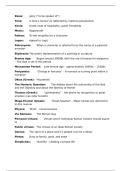
Kleos: glory (“to be spoken of”)
Tíme: A hero’s honour as reflected by material possessions
Xenia: Greek code of hospitality; guest friendship
Menis: Rage/wrath
Pathos: To feel empathy for a character
Logos: Appeal to Logic
Patronymic: When a character is referred to by the name of a paternal
ancestor
Ekphrasis: The poetic representation of a painting or sculpture
Bronze Age: Began around 3000Bc with the use of bronze for weaponry
– The Iliad is set in this period
Myceanean Period: Late bronze age – approximately 1600bc – 1100bc
Peripateia: “Change in fortunes” – A reversal or turning point within a
narrative
Okios (Greek): Household
The Homeric Question: The debate about the authorship of the Iliad
and the Odyssey and about the identity of Homer
Thumos (Greek): “spiritedness” – the desire for recognition or great
emotion (can refer to both)
Mega-Thumoi (Greek): “Great-hearted” – Major heroes are referred to
in this manner
Physce: ‘Mind’ – consciousness
Via Romana: The Roman way
Personal virtues: Virtues which individual Roman citizens should aspire
to
Public virtues: The virtues of an ideal Roman society
Genius: The spirit of a place and it’s people (can be a deity)
Pietas: Duty to family, gods, and state
Simplicitas: Humility – Leading a simple life
Tíme: A hero’s honour as reflected by material possessions
Xenia: Greek code of hospitality; guest friendship
Menis: Rage/wrath
Pathos: To feel empathy for a character
Logos: Appeal to Logic
Patronymic: When a character is referred to by the name of a paternal
ancestor
Ekphrasis: The poetic representation of a painting or sculpture
Bronze Age: Began around 3000Bc with the use of bronze for weaponry
– The Iliad is set in this period
Myceanean Period: Late bronze age – approximately 1600bc – 1100bc
Peripateia: “Change in fortunes” – A reversal or turning point within a
narrative
Okios (Greek): Household
The Homeric Question: The debate about the authorship of the Iliad
and the Odyssey and about the identity of Homer
Thumos (Greek): “spiritedness” – the desire for recognition or great
emotion (can refer to both)
Mega-Thumoi (Greek): “Great-hearted” – Major heroes are referred to
in this manner
Physce: ‘Mind’ – consciousness
Via Romana: The Roman way
Personal virtues: Virtues which individual Roman citizens should aspire
to
Public virtues: The virtues of an ideal Roman society
Genius: The spirit of a place and it’s people (can be a deity)
Pietas: Duty to family, gods, and state
Simplicitas: Humility – Leading a simple life

