CMN 3 final
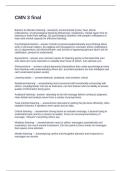
Barriers to effective listening - answer(1) environmental (noise, heat, phone
notifications), (2) physiological (hearing deficiencies, headaches, mental spare time bc
listening is faster than talking), (3) psychological (interfere with people's willingness to
listen and mental capacity for effective listening)
Psychological barriers - answer include (a) preoccupation/already busy thinking about
work or personal matters, (b) juggling and message/cmn overload, phone notifications,
etc (c) egocentrism, (d) ethnocentrism, and (e) fear of appearing ignorant (don't ask for
clarification, pretend to understand)
Egocentrism - answer one common reason for listening poorly is the belief that your
own ideas are more important or valuable than those of others. Can alienate you.
Ethnocentrism - - answer cultural ignorance’s/prejudices that create psychological noise
that interferes with understanding others (Ex: accented speakers are less intelligent and
can't understand spoken words)
Listening styles - - answerrelational, analytical, task-oriented, critical
Relational listening - - answerbeing most concerned with emotionally connecting with
others, nonjudgmental. Can be as instrusive, can hurt listener who lost ability to assess
quality of information being given
Analytical listening - answer- attending to the full message before coming to judgment.
Hear details and analyze issure from a variety of perspectives.
Task-oriented listening - - answermost interested in getting the job done efficiently, often
impatient listeners if speakers aren't quick and on-topic.
Critical listening - - answerhave strong desire to evaluate message, o beyond trying to
understand topic and try to assess its quality. Focus on accuracy/consistency of
message. "Nit-pick" everything others say.
Mindless listening - - answerlisteners react to others' messages automatically and
routineless, w/o much mental investment. Can be useful to focus minds on messages
that require more attention
Mindful listening - - answergiving careful and thoughtful attention and responses to
messages we receive
, Listening to understand - - answerwithhold judgment, talk and interrupt less, ask sincere
questions or genuine requests for information (avoid counterfeit questions, disguised
forms of advice/traps), paraphrasing or restating speaker's words to ensure
understanding, attend to nonverbal cues (speaker if asked will say more), take notes
CH 3 SUMMARY - - answer1) Listening is the most frequent communication activity at
work. Listening effectively helps the organization and also helps you achieve your
personal goals. 2) A number of faulty assumptions about listening can impede effective
understanding. 3) Environmental, physiological, and psychological barriers
(preoccupation, overload, egocentrism, ethnocentrism, and fear of appearing ignorant)
interfere with effective listening. 4) Knowing and understanding the characteristics of
your default listening style (relational. analytical, task-oriented, critical) and others'
listening styles helps you adapt to any given situation. 5) Listening to understand
requires withholding judgment, talking and interrupting less, seeking feedback by asking
sincere (not counterfeit) questions, paraphrasing, attending to nonverbal cues, and
taking notes. 6) Evaluative listening involves analyzing both a speaker's evidence and
emotional appeals.
CHAPTER 8 - answerCHAPTER 8
Teleconferences - - answermultiparty telephone calls, faster than email or two-person
phone conversations
Videoconferences - answer- valiable for widespread operations
Benefits of meetings/conferences - answerA group of people who do the same kind of
work can often improve their individual performance through meetings by performing
some of the complem entary functional roles. For example, one colleague might serve
as reality tester. ("do you really have time to do that?") Another might take the job of
being inform ationgiver. ("You know, there's a printer just outside Boston who can do
large jobs like that just as well as your regular printer, but he's cheaper. Call me, and I'll
give you the name and address.") Others serve as diagnosers. ("Have you checked the
feed mechanism?") Some can just serve as empathic listeners. ("Yeah, I know. It's
tough to get people who can do that kind of work right.")
Agenda - - answerlist of topics to be covered in a meeting
Parliamentary procedure - answeris a set of rules that governs the way groups conduct
business and make decisions in m e e tin g
Motion - answerW hen a member wants the group to deliberate, he or she introduces a
motion: a specific proposal for action
Overhead questions - answerare directed toward the group as a w hole, and anyone is
free to answer;
Barriers to effective listening - answer(1) environmental (noise, heat, phone
notifications), (2) physiological (hearing deficiencies, headaches, mental spare time bc
listening is faster than talking), (3) psychological (interfere with people's willingness to
listen and mental capacity for effective listening)
Psychological barriers - answer include (a) preoccupation/already busy thinking about
work or personal matters, (b) juggling and message/cmn overload, phone notifications,
etc (c) egocentrism, (d) ethnocentrism, and (e) fear of appearing ignorant (don't ask for
clarification, pretend to understand)
Egocentrism - answer one common reason for listening poorly is the belief that your
own ideas are more important or valuable than those of others. Can alienate you.
Ethnocentrism - - answer cultural ignorance’s/prejudices that create psychological noise
that interferes with understanding others (Ex: accented speakers are less intelligent and
can't understand spoken words)
Listening styles - - answerrelational, analytical, task-oriented, critical
Relational listening - - answerbeing most concerned with emotionally connecting with
others, nonjudgmental. Can be as instrusive, can hurt listener who lost ability to assess
quality of information being given
Analytical listening - answer- attending to the full message before coming to judgment.
Hear details and analyze issure from a variety of perspectives.
Task-oriented listening - - answermost interested in getting the job done efficiently, often
impatient listeners if speakers aren't quick and on-topic.
Critical listening - - answerhave strong desire to evaluate message, o beyond trying to
understand topic and try to assess its quality. Focus on accuracy/consistency of
message. "Nit-pick" everything others say.
Mindless listening - - answerlisteners react to others' messages automatically and
routineless, w/o much mental investment. Can be useful to focus minds on messages
that require more attention
Mindful listening - - answergiving careful and thoughtful attention and responses to
messages we receive
, Listening to understand - - answerwithhold judgment, talk and interrupt less, ask sincere
questions or genuine requests for information (avoid counterfeit questions, disguised
forms of advice/traps), paraphrasing or restating speaker's words to ensure
understanding, attend to nonverbal cues (speaker if asked will say more), take notes
CH 3 SUMMARY - - answer1) Listening is the most frequent communication activity at
work. Listening effectively helps the organization and also helps you achieve your
personal goals. 2) A number of faulty assumptions about listening can impede effective
understanding. 3) Environmental, physiological, and psychological barriers
(preoccupation, overload, egocentrism, ethnocentrism, and fear of appearing ignorant)
interfere with effective listening. 4) Knowing and understanding the characteristics of
your default listening style (relational. analytical, task-oriented, critical) and others'
listening styles helps you adapt to any given situation. 5) Listening to understand
requires withholding judgment, talking and interrupting less, seeking feedback by asking
sincere (not counterfeit) questions, paraphrasing, attending to nonverbal cues, and
taking notes. 6) Evaluative listening involves analyzing both a speaker's evidence and
emotional appeals.
CHAPTER 8 - answerCHAPTER 8
Teleconferences - - answermultiparty telephone calls, faster than email or two-person
phone conversations
Videoconferences - answer- valiable for widespread operations
Benefits of meetings/conferences - answerA group of people who do the same kind of
work can often improve their individual performance through meetings by performing
some of the complem entary functional roles. For example, one colleague might serve
as reality tester. ("do you really have time to do that?") Another might take the job of
being inform ationgiver. ("You know, there's a printer just outside Boston who can do
large jobs like that just as well as your regular printer, but he's cheaper. Call me, and I'll
give you the name and address.") Others serve as diagnosers. ("Have you checked the
feed mechanism?") Some can just serve as empathic listeners. ("Yeah, I know. It's
tough to get people who can do that kind of work right.")
Agenda - - answerlist of topics to be covered in a meeting
Parliamentary procedure - answeris a set of rules that governs the way groups conduct
business and make decisions in m e e tin g
Motion - answerW hen a member wants the group to deliberate, he or she introduces a
motion: a specific proposal for action
Overhead questions - answerare directed toward the group as a w hole, and anyone is
free to answer;