1 | Page
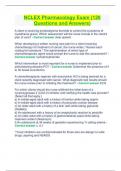
Pharmacology Hesi Practice 2 Questions and
Answers
A client receives a prescription for esomeprazole (Nexium) for
heartburn. Which finding in the client's history should the nurse
report to the healthcare provider before administering the
prescription?
Eats spicy food three times a week.
History of deep vein thrombosis.
Drinks 2 alcoholic beverages on weekends.
Family history of diabetes mellitus.
Ans: History of deep vein thrombosis.
A male client who is in the terminal stage of cancer is cared for at
home by his family and receives a prescription for morphine at a
rate to control intractable pain. When the hospice nurse visits, the
client awakens, moans in severe pain, and asks for an increase in
the morphine dosage. After determining the client's respirations
are 10 per minute, what is the best action for the nurse to
implement?
Titrate the morphine dose upward until the client has adequate
pain relief.
Suggest to the family that they can also give the client ibuprofen, a
non-narcotic analgesic.
Hold additional morphine until the client's respirations are at least
16 per minute.
Inform the client that an increased dose of morphine increases
side effects without additional pain control.
Ans: Titrate the morphine dose upward until the client has adequate
pain relief.
© 2025 All rights reserved
, 2 | Page
A client with Paget's disease is started on calcitonin (Calcimar)
500 mcg subcutaneously daily. During the initial treatment, what
is the priority nursing action?
Assess the injection site for inflammation.
Evaluate the client's level of pain.
Monitor the client's alkaline phosphatase levels.
Observe the client for signs of hypersensitivity.
Ans: Observe the client for signs of hypersensitivity.
A client is taking cyclosporine for renal allograft rejection
prevention. After 9 months of drug therapy, the nurse reviews
laboratory data and notes that the blood urea nitrogen level is 36
mg/dl. What additional finding should the nurse identify?
Hypotension.
White blood cell count 10,000.
Creatinine 28 mg/dl.
Anaphylactic reaction.
Ans: Creatinine 28 mg/dl.
The nurse receives a unit of blood from the blood bank for a
postoperative client who is currently in the X-ray department.
What action should the nurse implement?
Return the blood to the blood bank for refrigeration within 30
minutes.
Hang the blood transfusion as soon as the client returns to the
unit.
Store the blood bag in the nursing unit's refrigerator until the
client returns.
Take the unit of blood to the X-ray department to initiate the
transfusion.
Ans: Return the blood to the blood bank for refrigeration within 30
minutes.
© 2025 All rights reserved
, 3 | Page
Which side effects should the nurse monitor for a client who is
receiving dexamethasone (Decadron) following neurosurgery?
(Select all that apply.)
Select all that apply
Mood swings.
Decreased appetite.
Increased weight gain.
Serum glucose level of 65 mg/dl.
Delayed incisional wound healing.
Serum hemoglobin level of 9 mg/dl.
Ans: Mood swings.
Increased weight gain.
Delayed incisional wound healing.
Serum hemoglobin level of 9 mg/dl.
A client is taking danazol (Danocrine) for endometriosis and calls
the clinic nurse to complain of a dark, swollen, and painful leg.
What instructions should the nurse provide the client?
Wear support stockings.
Elevate both legs and apply heat.
Proceed to the closest emergency room.
Walk for 20 to 30 minutes to reduce muscle cramps.
Ans: Proceed to the closest emergency room.
A client asks the nurse to explain the meaning of a narrow
therapeutic index of a medication. What information should the
nurse use to answer the question?
The onset of action for the medication occurs very quickly.
A small margin exists between safe and toxic plasma levels.
Bioavailability is significantly reduced by the first-pass effect.
Minimum dosage is needed for the medication to be effective.
© 2025 All rights reserved
Pharmacology Hesi Practice 2 Questions and
Answers
A client receives a prescription for esomeprazole (Nexium) for
heartburn. Which finding in the client's history should the nurse
report to the healthcare provider before administering the
prescription?
Eats spicy food three times a week.
History of deep vein thrombosis.
Drinks 2 alcoholic beverages on weekends.
Family history of diabetes mellitus.
Ans: History of deep vein thrombosis.
A male client who is in the terminal stage of cancer is cared for at
home by his family and receives a prescription for morphine at a
rate to control intractable pain. When the hospice nurse visits, the
client awakens, moans in severe pain, and asks for an increase in
the morphine dosage. After determining the client's respirations
are 10 per minute, what is the best action for the nurse to
implement?
Titrate the morphine dose upward until the client has adequate
pain relief.
Suggest to the family that they can also give the client ibuprofen, a
non-narcotic analgesic.
Hold additional morphine until the client's respirations are at least
16 per minute.
Inform the client that an increased dose of morphine increases
side effects without additional pain control.
Ans: Titrate the morphine dose upward until the client has adequate
pain relief.
© 2025 All rights reserved
, 2 | Page
A client with Paget's disease is started on calcitonin (Calcimar)
500 mcg subcutaneously daily. During the initial treatment, what
is the priority nursing action?
Assess the injection site for inflammation.
Evaluate the client's level of pain.
Monitor the client's alkaline phosphatase levels.
Observe the client for signs of hypersensitivity.
Ans: Observe the client for signs of hypersensitivity.
A client is taking cyclosporine for renal allograft rejection
prevention. After 9 months of drug therapy, the nurse reviews
laboratory data and notes that the blood urea nitrogen level is 36
mg/dl. What additional finding should the nurse identify?
Hypotension.
White blood cell count 10,000.
Creatinine 28 mg/dl.
Anaphylactic reaction.
Ans: Creatinine 28 mg/dl.
The nurse receives a unit of blood from the blood bank for a
postoperative client who is currently in the X-ray department.
What action should the nurse implement?
Return the blood to the blood bank for refrigeration within 30
minutes.
Hang the blood transfusion as soon as the client returns to the
unit.
Store the blood bag in the nursing unit's refrigerator until the
client returns.
Take the unit of blood to the X-ray department to initiate the
transfusion.
Ans: Return the blood to the blood bank for refrigeration within 30
minutes.
© 2025 All rights reserved
, 3 | Page
Which side effects should the nurse monitor for a client who is
receiving dexamethasone (Decadron) following neurosurgery?
(Select all that apply.)
Select all that apply
Mood swings.
Decreased appetite.
Increased weight gain.
Serum glucose level of 65 mg/dl.
Delayed incisional wound healing.
Serum hemoglobin level of 9 mg/dl.
Ans: Mood swings.
Increased weight gain.
Delayed incisional wound healing.
Serum hemoglobin level of 9 mg/dl.
A client is taking danazol (Danocrine) for endometriosis and calls
the clinic nurse to complain of a dark, swollen, and painful leg.
What instructions should the nurse provide the client?
Wear support stockings.
Elevate both legs and apply heat.
Proceed to the closest emergency room.
Walk for 20 to 30 minutes to reduce muscle cramps.
Ans: Proceed to the closest emergency room.
A client asks the nurse to explain the meaning of a narrow
therapeutic index of a medication. What information should the
nurse use to answer the question?
The onset of action for the medication occurs very quickly.
A small margin exists between safe and toxic plasma levels.
Bioavailability is significantly reduced by the first-pass effect.
Minimum dosage is needed for the medication to be effective.
© 2025 All rights reserved