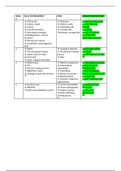
Weke BUILT ENVIRONMENT HRM SERVICE MANAGEMENT
n
1 SOR model Definition Mails and Margulies
Holistic model Holistic model four elements
Triple P Sustainable HR strategy
Circulair economy P model SHR Eroding
Real estate strategies Strategic management type of strategy
Building layers circular competitive
economy advantage ( benefits)
driving force theory
competitive advantaged by
built
2 CREM workplace diversity Internationalizing
The conceptual models The decision making Culture
added value for built process International strategy
environment CSR (
input / output real estate
3 Added value Global management International strategy
KPI International Empowerment
Decision making process organization building blocks
NEN2748 ( costs) Controlling The Contingency
strategy of built environment Balance scorecard Bowen and Lawler model
Benchmarking Leadership
Tools for measuring Kolb’s learning cycle
organizations
4 business case social responsibility service concept
BREAAM Green management framework
Dutch Green Building Council Shades of green Meassure
Ethics behaviour performance
Productivity
,Inhoud
Introduction (week 1).............................................................................................................................3
Chapter 16: week 1.................................................................................................................................7
Chapter 7: week 2.................................................................................................................................12
Chapter 11: week 3...............................................................................................................................22
Chapter 13: week 4...............................................................................................................................31
,Introduction (week 1)
Services are:
intangible ( niet tastbaar)
Simultaneous ( vergankelijk – kunnen niet op voorraad worden gehouden)
Heterogeneous ( hetrogeen)
Perishable ( gelijktijdig vinden snel na elkaar plaats )
You can classified the services in three times: mail en margulies
Maintenance-interactive services
- Standardization processes
- The customer knows what he wants and how the service process is carried out
- Little professional knowledge required for service provider
- Relatively simple decisions by customer and service provider
- Customer contact remains superficial
Example: provide the form at the counter / service counter fast food chain
Nature of service, a process that is actually always the same
Example: extend passport (draws a number, walks to the counter, passport photo, fingerprint)
Task-interactive services
- More task-oriented, less standardization
- Customer knows what he / she wants but not how the service process should go
- Relatively complex (technical) professional knowledge is required for the service provider
- Relatively complex decisions by customer and service provider
- Customer contact is more intensive, customer provides information
Example: IT Service Desk (bringing laptop for repair) and Tax Advisor
Personal-interactive services
Customization, very dynamic (no standardization)
- Customer does not know exactly what he wants and how the service process should proceed
- Very complex professional knowledge is required for the service provider
- Customer and service provider make complex decisions with uncertain results
- Customer contact is very intensive (personal)
Example: Company doctor supervises the employee's psycho-medical process
, The service profit chain
Within this model, the focus is on the strong relationship between the employee and the customer.
The service scape
The definition of a service scape: All objective physical factors that can be controlled by the firm to
enhance (or constrain) employees’ and customers’ activities’
A "servicescape" consists of all physical things that can be used by an organization to influence the
behavior of customers and employees.
Servicescape is a model developed by Booms and Bitner to emphasize the impact of the physical
environment in which a service process takes place. The aim of the servicescapes model is to explain
behaviour of people within the service environment with a view to designing environments that
n
1 SOR model Definition Mails and Margulies
Holistic model Holistic model four elements
Triple P Sustainable HR strategy
Circulair economy P model SHR Eroding
Real estate strategies Strategic management type of strategy
Building layers circular competitive
economy advantage ( benefits)
driving force theory
competitive advantaged by
built
2 CREM workplace diversity Internationalizing
The conceptual models The decision making Culture
added value for built process International strategy
environment CSR (
input / output real estate
3 Added value Global management International strategy
KPI International Empowerment
Decision making process organization building blocks
NEN2748 ( costs) Controlling The Contingency
strategy of built environment Balance scorecard Bowen and Lawler model
Benchmarking Leadership
Tools for measuring Kolb’s learning cycle
organizations
4 business case social responsibility service concept
BREAAM Green management framework
Dutch Green Building Council Shades of green Meassure
Ethics behaviour performance
Productivity
,Inhoud
Introduction (week 1).............................................................................................................................3
Chapter 16: week 1.................................................................................................................................7
Chapter 7: week 2.................................................................................................................................12
Chapter 11: week 3...............................................................................................................................22
Chapter 13: week 4...............................................................................................................................31
,Introduction (week 1)
Services are:
intangible ( niet tastbaar)
Simultaneous ( vergankelijk – kunnen niet op voorraad worden gehouden)
Heterogeneous ( hetrogeen)
Perishable ( gelijktijdig vinden snel na elkaar plaats )
You can classified the services in three times: mail en margulies
Maintenance-interactive services
- Standardization processes
- The customer knows what he wants and how the service process is carried out
- Little professional knowledge required for service provider
- Relatively simple decisions by customer and service provider
- Customer contact remains superficial
Example: provide the form at the counter / service counter fast food chain
Nature of service, a process that is actually always the same
Example: extend passport (draws a number, walks to the counter, passport photo, fingerprint)
Task-interactive services
- More task-oriented, less standardization
- Customer knows what he / she wants but not how the service process should go
- Relatively complex (technical) professional knowledge is required for the service provider
- Relatively complex decisions by customer and service provider
- Customer contact is more intensive, customer provides information
Example: IT Service Desk (bringing laptop for repair) and Tax Advisor
Personal-interactive services
Customization, very dynamic (no standardization)
- Customer does not know exactly what he wants and how the service process should proceed
- Very complex professional knowledge is required for the service provider
- Customer and service provider make complex decisions with uncertain results
- Customer contact is very intensive (personal)
Example: Company doctor supervises the employee's psycho-medical process
, The service profit chain
Within this model, the focus is on the strong relationship between the employee and the customer.
The service scape
The definition of a service scape: All objective physical factors that can be controlled by the firm to
enhance (or constrain) employees’ and customers’ activities’
A "servicescape" consists of all physical things that can be used by an organization to influence the
behavior of customers and employees.
Servicescape is a model developed by Booms and Bitner to emphasize the impact of the physical
environment in which a service process takes place. The aim of the servicescapes model is to explain
behaviour of people within the service environment with a view to designing environments that