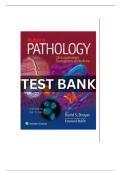
,TEST BANK FOR RUBIN’S PATHOLOGY: CLINICOPATHOLOGIC FOUNDATIONS O
MEDICINE 7TH EDITION ( WITH ANSWER KEY) LATEST UPDATED
TABLE OF CONTENTS
• Cell Injury, Adaptation, and Death
• Inflammation and Repair
• Neoplasia
• Genetic and Pediatric Diseases
• Environmental and Nutritional Diseases
• Hemodynamic Disorders
• Diseases of Immunity
• Infectious and Parasitic Diseases
• The Respiratory System
• The Gastrointestinal Tract
• The Liver and Biliary System
• The Pancreas
• The Kidney
• The Lower Urinary Tract and Male Reproductive System【15†Source.filemale Reproductive System*
,• The Breast
• The Hematopoietic and Lymphoid Systems
• The Cardiovascular System
• The Nervous System
• The Musculoskeletal System
• The Endocrine System
• The Skin
• The Eye and Ear
• Forensic Pathology
Chapter 1: Cell Adaptation, Injury and Death.
Ischemia and other toxic injuries increase the accumulation of intracellular calcium as a result
1. of:
A) release of stored calcium from the mitochondria.
B) improved intracellular volume regulation.
C) decreased influx across the cell membrane.
D) attraction of calcium to fatty infiltrates.
Answers: A
, The patient is found to have liver disease, resulting in the removal of a lobe of his liver.
2. Adaptation to the reduced size of the liver leads to _ of the remaining liver cells.
A) metaplasia
B) organ atrophy
C) compensatory hyperplasia
D) physiologic hypertrophy
Answer: C
A person eating peanuts starts choking and collapses. His airway obstruction is partially
cleared, but he remains hypoxic until he reaches the hospital. The prolonged cell hypoxia
3. caused a cerebral infarction and resulting _ in the brain.
A) caspase activation
B) coagulation necrosis
C) rapid phagocytosis
D) protein p53 deficiency
Answer:B
Bacteria and viruses cause cell damage by , which is unique from the intracellular
4. damage caused by other injurious agents.
A) disrupting the sodium/potassium ATPase pump
B) interrupting oxidative metabolism processes
C) replicating and producing continue
MEDICINE 7TH EDITION ( WITH ANSWER KEY) LATEST UPDATED
TABLE OF CONTENTS
• Cell Injury, Adaptation, and Death
• Inflammation and Repair
• Neoplasia
• Genetic and Pediatric Diseases
• Environmental and Nutritional Diseases
• Hemodynamic Disorders
• Diseases of Immunity
• Infectious and Parasitic Diseases
• The Respiratory System
• The Gastrointestinal Tract
• The Liver and Biliary System
• The Pancreas
• The Kidney
• The Lower Urinary Tract and Male Reproductive System【15†Source.filemale Reproductive System*
,• The Breast
• The Hematopoietic and Lymphoid Systems
• The Cardiovascular System
• The Nervous System
• The Musculoskeletal System
• The Endocrine System
• The Skin
• The Eye and Ear
• Forensic Pathology
Chapter 1: Cell Adaptation, Injury and Death.
Ischemia and other toxic injuries increase the accumulation of intracellular calcium as a result
1. of:
A) release of stored calcium from the mitochondria.
B) improved intracellular volume regulation.
C) decreased influx across the cell membrane.
D) attraction of calcium to fatty infiltrates.
Answers: A
, The patient is found to have liver disease, resulting in the removal of a lobe of his liver.
2. Adaptation to the reduced size of the liver leads to _ of the remaining liver cells.
A) metaplasia
B) organ atrophy
C) compensatory hyperplasia
D) physiologic hypertrophy
Answer: C
A person eating peanuts starts choking and collapses. His airway obstruction is partially
cleared, but he remains hypoxic until he reaches the hospital. The prolonged cell hypoxia
3. caused a cerebral infarction and resulting _ in the brain.
A) caspase activation
B) coagulation necrosis
C) rapid phagocytosis
D) protein p53 deficiency
Answer:B
Bacteria and viruses cause cell damage by , which is unique from the intracellular
4. damage caused by other injurious agents.
A) disrupting the sodium/potassium ATPase pump
B) interrupting oxidative metabolism processes
C) replicating and producing continue