TestYBankYForYEssentialsYOfYPathophysiologyY4thYEditionYPort
h
,TestYBankY- 1
YEssentialsYofYPathophysiologyY(4thYEditionYbyYPorth)
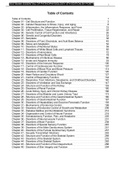
Table of Contents
Y Y
TableY ofY Contents 1
ChapterY 01Y -Y CellY StructureY andY Function C
ChapterY 02Y - h
Y CellularY ResponsesY toY Stress,Y Injury,Y andY AgingYChapterY 03Y - a
Y Inflammation,Y theY InflammatoryY Response,Y andY FeverY ChapterY 04Y - p
Y CellY Proliferation,Y TissueY Regeneration,Y andY RepairYChapterY 05Y - t
Y GeneticY ControlY of Y CellY FunctionY andY InheritanceYChapterY06Y- e
Y GeneticYandYCongenitalY Disorders r
Y
ChapterY 07Y -Y Neoplasia 4
ChapterY 08Y -Y DisordersY ofY Fluid,Y Electrolyte,Y andY Acid- 2
BaseY BalanceYChapterY09Y-YStressYandYAdaptation Y
ChapterY 10Y -Y DisordersY ofY NutritionalY Status -
Y
ChapterY 11Y - S
Y DisordersY of Y WhiteY BloodY CellsY andY LymphoidY TissuesY ChapterY12Y- t
YDisordersYof YHemostasis
r
ChapterY13Y- u
Y DisordersY of Y RedY BloodY CellsYChapterY 14Y -
c
Y MechanismsY ofY InfectiousY DiseaseYChapterY 15Y -
t
Y InnateY andY AdaptiveY ImmunityYChapterY 16Y -
u
Y DisordersY of Y theY ImmuneY ResponseY ChapterY 17Y - r
Y ControlY of Y CardiovascularY Function
e
ChapterY 18Y - Y
Y DisordersY of Y BloodY FlowY andY BloodY PressureY ChapterY19Y- a
YDisordersY of Y CardiacYFunction
n
ChapterY 20Y - d
Y
Y HeartY FailureY andY CirculatoryY ShockY ChapterY 21Y - F
Y ControlY of Y RespiratoryY Function u
ChapterY 22Y - n
Y RespiratoryY TractY Infections,Y Neoplasms,Y andY ChildhoodY DisordersY ChapterY23Y- c
YDisordersY of YVentilationYandY GasYExchange t
ChapterY 24Y - i
Y StructureY andY FunctionY of Y theY KidneyYChapterY25Y- o
Y DisordersY of Y RenalY Function n
Y
ChapterY 26Y -
o
Y AcuteY KidneyY InjuryY andY ChronicY KidneyY DiseaseYChapterY 27Y -
f
Y DisordersY of Y theY BladderY andY LowerY UrinaryY TractYChapterY 28Y - Y
Y StructureY andY FunctionY of Y theY GastrointestinalY System YChapterY29Y- t
Y DisordersY ofY GastrointestinalY Function h
ChapterY 30Y - e
Y
Y DisordersY of Y HepatobiliaryY andY ExocrineY PancreaticY FunctionY ChapterY31Y- S
YMechanismsYof YEndocrineYControl
k
ChapterY 32Y - e
Y DisordersY of Y EndocrineY ControlY of Y GrowthY andY MetabolismY ChapterY33Y- l
Y DiabetesY MellitusY andY theY MetabolicY Syndrome
e
ChapterY 34Y - t
Y OrganizationY andY ControlY of Y NeuralY FunctionYChapterY 35Y -
a
Y SomatosensoryY Function,Y Pain,Y andY HeadacheY ChapterY36Y- l
Y DisordersY ofY NeuromuscularY Function Y
ChapterY 37Y -Y DisordersY ofY BrainY Function S
ChapterY38Y- y
YDisordersYof Y SpecialY SensoryY FunctionYChapterY 39Y -
s
Y DisordersY of Y theY MaleY GenitourinaryY System YChapterY 40Y -
t
Y DisordersY of Y theY FemaleY GenitourinaryY System Y ChapterY41Y- e
Y SexuallyYTransmittedY Infections
m
Y
,TestYBankY- 2
YEssentialsYofYPathophysiologyY(4thYEditionYbyYPorth)
ChapterY43Y-YDisordersYofYtheYSkeletalYSystem 2
ChapterY 44Y -Y DisordersY ofY theY SkeletalY System 8
ChapterY 45Y - 15
Y StructureY andY FunctionY of Y theY Integumentum Y
ChapterY 46Y - 22
Y DisordersY of Y SkinY IntegrityY andY Function 26
32
38
45
52
59
65
72
79
86
93
100
107
113
120
127
134
140
147
153
160
166
173
180
187
193
199
206
212
219
225
231
238
245
251
257
263
269
275
282
288
294
, TestYBankY- 3
YEssentialsYofYPathophysiologyY(4thYEditionYbyYPorth)
Chapter 01 - Cell Structure and Function
Y Y Y Y Y Y
1. TheYnucleus ,YwhichYisYessentialYforYfunctionYandYsurvivalYofYtheYcell.
A) isYtheYsiteYofYproteinYsynthesis
B) containsYtheYgeneticYcode
C) transformsYcellularYenergy
D) initiatesY aerobicY metabolism
2. AlthoughYenergyYisYnotYmadeYinYmitochondria,YtheyYareYknownYasYtheYpowerYplantsYofYtheYcellYbec
auseYthey:
A) containYRNAYforYproteinYsynthesis.
B) utilizeYglycolysisYforYoxidativeYenergy.
C) extractYenergyYfromYorganicYcompounds.
D) storeYcalciumYbondsYforYmuscleYcontractions.
3. AlthoughYtheYbasicYstructureYofYtheYcellYplasmaYmembraneYisYformedYbyYaYlipidYbilayer,YmostYof
YtheY
specificYmembraneYfunctionsYareYcarriedYoutYby:
A) boundY andY transmembraneY proteins.
B) complex,Y longY carbohydrateY chains.
C) surfaceYantigensYandYhormoneYreceptors.
D) aYgatingYsystemYofYselectiveYionYchannels.
4. ToY effectivelyY relayY signals,Y cell-to-cellY communicationY utilizesY chemicalY messengerY systemsY that:
A) displaceYsurfaceYreceptorYproteins.
B) accumulateYwithinYcellYgapYjunctions.
C) bindYtoYcontractileYmicrofilaments.
h
,TestYBankY- 1
YEssentialsYofYPathophysiologyY(4thYEditionYbyYPorth)
Table of Contents
Y Y
TableY ofY Contents 1
ChapterY 01Y -Y CellY StructureY andY Function C
ChapterY 02Y - h
Y CellularY ResponsesY toY Stress,Y Injury,Y andY AgingYChapterY 03Y - a
Y Inflammation,Y theY InflammatoryY Response,Y andY FeverY ChapterY 04Y - p
Y CellY Proliferation,Y TissueY Regeneration,Y andY RepairYChapterY 05Y - t
Y GeneticY ControlY of Y CellY FunctionY andY InheritanceYChapterY06Y- e
Y GeneticYandYCongenitalY Disorders r
Y
ChapterY 07Y -Y Neoplasia 4
ChapterY 08Y -Y DisordersY ofY Fluid,Y Electrolyte,Y andY Acid- 2
BaseY BalanceYChapterY09Y-YStressYandYAdaptation Y
ChapterY 10Y -Y DisordersY ofY NutritionalY Status -
Y
ChapterY 11Y - S
Y DisordersY of Y WhiteY BloodY CellsY andY LymphoidY TissuesY ChapterY12Y- t
YDisordersYof YHemostasis
r
ChapterY13Y- u
Y DisordersY of Y RedY BloodY CellsYChapterY 14Y -
c
Y MechanismsY ofY InfectiousY DiseaseYChapterY 15Y -
t
Y InnateY andY AdaptiveY ImmunityYChapterY 16Y -
u
Y DisordersY of Y theY ImmuneY ResponseY ChapterY 17Y - r
Y ControlY of Y CardiovascularY Function
e
ChapterY 18Y - Y
Y DisordersY of Y BloodY FlowY andY BloodY PressureY ChapterY19Y- a
YDisordersY of Y CardiacYFunction
n
ChapterY 20Y - d
Y
Y HeartY FailureY andY CirculatoryY ShockY ChapterY 21Y - F
Y ControlY of Y RespiratoryY Function u
ChapterY 22Y - n
Y RespiratoryY TractY Infections,Y Neoplasms,Y andY ChildhoodY DisordersY ChapterY23Y- c
YDisordersY of YVentilationYandY GasYExchange t
ChapterY 24Y - i
Y StructureY andY FunctionY of Y theY KidneyYChapterY25Y- o
Y DisordersY of Y RenalY Function n
Y
ChapterY 26Y -
o
Y AcuteY KidneyY InjuryY andY ChronicY KidneyY DiseaseYChapterY 27Y -
f
Y DisordersY of Y theY BladderY andY LowerY UrinaryY TractYChapterY 28Y - Y
Y StructureY andY FunctionY of Y theY GastrointestinalY System YChapterY29Y- t
Y DisordersY ofY GastrointestinalY Function h
ChapterY 30Y - e
Y
Y DisordersY of Y HepatobiliaryY andY ExocrineY PancreaticY FunctionY ChapterY31Y- S
YMechanismsYof YEndocrineYControl
k
ChapterY 32Y - e
Y DisordersY of Y EndocrineY ControlY of Y GrowthY andY MetabolismY ChapterY33Y- l
Y DiabetesY MellitusY andY theY MetabolicY Syndrome
e
ChapterY 34Y - t
Y OrganizationY andY ControlY of Y NeuralY FunctionYChapterY 35Y -
a
Y SomatosensoryY Function,Y Pain,Y andY HeadacheY ChapterY36Y- l
Y DisordersY ofY NeuromuscularY Function Y
ChapterY 37Y -Y DisordersY ofY BrainY Function S
ChapterY38Y- y
YDisordersYof Y SpecialY SensoryY FunctionYChapterY 39Y -
s
Y DisordersY of Y theY MaleY GenitourinaryY System YChapterY 40Y -
t
Y DisordersY of Y theY FemaleY GenitourinaryY System Y ChapterY41Y- e
Y SexuallyYTransmittedY Infections
m
Y
,TestYBankY- 2
YEssentialsYofYPathophysiologyY(4thYEditionYbyYPorth)
ChapterY43Y-YDisordersYofYtheYSkeletalYSystem 2
ChapterY 44Y -Y DisordersY ofY theY SkeletalY System 8
ChapterY 45Y - 15
Y StructureY andY FunctionY of Y theY Integumentum Y
ChapterY 46Y - 22
Y DisordersY of Y SkinY IntegrityY andY Function 26
32
38
45
52
59
65
72
79
86
93
100
107
113
120
127
134
140
147
153
160
166
173
180
187
193
199
206
212
219
225
231
238
245
251
257
263
269
275
282
288
294
, TestYBankY- 3
YEssentialsYofYPathophysiologyY(4thYEditionYbyYPorth)
Chapter 01 - Cell Structure and Function
Y Y Y Y Y Y
1. TheYnucleus ,YwhichYisYessentialYforYfunctionYandYsurvivalYofYtheYcell.
A) isYtheYsiteYofYproteinYsynthesis
B) containsYtheYgeneticYcode
C) transformsYcellularYenergy
D) initiatesY aerobicY metabolism
2. AlthoughYenergyYisYnotYmadeYinYmitochondria,YtheyYareYknownYasYtheYpowerYplantsYofYtheYcellYbec
auseYthey:
A) containYRNAYforYproteinYsynthesis.
B) utilizeYglycolysisYforYoxidativeYenergy.
C) extractYenergyYfromYorganicYcompounds.
D) storeYcalciumYbondsYforYmuscleYcontractions.
3. AlthoughYtheYbasicYstructureYofYtheYcellYplasmaYmembraneYisYformedYbyYaYlipidYbilayer,YmostYof
YtheY
specificYmembraneYfunctionsYareYcarriedYoutYby:
A) boundY andY transmembraneY proteins.
B) complex,Y longY carbohydrateY chains.
C) surfaceYantigensYandYhormoneYreceptors.
D) aYgatingYsystemYofYselectiveYionYchannels.
4. ToY effectivelyY relayY signals,Y cell-to-cellY communicationY utilizesY chemicalY messengerY systemsY that:
A) displaceYsurfaceYreceptorYproteins.
B) accumulateYwithinYcellYgapYjunctions.
C) bindYtoYcontractileYmicrofilaments.