Downloaded by Collins Mwaniki ()
,TABLE OF CONTENTS
• Chapter 01: Introduction to Pathophysiology
• Chapter 02: Fluid, Electrolyte, and Acid-Base Imbalances
• Chapter 06: Infection
• Chapter 10: Blood and Circulatory System Disorders
• Chapter 15: Disorders of the Eye, Ear, and Other Sensory Organs
• Chapter 16: Endocrine System Disorders
• Chapter 18: Urinary System Disorders
• Chapter 20: Neoplasms and Cancer【5†sourcepter
Chapter 22: Complications due to Pregnancy
• Chapter 23: Complications due to Adolescence
• Chapter 25: Immobility and Associated Problems
• Chapter 28: Environmental Hazards and Associated Problems
TEST BANK FOR GOULD'S PATHOPHYSIOLOGY FOR THE HEALTH
PROFESSIONS 7TH EDITION VANMETER
Downloaded by Collins Mwaniki ()
, 1
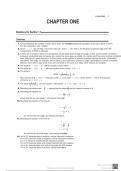
Chapter 01: Introduction to Pathophysiology
VanMeter and Hubert: Gould’s Pathophysiology for the Health Professions, 7th Edition
MULTIPLE CHOICE
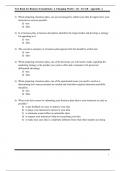
1. Which of the following would be the most likely cause of an
iatrogenic disease?
a. An inherited disorder
b. A combination of specific etiological factors
c. An unwanted effect of a prescribed drug
d. Prolonged exposure to toxic chemicals in the environment
ANS: C
2. The manifestations of a disease are best defined as the
a. subjective feelings of discomfort during a chronic illness.
b. signs and symptoms of a disease.
c. factors that precipitate an acute episode of a chronic illness.
d. early indicators of the prodromal stage of infection.
ANS: B
3. The best definition of the term prognosis is the
a. precipitating factors causing an acute episode.
b. number of remissions to be expected during the course of a chronic illness.
c. predicted outcome or likelihood of recovery from a specific disease.
d. exacerbations occurring during chronic illness.
ANS: C
4. Which of the following is considered a systemic sign of disease?
a. Swelling of the knee
b. Fever
c. Pain in the neck
d. Red rash on the face
ANS: B
5. Etiology is defined as the study of the
a. causes of a disease.
b. course of a disease.
c. expected complications of a disease.
d. manifestations of a disease.
ANS: A
6. A type of cellular adaptation in which there is a decrease in cell size is referred to as
a. hypertrophy.
b. metaplasia.
c. anaplasia.
d. atrophy.
ANS: D
Downloaded by Collins Mwaniki ()
, 1
7. A change in a tissue marked by cells that vary in size and shape and show increased mitotic
figures would be called
Downloaded by Collins Mwaniki ()
,TABLE OF CONTENTS
• Chapter 01: Introduction to Pathophysiology
• Chapter 02: Fluid, Electrolyte, and Acid-Base Imbalances
• Chapter 06: Infection
• Chapter 10: Blood and Circulatory System Disorders
• Chapter 15: Disorders of the Eye, Ear, and Other Sensory Organs
• Chapter 16: Endocrine System Disorders
• Chapter 18: Urinary System Disorders
• Chapter 20: Neoplasms and Cancer【5†sourcepter
Chapter 22: Complications due to Pregnancy
• Chapter 23: Complications due to Adolescence
• Chapter 25: Immobility and Associated Problems
• Chapter 28: Environmental Hazards and Associated Problems
TEST BANK FOR GOULD'S PATHOPHYSIOLOGY FOR THE HEALTH
PROFESSIONS 7TH EDITION VANMETER
Downloaded by Collins Mwaniki ()
, 1
Chapter 01: Introduction to Pathophysiology
VanMeter and Hubert: Gould’s Pathophysiology for the Health Professions, 7th Edition
MULTIPLE CHOICE
1. Which of the following would be the most likely cause of an
iatrogenic disease?
a. An inherited disorder
b. A combination of specific etiological factors
c. An unwanted effect of a prescribed drug
d. Prolonged exposure to toxic chemicals in the environment
ANS: C
2. The manifestations of a disease are best defined as the
a. subjective feelings of discomfort during a chronic illness.
b. signs and symptoms of a disease.
c. factors that precipitate an acute episode of a chronic illness.
d. early indicators of the prodromal stage of infection.
ANS: B
3. The best definition of the term prognosis is the
a. precipitating factors causing an acute episode.
b. number of remissions to be expected during the course of a chronic illness.
c. predicted outcome or likelihood of recovery from a specific disease.
d. exacerbations occurring during chronic illness.
ANS: C
4. Which of the following is considered a systemic sign of disease?
a. Swelling of the knee
b. Fever
c. Pain in the neck
d. Red rash on the face
ANS: B
5. Etiology is defined as the study of the
a. causes of a disease.
b. course of a disease.
c. expected complications of a disease.
d. manifestations of a disease.
ANS: A
6. A type of cellular adaptation in which there is a decrease in cell size is referred to as
a. hypertrophy.
b. metaplasia.
c. anaplasia.
d. atrophy.
ANS: D
Downloaded by Collins Mwaniki ()
, 1
7. A change in a tissue marked by cells that vary in size and shape and show increased mitotic
figures would be called
Downloaded by Collins Mwaniki ()