AC 2.2 Writing Frames
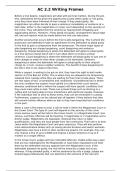
Before a trial begins, magistrates will deal with pre-trial matters. During the pre-
trial, defendants will be given the opportunity to plea either guilty or not guilty,
once they have been informed of their charge. If they plead guilty, the
magistrates can either decide to pass a sentence immediately or sentence at a
later date, either in the magistrates or crown court depending on the severity of
the crime. They will determine the severity by hearing both mitigating and
aggravating factors. However, if they plead not guilty, arrangements about legal
aid, bail and reports must be made before the trial can take place.
Another process that occurs before the trial is plea bargaining. This is where the
prosecutor and defendant make an agreement for the defendant to plead guilty
in the trial to gain a compromise from the prosecutor. The three major types of
plea bargaining are charge bargaining, count bargaining and sentence
bargaining. Charge bargaining is where the defendant will agree to plead guilty
to a less serious charge which will in turn allow them to receive a lesser
sentence. Count bargaining is where the defendant will plead guilty to just one of
their charges in order for their other charges to be dismissed. Sentence
bargaining is where the defendant will agree to plead guilty to their original
charge to, in turn, receive a lighter sentence. The benefit of plea bargaining for
the CJS is that it can reduce trial times.
While a suspect is waiting to be put on trial, they have the right to bail (under
section 4 of the Bail Act 1976). This is where they are allowed to be temporarily
released from custody while they are waiting for their trial to take place. There
are two types of bail: unconditional and conditional. Unconditional bail is where
the only condition the suspect must uphold is to attend their court session,
whereas conditional bail is where the suspect will have specific conditions that
they must meet while on bail. These can include things such as sticking to a
curfew and not being able to have interactions with particular people. However,
if the individual fails to stick to these terms, they can be remanded in custody.
Furthermore, suspects can be refused bail all together if they believe that they
will commit further offences while on bail or they have breached bail conditions
in the past.
When a case is first taken to trial, it will be held in either the Magistrates Court or
the Crown Court. The type of court will depend on the severity of the crime
(more serious cases will be held in the Crown Court). In a Magistrates Court, less
serious, summary offences will be heard by 3 magistrates or 2 magistrates and a
district judge. Magistrates are laypeople, meaning they have no legal
qualifications, and they are local people from the community. Their role is to hear
cases within the Magistrates Court and give sentences. They will also perform
more administrative duties such as issuing alcohol licenses and search warrants.
Magistrates also have a limit on their sentencing powers. For example, they can
only impose a fine of up to £5000 and impose a prison sentence of up to 6
months on a single offence.
In the Crown Court, judges will hear indictable offences, triable-either-way cases
that are too challenging for the Magistrates or have been requested to be held
there by the defendant and any appeals from the Magistrates Court. If the
defendant pleaded not guilty, the trial will be heard by a judge and a jury,
whereas, if they pleaded guilty, it will be sentenced by only a judge. Judges are
trained legal professionals that can determine the outcome of the trail and
Before a trial begins, magistrates will deal with pre-trial matters. During the pre-
trial, defendants will be given the opportunity to plea either guilty or not guilty,
once they have been informed of their charge. If they plead guilty, the
magistrates can either decide to pass a sentence immediately or sentence at a
later date, either in the magistrates or crown court depending on the severity of
the crime. They will determine the severity by hearing both mitigating and
aggravating factors. However, if they plead not guilty, arrangements about legal
aid, bail and reports must be made before the trial can take place.
Another process that occurs before the trial is plea bargaining. This is where the
prosecutor and defendant make an agreement for the defendant to plead guilty
in the trial to gain a compromise from the prosecutor. The three major types of
plea bargaining are charge bargaining, count bargaining and sentence
bargaining. Charge bargaining is where the defendant will agree to plead guilty
to a less serious charge which will in turn allow them to receive a lesser
sentence. Count bargaining is where the defendant will plead guilty to just one of
their charges in order for their other charges to be dismissed. Sentence
bargaining is where the defendant will agree to plead guilty to their original
charge to, in turn, receive a lighter sentence. The benefit of plea bargaining for
the CJS is that it can reduce trial times.
While a suspect is waiting to be put on trial, they have the right to bail (under
section 4 of the Bail Act 1976). This is where they are allowed to be temporarily
released from custody while they are waiting for their trial to take place. There
are two types of bail: unconditional and conditional. Unconditional bail is where
the only condition the suspect must uphold is to attend their court session,
whereas conditional bail is where the suspect will have specific conditions that
they must meet while on bail. These can include things such as sticking to a
curfew and not being able to have interactions with particular people. However,
if the individual fails to stick to these terms, they can be remanded in custody.
Furthermore, suspects can be refused bail all together if they believe that they
will commit further offences while on bail or they have breached bail conditions
in the past.
When a case is first taken to trial, it will be held in either the Magistrates Court or
the Crown Court. The type of court will depend on the severity of the crime
(more serious cases will be held in the Crown Court). In a Magistrates Court, less
serious, summary offences will be heard by 3 magistrates or 2 magistrates and a
district judge. Magistrates are laypeople, meaning they have no legal
qualifications, and they are local people from the community. Their role is to hear
cases within the Magistrates Court and give sentences. They will also perform
more administrative duties such as issuing alcohol licenses and search warrants.
Magistrates also have a limit on their sentencing powers. For example, they can
only impose a fine of up to £5000 and impose a prison sentence of up to 6
months on a single offence.
In the Crown Court, judges will hear indictable offences, triable-either-way cases
that are too challenging for the Magistrates or have been requested to be held
there by the defendant and any appeals from the Magistrates Court. If the
defendant pleaded not guilty, the trial will be heard by a judge and a jury,
whereas, if they pleaded guilty, it will be sentenced by only a judge. Judges are
trained legal professionals that can determine the outcome of the trail and