

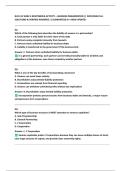
BUS 311 WEEK 4 MULTIMEDIA ACTIVITY – BUSINESS ORGANIZATION || 2025/2026 FULL
SOLUTIONS & VERIFIED ANSWERS || GUARANTEED A+ <NEW UPDATE>
Q1.
Which of the following best describes the liability of owners in a partnership?
A. Each partner is only liable for their share of the debt
B. Partners enjoy complete immunity from lawsuits
C. Partners share unlimited liability for business debts
D. Liability is transferred to the government if the business fails
Answer: C. Partners share unlimited liability for business debts
In a general partnership, each partner can be held personally liable for all debts and
obligations of the business, even those created by another partner.
Q2.
What is one of the key benefits of incorporating a business?
A. Owners can avoid taxes entirely
B. Shareholders enjoy limited liability protection
C. Corporations are exempt from financial reporting
D. Owners can withdraw unlimited profits without tax implications
Answer: B. Shareholders enjoy limited liability protection
Incorporation protects personal assets from business debts and lawsuits, a major reason
entrepreneurs form corporations.
Q3.
Which type of business structure is MOST attractive to venture capitalists?
A. Sole Proprietorship
B. General Partnership
C. C Corporation
D. Cooperative
Answer: C. C Corporation
Venture capitalists prefer C Corporations because they can issue multiple classes of stock,
raise large amounts of capital, and provide clear ownership rights.
,Q4.
What is one major drawback of a partnership compared to a corporation?
A. Lack of profit-sharing agreements
B. Limited access to credit markets
C. Unlimited liability for business debts
D. Inability to expand into other markets
Answer: C. Unlimited liability for business debts
Unlike corporations, partnerships expose owners to unlimited liability, making them
personally responsible for obligations.
Q5.
Which of the following is TRUE about nonprofit organizations?
A. They distribute profits directly to members
B. They are exempt from all taxes without exception
C. Their primary mission is service, not profit-making
D. They cannot receive donations or grants
Answer: C. Their primary mission is service, not profit-making
Nonprofits reinvest any surplus into their mission-driven activities instead of distributing
profits to owners or shareholders.
Q6.
Which legal structure allows profits to be distributed to shareholders but also provides
continuity beyond the life of the founder?
A. Sole Proprietorship
B. General Partnership
C. Corporation
D. Limited Liability Company
Answer: C. Corporation
Corporations have perpetual existence, meaning ownership can change but the entity
continues to operate independently.
Q7.
What is the main advantage of forming an S Corporation instead of a C Corporation?
, A. Unlimited classes of stock allowed
B. Pass-through taxation to shareholders
C. Exemption from employment laws
D. Unlimited number of shareholders
Answer: B. Pass-through taxation to shareholders
S Corporations avoid double taxation by allowing profits and losses to be passed directly
to shareholder tax returns.
Q8.
Which business form is most common among small, family-owned businesses due to its
flexibility?
A. Cooperative
B. Sole Proprietorship
C. C Corporation
D. Nonprofit Organization
Answer: B. Sole Proprietorship
Many small businesses begin as sole proprietorships because of their simplicity, low cost,
and independence in decision-making.
Q9.
Which statement BEST describes a joint venture?
A. It is a merger of two corporations into a single legal entity
B. It is a temporary partnership created for a specific project or goal
C. It refers to the buying of shares in a corporation by outsiders
D. It is a nonprofit formed to provide community services
Answer: B. It is a temporary partnership created for a specific project or goal
Joint ventures allow businesses to collaborate on opportunities while sharing risks and
resources without permanently merging.
Q10.
In which type of business do members typically receive dividends based on how much they
use the organization’s services rather than the amount of stock they own?
A. Partnership
SOLUTIONS & VERIFIED ANSWERS || GUARANTEED A+ <NEW UPDATE>
Q1.
Which of the following best describes the liability of owners in a partnership?
A. Each partner is only liable for their share of the debt
B. Partners enjoy complete immunity from lawsuits
C. Partners share unlimited liability for business debts
D. Liability is transferred to the government if the business fails
Answer: C. Partners share unlimited liability for business debts
In a general partnership, each partner can be held personally liable for all debts and
obligations of the business, even those created by another partner.
Q2.
What is one of the key benefits of incorporating a business?
A. Owners can avoid taxes entirely
B. Shareholders enjoy limited liability protection
C. Corporations are exempt from financial reporting
D. Owners can withdraw unlimited profits without tax implications
Answer: B. Shareholders enjoy limited liability protection
Incorporation protects personal assets from business debts and lawsuits, a major reason
entrepreneurs form corporations.
Q3.
Which type of business structure is MOST attractive to venture capitalists?
A. Sole Proprietorship
B. General Partnership
C. C Corporation
D. Cooperative
Answer: C. C Corporation
Venture capitalists prefer C Corporations because they can issue multiple classes of stock,
raise large amounts of capital, and provide clear ownership rights.
,Q4.
What is one major drawback of a partnership compared to a corporation?
A. Lack of profit-sharing agreements
B. Limited access to credit markets
C. Unlimited liability for business debts
D. Inability to expand into other markets
Answer: C. Unlimited liability for business debts
Unlike corporations, partnerships expose owners to unlimited liability, making them
personally responsible for obligations.
Q5.
Which of the following is TRUE about nonprofit organizations?
A. They distribute profits directly to members
B. They are exempt from all taxes without exception
C. Their primary mission is service, not profit-making
D. They cannot receive donations or grants
Answer: C. Their primary mission is service, not profit-making
Nonprofits reinvest any surplus into their mission-driven activities instead of distributing
profits to owners or shareholders.
Q6.
Which legal structure allows profits to be distributed to shareholders but also provides
continuity beyond the life of the founder?
A. Sole Proprietorship
B. General Partnership
C. Corporation
D. Limited Liability Company
Answer: C. Corporation
Corporations have perpetual existence, meaning ownership can change but the entity
continues to operate independently.
Q7.
What is the main advantage of forming an S Corporation instead of a C Corporation?
, A. Unlimited classes of stock allowed
B. Pass-through taxation to shareholders
C. Exemption from employment laws
D. Unlimited number of shareholders
Answer: B. Pass-through taxation to shareholders
S Corporations avoid double taxation by allowing profits and losses to be passed directly
to shareholder tax returns.
Q8.
Which business form is most common among small, family-owned businesses due to its
flexibility?
A. Cooperative
B. Sole Proprietorship
C. C Corporation
D. Nonprofit Organization
Answer: B. Sole Proprietorship
Many small businesses begin as sole proprietorships because of their simplicity, low cost,
and independence in decision-making.
Q9.
Which statement BEST describes a joint venture?
A. It is a merger of two corporations into a single legal entity
B. It is a temporary partnership created for a specific project or goal
C. It refers to the buying of shares in a corporation by outsiders
D. It is a nonprofit formed to provide community services
Answer: B. It is a temporary partnership created for a specific project or goal
Joint ventures allow businesses to collaborate on opportunities while sharing risks and
resources without permanently merging.
Q10.
In which type of business do members typically receive dividends based on how much they
use the organization’s services rather than the amount of stock they own?
A. Partnership

