LCP4804
Assignment 2 Semester 2 2025
2 2025
Unique Number:
Due date: September 2025
QUESTION 1 (2 ANSWERS PROVIDED)
1. Introduction
African Customary Law is a living, community-anchored system of norms that co-exists with
the common law and statute in South Africa’s plural legal order. It governs matters such as
family relations, succession, land tenure, and leadership, and it does so through practices
that communities accept as binding rules. The post-1994 Constitution recognises customary
law as an independent source of law, subject to the Bill of Rights, which requires courts and
officials to treat it with equal respect alongside other sources of law. Scholars emphasise
that understanding customary law demands attention to the social contexts in which people
actually live, and to the historical forces, colonialism and apartheid. that reshaped how it has
been recognised and applied by the state.1
2. Concepts and forms: living, official and state-transformed customary law
A central insight of contemporary scholarship and case law is that “customary law” is not
monolithic. There are (at least) two core forms. First, living customary law consists of the
DISCLAIMER & TERMS OF USE
Educational Aid: These study notes are intended to be used as educational resources and should not be seen as a
replacement for individual research, critical analysis, or professional consultation. Students are encouraged to perform
their own research and seek advice from their instructors or academic advisors for specific assignment guidelines.
Personal Responsibility: While every effort has been made to ensure the accuracy and reliability of the information in
these study notes, the seller does not guarantee the completeness or correctness of all content. The buyer is
responsible for verifying the accuracy of the information and exercising their own judgment when applying it to their
assignments.
Academic Integrity: It is essential for students to maintain academic integrity and follow their institution's policies
regarding plagiarism, citation, and referencing. These study notes should be used as learning tools and sources of
inspiration. Any direct reproduction of the content without proper citation and acknowledgment may be considered
academic misconduct.
Limited Liability: The seller shall not be liable for any direct or indirect damages, losses, or consequences arising from
the use of these notes. This includes, but is not limited to, poor academic performance, penalties, or any other negative
consequences resulting from the application or misuse of the information provided.
, For additional support +27 81 278 3372
QUESTION 1 (2 ANSWERS PROVIDED)
1. Introduction
African Customary Law is a living, community-anchored system of norms that co-
exists with the common law and statute in South Africa’s plural legal order. It governs
matters such as family relations, succession, land tenure, and leadership, and it
does so through practices that communities accept as binding rules. The post-1994
Constitution recognises customary law as an independent source of law, subject to
the Bill of Rights, which requires courts and officials to treat it with equal respect
alongside other sources of law. Scholars emphasise that understanding customary
law demands attention to the social contexts in which people actually live, and to the
historical forces, colonialism and apartheid. that reshaped how it has been
recognised and applied by the state.1
2. Concepts and forms: living, official and state-transformed customary law
A central insight of contemporary scholarship and case law is that “customary law” is
not monolithic. There are (at least) two core forms. First, living customary law
consists of the practices that communities currently observe and accept as binding; it
is dynamic and adapts as social conditions change.2 Courts have repeatedly
acknowledged this dynamism. In Alexkor Ltd v Richtersveld Community, the
Constitutional Court stressed that indigenous law is a normative system that has
evolved historically and must not be frozen in time, and that courts must be cautious
of reading it through foreign legal categories.3 In Bhe v Magistrate, Khayelitsha, the
Court contrasted living law with official rules that had been recorded or codified.4 And
in Mabena v Letsoalo, a High Court recognised that courts should give effect to
actually observed practices when consistent with constitutional values.5
1
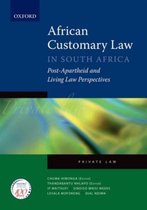
C Himonga and T Nhlapo (eds), African Customary Law in South Africa: Post-Apartheid and Living Law
Perspectives (Cape Town: Oxford University Press, 2023)
2
Ibid.
3
Alexkor Ltd v Richtersveld Community and Others 2004 (5) SA 460 (CC)
4
Bhe and Others v Magistrate, Khayelitsha and Others 2005 (1) SA 580 (CC).
5
Mabena v Letsoalo 1998 (2) SA 1068 (T).
, For additional support +27 81 278 3372
Second, official customary law is the version applied by state institutions—largely
shaped by statutes, codifications, academic texts, and court precedents.6 Under
colonial and apartheid rule, official customary law tended to be rigid and rule-bound,
often diverging from the flexible practices of communities. Because courts seek
certainty and rely on written sources, official customary law still often dominates
litigation even when it imperfectly reflects lived practice.
A third, helpful label in the literature is state “living” customary law: once a
community rule is drawn into adjudication, the judicial process (with doctrines like
precedent and interpretation) can transform it into a state-shaped rule. This
highlights a practical tension: courts are urged to apply living law, yet the very act of
adjudication can convert fluid practice into fixed doctrine. The Constitutional Court
has tried to manage this by requiring that customary rules be identified with
sensitivity to community practice and developed consistently with the Constitution.7
3. Colonial legacies and the making of “official” customary law
Customary law in the archives bears the marks of its colonial and apartheid past.
Administrators and courts treated indigenous law as a “fact” to be proved, relied on
interpreters and elders who held patriarchal power, and redirected norms through
devices like the repugnancy clause (invalidating customs “repugnant” to colonial
values). The drive for uniform written rules produced codifications and textbooks that
stabilised certain versions of custom, often privileging male authority in marriage,
succession and leadership.8 The result was an invented or ossified official customary
law that sometimes differed markedly from everyday practices.
South African courts have warned against uncritical reliance on these older sources.
In Alexkor, the Court cautioned that textbooks and cases from the pre-democratic
era may reflect the political and administrative context of their time, and that courts
must avoid viewing indigenous law through foreign conceptual prisms. This does not
mean discarding the record; it means reading it critically, corroborating with evidence
6
C Rautenbach et al., Introduction to Legal Pluralism in South Africa (latest ed.).
7
Ex parte Chairperson of the Constitutional Assembly: In re Certification of the Constitution of the Republic of
South Africa, 1996 1996 (4) SA 744 (CC).
8
C Rautenbach et al., Introduction to Legal Pluralism in South Africa (latest ed.).
Assignment 2 Semester 2 2025
2 2025
Unique Number:
Due date: September 2025
QUESTION 1 (2 ANSWERS PROVIDED)
1. Introduction
African Customary Law is a living, community-anchored system of norms that co-exists with
the common law and statute in South Africa’s plural legal order. It governs matters such as
family relations, succession, land tenure, and leadership, and it does so through practices
that communities accept as binding rules. The post-1994 Constitution recognises customary
law as an independent source of law, subject to the Bill of Rights, which requires courts and
officials to treat it with equal respect alongside other sources of law. Scholars emphasise
that understanding customary law demands attention to the social contexts in which people
actually live, and to the historical forces, colonialism and apartheid. that reshaped how it has
been recognised and applied by the state.1
2. Concepts and forms: living, official and state-transformed customary law
A central insight of contemporary scholarship and case law is that “customary law” is not
monolithic. There are (at least) two core forms. First, living customary law consists of the
DISCLAIMER & TERMS OF USE
Educational Aid: These study notes are intended to be used as educational resources and should not be seen as a
replacement for individual research, critical analysis, or professional consultation. Students are encouraged to perform
their own research and seek advice from their instructors or academic advisors for specific assignment guidelines.
Personal Responsibility: While every effort has been made to ensure the accuracy and reliability of the information in
these study notes, the seller does not guarantee the completeness or correctness of all content. The buyer is
responsible for verifying the accuracy of the information and exercising their own judgment when applying it to their
assignments.
Academic Integrity: It is essential for students to maintain academic integrity and follow their institution's policies
regarding plagiarism, citation, and referencing. These study notes should be used as learning tools and sources of
inspiration. Any direct reproduction of the content without proper citation and acknowledgment may be considered
academic misconduct.
Limited Liability: The seller shall not be liable for any direct or indirect damages, losses, or consequences arising from
the use of these notes. This includes, but is not limited to, poor academic performance, penalties, or any other negative
consequences resulting from the application or misuse of the information provided.
, For additional support +27 81 278 3372
QUESTION 1 (2 ANSWERS PROVIDED)
1. Introduction
African Customary Law is a living, community-anchored system of norms that co-
exists with the common law and statute in South Africa’s plural legal order. It governs
matters such as family relations, succession, land tenure, and leadership, and it
does so through practices that communities accept as binding rules. The post-1994
Constitution recognises customary law as an independent source of law, subject to
the Bill of Rights, which requires courts and officials to treat it with equal respect
alongside other sources of law. Scholars emphasise that understanding customary
law demands attention to the social contexts in which people actually live, and to the
historical forces, colonialism and apartheid. that reshaped how it has been
recognised and applied by the state.1
2. Concepts and forms: living, official and state-transformed customary law
A central insight of contemporary scholarship and case law is that “customary law” is
not monolithic. There are (at least) two core forms. First, living customary law
consists of the practices that communities currently observe and accept as binding; it
is dynamic and adapts as social conditions change.2 Courts have repeatedly
acknowledged this dynamism. In Alexkor Ltd v Richtersveld Community, the
Constitutional Court stressed that indigenous law is a normative system that has
evolved historically and must not be frozen in time, and that courts must be cautious
of reading it through foreign legal categories.3 In Bhe v Magistrate, Khayelitsha, the
Court contrasted living law with official rules that had been recorded or codified.4 And
in Mabena v Letsoalo, a High Court recognised that courts should give effect to
actually observed practices when consistent with constitutional values.5
1
C Himonga and T Nhlapo (eds), African Customary Law in South Africa: Post-Apartheid and Living Law
Perspectives (Cape Town: Oxford University Press, 2023)
2
Ibid.
3
Alexkor Ltd v Richtersveld Community and Others 2004 (5) SA 460 (CC)
4
Bhe and Others v Magistrate, Khayelitsha and Others 2005 (1) SA 580 (CC).
5
Mabena v Letsoalo 1998 (2) SA 1068 (T).
, For additional support +27 81 278 3372
Second, official customary law is the version applied by state institutions—largely
shaped by statutes, codifications, academic texts, and court precedents.6 Under
colonial and apartheid rule, official customary law tended to be rigid and rule-bound,
often diverging from the flexible practices of communities. Because courts seek
certainty and rely on written sources, official customary law still often dominates
litigation even when it imperfectly reflects lived practice.
A third, helpful label in the literature is state “living” customary law: once a
community rule is drawn into adjudication, the judicial process (with doctrines like
precedent and interpretation) can transform it into a state-shaped rule. This
highlights a practical tension: courts are urged to apply living law, yet the very act of
adjudication can convert fluid practice into fixed doctrine. The Constitutional Court
has tried to manage this by requiring that customary rules be identified with
sensitivity to community practice and developed consistently with the Constitution.7
3. Colonial legacies and the making of “official” customary law
Customary law in the archives bears the marks of its colonial and apartheid past.
Administrators and courts treated indigenous law as a “fact” to be proved, relied on
interpreters and elders who held patriarchal power, and redirected norms through
devices like the repugnancy clause (invalidating customs “repugnant” to colonial
values). The drive for uniform written rules produced codifications and textbooks that
stabilised certain versions of custom, often privileging male authority in marriage,
succession and leadership.8 The result was an invented or ossified official customary
law that sometimes differed markedly from everyday practices.
South African courts have warned against uncritical reliance on these older sources.
In Alexkor, the Court cautioned that textbooks and cases from the pre-democratic
era may reflect the political and administrative context of their time, and that courts
must avoid viewing indigenous law through foreign conceptual prisms. This does not
mean discarding the record; it means reading it critically, corroborating with evidence
6
C Rautenbach et al., Introduction to Legal Pluralism in South Africa (latest ed.).
7
Ex parte Chairperson of the Constitutional Assembly: In re Certification of the Constitution of the Republic of
South Africa, 1996 1996 (4) SA 744 (CC).
8
C Rautenbach et al., Introduction to Legal Pluralism in South Africa (latest ed.).