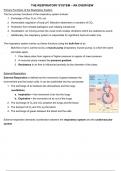
THE RESPIRATORY SYSTEM – AN OVERVIEW
Primary Functions of the Respiratory System:
The four primary functions of the respiratory system include:
1. Exchange of Gas: O2 in, CO2 out.
2. Homeostatic regulation of body pH: Selective retainment or excretion of CO2
3. Protection from inhaled pathogens and irritating substances
4. Vocalization: air moving across the vocal cords creates vibrations which are realized as sound.
- Additionally, the respiratory system is responsible for significant heat and water loss
The respiratory system carries out these functions using the bulk flow of air.
- Bulk flow of air is carried out by a muscle pump (respiratory muscle pump), to which the same
principles apply:
1. Flow takes place from regions of higher pressure to regions of lower pressure
2. A muscular pump creates the pressure gradient.
3. Resistance to air flow is influenced primarily by the diameter of the tubes.
External Respiration:
External Respiration is defined as the movement of gases between the
environment and the body's cells. It can be subdivided into four processes:
1. The exchange of air between the atmosphere and the lungs
(ventilation).
a. Inspiration = the movement of air into the lungs
b. Expiration = the movement of air out of the lungs
2. The exchange of O2 and CO2 between the lungs and the blood.
3. The transport of O2 and CO2 by the blood.
4. The exchange of gases between the blood and the cells.
External respiration demands coordination between the respiratory system and the cardiovascular
system.
, RESPIRATORY SYSTEM – ANATOMY
The respiratory system is structured as follows:
1. The conducting system of airways: Connect the inside
environment to the outside environment
2. The alveoli: Series of interconnected sacs and associated
pulmonary capillaries. Form the exchange surface.
3. Bones and muscles of the thorax: Assist in ventilation.
The respiratory system can be divided into the upper respiratory
tract and lower respiratory tract (“thoracic portion”). →
- Upper respiratory tract = mouth, nasal cavity, pharynx, and
larynx.
- Lower respiratory tract = trachea, two primary bronchi,
branches of bronchi, and lungs.
The Thorax
The thorax is a cavity bound by bones of the spine, the rib cage,
and their associated muscles. Together, this forms the thoracic
cage.
- The ribs and spine form the top of the cage.
- The diaphragm forms the floor.
The thoracic cage supports breathing through two sets of muscles:
1. Intercostal muscles: Connect 12 pairs of ribs.
2. Sternoclemoidamastoids and Scalenes: run from the
head and neck to the sternum and first two ribs.
The thorax is a sealed container filled with three membranous bags: →
1. Pericardial sac
2. Left pleural sac
3. Right pleural sac
, The Lungs:
Each lung is surrounded by a pleural sac.
- Pleural sacs are double membraned. One membrane lined
the inside of the thorax and the other membrane covers
the outside of the lungs.
- Opposing layers of pleural membrane are held together by
pleural fluid (25-30mL).
1. Pleural fluid promotes sliding of opposing
membranes during ventilation.
2. Pleural fluid holds lungs tight against the thoracic
wall.
The lungs are connected to the outside environment via the
following airways from the outside environment to the URT to the
LRT.
- Air transitions from the outside environment to the mouth and nose → pharynx (throat) → larynx →
trachea → primary bronchi (div. 1) → bronchi (div. 2-11) → bronchioles (div. 12-23) → alveoli.
- As the total cross sectional area of the airways increases… velocity of air flow decreases.
The Ciliated Epithelium:
During breathing, the upper airways and bronchi (1) warm the air, (2) humidify the air, and (3) filter the air.
- The air is warmed to 37ºC by the body’s heat.
- The air is humidified to 100% by the mucosal lining.
Primary Functions of the Respiratory System:
The four primary functions of the respiratory system include:
1. Exchange of Gas: O2 in, CO2 out.
2. Homeostatic regulation of body pH: Selective retainment or excretion of CO2
3. Protection from inhaled pathogens and irritating substances
4. Vocalization: air moving across the vocal cords creates vibrations which are realized as sound.
- Additionally, the respiratory system is responsible for significant heat and water loss
The respiratory system carries out these functions using the bulk flow of air.
- Bulk flow of air is carried out by a muscle pump (respiratory muscle pump), to which the same
principles apply:
1. Flow takes place from regions of higher pressure to regions of lower pressure
2. A muscular pump creates the pressure gradient.
3. Resistance to air flow is influenced primarily by the diameter of the tubes.
External Respiration:
External Respiration is defined as the movement of gases between the
environment and the body's cells. It can be subdivided into four processes:
1. The exchange of air between the atmosphere and the lungs
(ventilation).
a. Inspiration = the movement of air into the lungs
b. Expiration = the movement of air out of the lungs
2. The exchange of O2 and CO2 between the lungs and the blood.
3. The transport of O2 and CO2 by the blood.
4. The exchange of gases between the blood and the cells.
External respiration demands coordination between the respiratory system and the cardiovascular
system.
, RESPIRATORY SYSTEM – ANATOMY
The respiratory system is structured as follows:
1. The conducting system of airways: Connect the inside
environment to the outside environment
2. The alveoli: Series of interconnected sacs and associated
pulmonary capillaries. Form the exchange surface.
3. Bones and muscles of the thorax: Assist in ventilation.
The respiratory system can be divided into the upper respiratory
tract and lower respiratory tract (“thoracic portion”). →
- Upper respiratory tract = mouth, nasal cavity, pharynx, and
larynx.
- Lower respiratory tract = trachea, two primary bronchi,
branches of bronchi, and lungs.
The Thorax
The thorax is a cavity bound by bones of the spine, the rib cage,
and their associated muscles. Together, this forms the thoracic
cage.
- The ribs and spine form the top of the cage.
- The diaphragm forms the floor.
The thoracic cage supports breathing through two sets of muscles:
1. Intercostal muscles: Connect 12 pairs of ribs.
2. Sternoclemoidamastoids and Scalenes: run from the
head and neck to the sternum and first two ribs.
The thorax is a sealed container filled with three membranous bags: →
1. Pericardial sac
2. Left pleural sac
3. Right pleural sac
, The Lungs:
Each lung is surrounded by a pleural sac.
- Pleural sacs are double membraned. One membrane lined
the inside of the thorax and the other membrane covers
the outside of the lungs.
- Opposing layers of pleural membrane are held together by
pleural fluid (25-30mL).
1. Pleural fluid promotes sliding of opposing
membranes during ventilation.
2. Pleural fluid holds lungs tight against the thoracic
wall.
The lungs are connected to the outside environment via the
following airways from the outside environment to the URT to the
LRT.
- Air transitions from the outside environment to the mouth and nose → pharynx (throat) → larynx →
trachea → primary bronchi (div. 1) → bronchi (div. 2-11) → bronchioles (div. 12-23) → alveoli.
- As the total cross sectional area of the airways increases… velocity of air flow decreases.
The Ciliated Epithelium:
During breathing, the upper airways and bronchi (1) warm the air, (2) humidify the air, and (3) filter the air.
- The air is warmed to 37ºC by the body’s heat.
- The air is humidified to 100% by the mucosal lining.