lOMoAR cPSD| 47061011
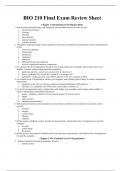
BIO 210 Final Exam Review Sheet
Chapter 1 Introduction to the Human Body
1. Define anatomy & physiology, and distinguish sub-disciplines based on focus of study.
1. microscopic anatomy
2. cytology
3. histology
4. gross anatomy
5. regional anatomy
6. systemic anatomy
2. Throughout studying biology, relate integration of structures, mechanisms, and functions to basic characteristics
of life.
1. control or regulation
2. homeostasis
3. metabolism
4. catabolism
5. anabolism
6. differentiation for specialization
7. levels of organization (relative complexity).
3. For chemical levels of organization (living or non-living): define, give examples, and evaluate roles in the
stability of matter and providing functional complexity.
1. subatomic particles - proton (p+), neutron (n0), & electron (e-)
2. atoms - hydrogen (H), oxygen (O), carbon (C), & nitrogen (N)
3. molecules - oxygen gas (O2), water (H2O), glucose (C6H12O6), a protein, & DNA.
4. For cellular levels of organization: define, give examples, and evaluate relative ability to achieve independent
homeostasis.
1. organelles in the cell (i.e., Plasma membrane/nucleus/Endoplasmic Reticulum/etc…)
2. cell types (i.e., epithelial cells, blood cells, muscle fibers, neurons, etc…)
5. For levels of organization more complex than cells, define, give examples, and evaluate relative ability to
achieve independent extracellular homeostasis.
1. tissues - epithelia, connective tissues, muscle tissues, & nervous tissues
2. organs
3. organ systems
4. organism (multicellular).
6. Define general control system components, and use them to identify roles of structures in specific control
systems.
1. stimulus
2. receptor
3. control center
4. effector
5. response
7. Define negative feedback control, describe its characteristics, and identify roles of components for specific
examples.
1. set point
2. normal range
3. fluctuation
8. Define positive and negative feedback control, describe their characteristics, and identify roles of components
for specific examples.
Chapter 2 The Chemical Level of Organization
9. Define or describe the parts & properties of atoms.
1. atomic nucleus
.
, lOMoAR cPSD| 47061011
2. proton (p+)
3. neutron (n0)
4. electron (e-)
5. potential energy holding an atom together
i. nuclear energy
ii. chemical energy
10. Describe chemical bonds and relate then to classes of molecules.
1. ionic bonds and ionic compounds (salts)
2. polar covalent bonds and polar molecules
3. non-polar covalent bonds and non-polar molecules
i. non-polar elements (H2, O2, N2, etc.)
ii. non-polar compounds (e.g., CO2, CH4, & other hydrocarbons);
4. polar compounds (H2O, C6H12O6 (glucose), & other carbohydrates).
11. Relate physical properties of water to its functional mechanisms.
1. dissolve hydrophilic molecules to form solutions
2. separate from hydrophobic molecules to form bubbles or droplets
3. cause molecules with both hydrophilic & hydrophobic parts to form micelles or bilayers
4. pressure gradients→ flow
5. concentration gradients→ diffusion
12. Explain how water’s chemical reactivity causes pH
1. recognize relative pH values of acidic, neutral (pH 7), & basic solutions
2. chemical equilibrium at pH 7 107 H2O ↔ H3O+ + OH- 3. acids – e.g. hydrochloric acid (HCl)
4. bases – e.g. ammonia (NH3)
5. buffers – e.g. bicarbonate (HCO3- ) buffers extracellular (averages pH 7.4)
13. Use chemical equations to describe the roles for ATP.
1. cellular respiration of glucose: C6H12O6 + 6O2 → 6CO2+ 6H2O + energy (to make ATP)
2. ATP synthesis: ADP + Pi + energy → ATP + H2O
3. ATP hydrolysis: ATP + H2O → ADP + Pi + energy)
14. State major salts in extracellular fluid & cytosol, and state functional roles for the dissociated ions. 1.
potassium phosphate (ions: K+ & HPO42-)
2. sodium chloride (ions: Na+ & Cl-).
15. Describe structures and roles for alcohols and lipids.
1. triglycerides
2. phospholipids
3. cholesterol
4. steroid hormones (e.g., estrogen & testosterone)
5. fat soluble vitamins (e.g., vitamin D)
16. Describe structures and roles for carbohydrates
1. monosaccharides, e.g., glucose
2. disaccharides, e.g., lactose
3. polysaccharides, e.g., glycogen
17. Describe structures and roles for nucleotides and nucleic acids.
1. Nucleotides, e.g., ATP
2. DNA (double helix)
3. RNA (three major types: rRNA, mRNA, & tRNA).
18. Describe the role of amino acids in protein structure and define denaturation.
Chapter 3 The Cellular Level of Organization
19. Give examples for different types of proteins and their roles in cells.
1. enzymes (e.g., digestive enzymes & DNA polymerase)
2. fiber proteins (e.g., collagen & keratin)
3. contractile cytoskeletal proteins (e.g., myosin & actin)
4. membrane transport proteins (e.g., glucose transporter)
5. peptide hormones (e.g., insulin & oxytocin)
.
BIO 210 Final Exam Review Sheet
Chapter 1 Introduction to the Human Body
1. Define anatomy & physiology, and distinguish sub-disciplines based on focus of study.
1. microscopic anatomy
2. cytology
3. histology
4. gross anatomy
5. regional anatomy
6. systemic anatomy
2. Throughout studying biology, relate integration of structures, mechanisms, and functions to basic characteristics
of life.
1. control or regulation
2. homeostasis
3. metabolism
4. catabolism
5. anabolism
6. differentiation for specialization
7. levels of organization (relative complexity).
3. For chemical levels of organization (living or non-living): define, give examples, and evaluate roles in the
stability of matter and providing functional complexity.
1. subatomic particles - proton (p+), neutron (n0), & electron (e-)
2. atoms - hydrogen (H), oxygen (O), carbon (C), & nitrogen (N)
3. molecules - oxygen gas (O2), water (H2O), glucose (C6H12O6), a protein, & DNA.
4. For cellular levels of organization: define, give examples, and evaluate relative ability to achieve independent
homeostasis.
1. organelles in the cell (i.e., Plasma membrane/nucleus/Endoplasmic Reticulum/etc…)
2. cell types (i.e., epithelial cells, blood cells, muscle fibers, neurons, etc…)
5. For levels of organization more complex than cells, define, give examples, and evaluate relative ability to
achieve independent extracellular homeostasis.
1. tissues - epithelia, connective tissues, muscle tissues, & nervous tissues
2. organs
3. organ systems
4. organism (multicellular).
6. Define general control system components, and use them to identify roles of structures in specific control
systems.
1. stimulus
2. receptor
3. control center
4. effector
5. response
7. Define negative feedback control, describe its characteristics, and identify roles of components for specific
examples.
1. set point
2. normal range
3. fluctuation
8. Define positive and negative feedback control, describe their characteristics, and identify roles of components
for specific examples.
Chapter 2 The Chemical Level of Organization
9. Define or describe the parts & properties of atoms.
1. atomic nucleus
.
, lOMoAR cPSD| 47061011
2. proton (p+)
3. neutron (n0)
4. electron (e-)
5. potential energy holding an atom together
i. nuclear energy
ii. chemical energy
10. Describe chemical bonds and relate then to classes of molecules.
1. ionic bonds and ionic compounds (salts)
2. polar covalent bonds and polar molecules
3. non-polar covalent bonds and non-polar molecules
i. non-polar elements (H2, O2, N2, etc.)
ii. non-polar compounds (e.g., CO2, CH4, & other hydrocarbons);
4. polar compounds (H2O, C6H12O6 (glucose), & other carbohydrates).
11. Relate physical properties of water to its functional mechanisms.
1. dissolve hydrophilic molecules to form solutions
2. separate from hydrophobic molecules to form bubbles or droplets
3. cause molecules with both hydrophilic & hydrophobic parts to form micelles or bilayers
4. pressure gradients→ flow
5. concentration gradients→ diffusion
12. Explain how water’s chemical reactivity causes pH
1. recognize relative pH values of acidic, neutral (pH 7), & basic solutions
2. chemical equilibrium at pH 7 107 H2O ↔ H3O+ + OH- 3. acids – e.g. hydrochloric acid (HCl)
4. bases – e.g. ammonia (NH3)
5. buffers – e.g. bicarbonate (HCO3- ) buffers extracellular (averages pH 7.4)
13. Use chemical equations to describe the roles for ATP.
1. cellular respiration of glucose: C6H12O6 + 6O2 → 6CO2+ 6H2O + energy (to make ATP)
2. ATP synthesis: ADP + Pi + energy → ATP + H2O
3. ATP hydrolysis: ATP + H2O → ADP + Pi + energy)
14. State major salts in extracellular fluid & cytosol, and state functional roles for the dissociated ions. 1.
potassium phosphate (ions: K+ & HPO42-)
2. sodium chloride (ions: Na+ & Cl-).
15. Describe structures and roles for alcohols and lipids.
1. triglycerides
2. phospholipids
3. cholesterol
4. steroid hormones (e.g., estrogen & testosterone)
5. fat soluble vitamins (e.g., vitamin D)
16. Describe structures and roles for carbohydrates
1. monosaccharides, e.g., glucose
2. disaccharides, e.g., lactose
3. polysaccharides, e.g., glycogen
17. Describe structures and roles for nucleotides and nucleic acids.
1. Nucleotides, e.g., ATP
2. DNA (double helix)
3. RNA (three major types: rRNA, mRNA, & tRNA).
18. Describe the role of amino acids in protein structure and define denaturation.
Chapter 3 The Cellular Level of Organization
19. Give examples for different types of proteins and their roles in cells.
1. enzymes (e.g., digestive enzymes & DNA polymerase)
2. fiber proteins (e.g., collagen & keratin)
3. contractile cytoskeletal proteins (e.g., myosin & actin)
4. membrane transport proteins (e.g., glucose transporter)
5. peptide hormones (e.g., insulin & oxytocin)
.