8/13/25, 6:02 PM NUR 3065 exam 3
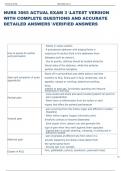
NURS 3065 ACTUAL EXAM 3 \LATEST VERSION
WITH COMPLETE QUESTIONS AND ACCURATE
DETAILED ANSWERS \VERIFIED ANSWERS
- Patientin supine position.
- A protuberant abdomen with bulging flanks is
How to assess for ascites suspicious for ascites (fluid in the abdomen from
using percussion
diseases such as cancer).
- Due to gravity, dullness should be located along the
lateral sides of the abdomen, while the anterior
portion should be tympanic
Starts off in periumbilical area (belly button) and then
Signs and symptoms of acute transfers to RLQ. Sharp pain in RLQ, tenderness, loss of
appendicitis
appetite, nausea or vomiting, abdominal swelling,
fever,
inability to pass gas, Involuntary guarding and rebound
tenderness in the RLQ
- more severe and sharp and easily located (patient can point to
Parietal pain pain) (appendicitis)
- When there is inflammation from the hollow or solid
organs that affect the parietal peritoneum
- painoccurring from the hollow organ and difficult to localize
(hepatitis)
- When hollow organs (vague) (stomach,colon)
Visceral pain forcefully contract or become distended
- Solid organs (liver, spleen) can also generate this
type of pain when they swell against their capsules
- Visceral pain is usually gnawing, cramping, or aching and is
difficult to localize
- pain originates at different site from where it is
Referred pain actually happening but shares innervation from
the same spinal level
- Rovsing sign is an example
liver, gallbladder, pylorus, duodenum, pancreatic head,
Organs in RUQ
1/6
, 8/13/25, 6:02 PM NUR 3065 exam 3
right adrenal gland, right upper pole of kidney,
hepatic flexure
left lobe of liver, spleen, stomach, body of pancreas,
Organs in LUQ
left adrenal gland, upper pole of left kidney
left kidney, colon (only organ that does not crossover to
Organs in LLQ the other lower quadrant), descending colon, left
ovary, left fallopian tube, left ureter, left spermatic
cord,
uterus (if enlarged), bladder (if enlarged)
right kidney, cecum, appendix, ascending colon, right
Organs in RLQ
ovary, right fallopian tube, right ureter, right
spermatic cord, uterus (if enlarged), bladder (if
enlarged)
Using the left hand to support the back at the level of
the 11th and 12th rib, the right hand presses on the
abdomen inferior to the border of the liver and
continues to palpate superiorly until the liver border is
How to assess the liver-
hooking technique palpated. The "hooking technique" can be helpful when
a patient is obese. Place both hands, side by side, on
the right
abdomen below the border of liver dullness. You should be
standing by their
shoulders, looking towards their feet. Ask the patient to
take a deep breath. Press in with the fingers and go
up toward the costal margin. The liver edge should
be
palpable under the finger pads of both hands
Same technique for the liver but on the left side.
Shouldn't be able to palpate unless enlarged. Percuss
How to assess the spleen
the lowest interspace in the left anterior axillary line,
then have the patient take a deep breath and percuss
again.Palpate the spleen on the left side, with the left
hand supporting the back and the right hand
palpating the abdomen
Put hand over costovertebral angle and slightly hit hand
on your own hand on each side of back for kidney
How to assess the kidneys tenderness. Palpate over the suprapubic area for
bladder tenderness.
2/6
NURS 3065 ACTUAL EXAM 3 \LATEST VERSION
WITH COMPLETE QUESTIONS AND ACCURATE
DETAILED ANSWERS \VERIFIED ANSWERS
- Patientin supine position.
- A protuberant abdomen with bulging flanks is
How to assess for ascites suspicious for ascites (fluid in the abdomen from
using percussion
diseases such as cancer).
- Due to gravity, dullness should be located along the
lateral sides of the abdomen, while the anterior
portion should be tympanic
Starts off in periumbilical area (belly button) and then
Signs and symptoms of acute transfers to RLQ. Sharp pain in RLQ, tenderness, loss of
appendicitis
appetite, nausea or vomiting, abdominal swelling,
fever,
inability to pass gas, Involuntary guarding and rebound
tenderness in the RLQ
- more severe and sharp and easily located (patient can point to
Parietal pain pain) (appendicitis)
- When there is inflammation from the hollow or solid
organs that affect the parietal peritoneum
- painoccurring from the hollow organ and difficult to localize
(hepatitis)
- When hollow organs (vague) (stomach,colon)
Visceral pain forcefully contract or become distended
- Solid organs (liver, spleen) can also generate this
type of pain when they swell against their capsules
- Visceral pain is usually gnawing, cramping, or aching and is
difficult to localize
- pain originates at different site from where it is
Referred pain actually happening but shares innervation from
the same spinal level
- Rovsing sign is an example
liver, gallbladder, pylorus, duodenum, pancreatic head,
Organs in RUQ
1/6
, 8/13/25, 6:02 PM NUR 3065 exam 3
right adrenal gland, right upper pole of kidney,
hepatic flexure
left lobe of liver, spleen, stomach, body of pancreas,
Organs in LUQ
left adrenal gland, upper pole of left kidney
left kidney, colon (only organ that does not crossover to
Organs in LLQ the other lower quadrant), descending colon, left
ovary, left fallopian tube, left ureter, left spermatic
cord,
uterus (if enlarged), bladder (if enlarged)
right kidney, cecum, appendix, ascending colon, right
Organs in RLQ
ovary, right fallopian tube, right ureter, right
spermatic cord, uterus (if enlarged), bladder (if
enlarged)
Using the left hand to support the back at the level of
the 11th and 12th rib, the right hand presses on the
abdomen inferior to the border of the liver and
continues to palpate superiorly until the liver border is
How to assess the liver-
hooking technique palpated. The "hooking technique" can be helpful when
a patient is obese. Place both hands, side by side, on
the right
abdomen below the border of liver dullness. You should be
standing by their
shoulders, looking towards their feet. Ask the patient to
take a deep breath. Press in with the fingers and go
up toward the costal margin. The liver edge should
be
palpable under the finger pads of both hands
Same technique for the liver but on the left side.
Shouldn't be able to palpate unless enlarged. Percuss
How to assess the spleen
the lowest interspace in the left anterior axillary line,
then have the patient take a deep breath and percuss
again.Palpate the spleen on the left side, with the left
hand supporting the back and the right hand
palpating the abdomen
Put hand over costovertebral angle and slightly hit hand
on your own hand on each side of back for kidney
How to assess the kidneys tenderness. Palpate over the suprapubic area for
bladder tenderness.
2/6