

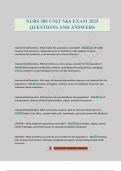
NURS 385 UNIT 5&6 EXAM 2025
QUESTIONS AND ANSWERS
Impoverished/homeless- What makes this population vulnerable? - ANS Lack of stable
housing, food insecurity, inadequate access to healthcare, high exposure to harsh
environmental conditions, and increased risk of chronic illnesses.
Impoverished/homeless- What priorities as a nurse do you consider for this population? -
ANS Addressing basic needs (food, shelter), connecting with social services, managing
chronic conditions, and providing preventive care like vaccinations.
Impoverished/homeless- Why types of education/prevention measures are important for this
population? - ANS Education on hygiene, nutrition, access to healthcare resources, and
substance abuse prevention.
Impoverished/homeless- What barriers do you identify for this population? - ANS Lack of
transportation, mistrust of healthcare providers, stigma, and lack of insurance.
Impoverished/homeless- What community resources exist to overcome these barriers? -
ANS Shelters, free clinics, mobile health units, food banks, and social services like Medicaid.
LGBTQIA+- What makes this population vulnerable? - ANS Discrimination, stigma, mental
health challenges, and limited access to culturally competent healthcare.
LGBTQIA+- What priorities as a nurse do you consider for this population? - ANS Creating a
safe, inclusive environment, offering nonjudgmental support, and providing mental health
resources.
1 @COPYRIGHT THEBRIGHT 2025/2026
, LGBTQIA+- What types of education/prevention measures are important for this population? -
ANS Education on safe sex practices, mental health resources, and awareness of gender-
affirming healthcare services.
LGBTQIA+- What barriers do you identify for this population? - ANS Fear of discrimination,
lack of culturally competent providers, and limited access to LGBTQIA+ specific resources.
LGBTQIA+- What community resources exist to overcome these barriers? - ANS LGBTQIA+
community centers, hotlines, support groups, and specialized healthcare providers.
Veterans- What makes this population vulnerable? - ANS High rates of PTSD, substance
abuse, homelessness, and difficulty transitioning to civilian life.
Veterans- What priorities as a nurse do you consider for this population? - ANS Mental
health assessments, connecting with VA services, supporting transitions to civilian care, and
addressing chronic pain management.
Veterans- What types of education/prevention measures are important for this population? -
ANS Mental health awareness, support for substance abuse recovery, and education on
navigating VA benefits.
Veterans- What barriers do you identify for this population? - ANS Stigma surrounding
mental health, difficulty accessing VA resources, and financial instability.
Veterans- What community resources exist to overcome these barriers? - ANS VA hospitals,
veteran support groups, job training programs, and mental health hotlines.
Rural Populations- What makes this population vulnerable? - ANS Geographic isolation, lack
of healthcare facilities, limited transportation, and shortage of healthcare providers.
2 @COPYRIGHT THEBRIGHT 2025/2026
QUESTIONS AND ANSWERS
Impoverished/homeless- What makes this population vulnerable? - ANS Lack of stable
housing, food insecurity, inadequate access to healthcare, high exposure to harsh
environmental conditions, and increased risk of chronic illnesses.
Impoverished/homeless- What priorities as a nurse do you consider for this population? -
ANS Addressing basic needs (food, shelter), connecting with social services, managing
chronic conditions, and providing preventive care like vaccinations.
Impoverished/homeless- Why types of education/prevention measures are important for this
population? - ANS Education on hygiene, nutrition, access to healthcare resources, and
substance abuse prevention.
Impoverished/homeless- What barriers do you identify for this population? - ANS Lack of
transportation, mistrust of healthcare providers, stigma, and lack of insurance.
Impoverished/homeless- What community resources exist to overcome these barriers? -
ANS Shelters, free clinics, mobile health units, food banks, and social services like Medicaid.
LGBTQIA+- What makes this population vulnerable? - ANS Discrimination, stigma, mental
health challenges, and limited access to culturally competent healthcare.
LGBTQIA+- What priorities as a nurse do you consider for this population? - ANS Creating a
safe, inclusive environment, offering nonjudgmental support, and providing mental health
resources.
1 @COPYRIGHT THEBRIGHT 2025/2026
, LGBTQIA+- What types of education/prevention measures are important for this population? -
ANS Education on safe sex practices, mental health resources, and awareness of gender-
affirming healthcare services.
LGBTQIA+- What barriers do you identify for this population? - ANS Fear of discrimination,
lack of culturally competent providers, and limited access to LGBTQIA+ specific resources.
LGBTQIA+- What community resources exist to overcome these barriers? - ANS LGBTQIA+
community centers, hotlines, support groups, and specialized healthcare providers.
Veterans- What makes this population vulnerable? - ANS High rates of PTSD, substance
abuse, homelessness, and difficulty transitioning to civilian life.
Veterans- What priorities as a nurse do you consider for this population? - ANS Mental
health assessments, connecting with VA services, supporting transitions to civilian care, and
addressing chronic pain management.
Veterans- What types of education/prevention measures are important for this population? -
ANS Mental health awareness, support for substance abuse recovery, and education on
navigating VA benefits.
Veterans- What barriers do you identify for this population? - ANS Stigma surrounding
mental health, difficulty accessing VA resources, and financial instability.
Veterans- What community resources exist to overcome these barriers? - ANS VA hospitals,
veteran support groups, job training programs, and mental health hotlines.
Rural Populations- What makes this population vulnerable? - ANS Geographic isolation, lack
of healthcare facilities, limited transportation, and shortage of healthcare providers.
2 @COPYRIGHT THEBRIGHT 2025/2026

