CONTEXTS OF POWER
- economic
- governmental
- legal
- educational
- family
- media
- tourism
All contexts of power share three noteworthy characteristics:
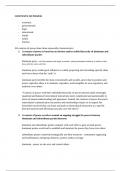
1. A context of power is based on an obvious and/or subtle hierarchy of dominant and
subordinate parties
dominant party - one that possesses the legal, economic, and governmental authority to enforce rules,
laws, policies, taxes, and fees
dominant party wields great influence in widely projecting and circulating specific ideas
and views about what the ‘truth’ is
dominant party benefits the most economically and socially, given that its position and
power capacities allow it to maintain, reproduce, and strengthen its own supremacy and
authority over others
“Contexts of power with their embedded hierarchy of power interests make seemingly
equalized and balanced intercultural interactions more complicated and questionable in
terms of mutual understanding and agreement. Instead, the contexts of power that touch
intercultural communication encounters and relationships require us to unpack the
hierarchies involved that can frame and push an intercultural interaction in a specific
direction (and toward affirming one party over the other).”
2. A context of power revolves around an ongoing struggle for power between
dominant and subordinate parties/interests
dominant and subordinate parties compete with each other to gain societal power -
dominant parties work hard to establish and maintain the power they have over others
subordinate parties creatively/strategically use their resources - community organizing
and mobilization, intergroup alliances, protest, media coverage
dominant - power to rule over and control others
- economic
- governmental
- legal
- educational
- family
- media
- tourism
All contexts of power share three noteworthy characteristics:
1. A context of power is based on an obvious and/or subtle hierarchy of dominant and
subordinate parties
dominant party - one that possesses the legal, economic, and governmental authority to enforce rules,
laws, policies, taxes, and fees
dominant party wields great influence in widely projecting and circulating specific ideas
and views about what the ‘truth’ is
dominant party benefits the most economically and socially, given that its position and
power capacities allow it to maintain, reproduce, and strengthen its own supremacy and
authority over others
“Contexts of power with their embedded hierarchy of power interests make seemingly
equalized and balanced intercultural interactions more complicated and questionable in
terms of mutual understanding and agreement. Instead, the contexts of power that touch
intercultural communication encounters and relationships require us to unpack the
hierarchies involved that can frame and push an intercultural interaction in a specific
direction (and toward affirming one party over the other).”
2. A context of power revolves around an ongoing struggle for power between
dominant and subordinate parties/interests
dominant and subordinate parties compete with each other to gain societal power -
dominant parties work hard to establish and maintain the power they have over others
subordinate parties creatively/strategically use their resources - community organizing
and mobilization, intergroup alliances, protest, media coverage
dominant - power to rule over and control others