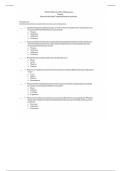
Test Bank
For Advanced Physiology and Pathophysiology,
2nd Edition, By Nancy Tkacs
Latest Revised 2nd Edition
,Table Of Content
Chapter: 1 The Foundational Concepts of Clinical Practice
Chapter: 2 Chemical and Biochemical Foundations
Chapter: 3 Molecular Biology, Genetics, and Genetic Diseases
Chapter: 4 Cell Physiology and Pathophysiology
Chapter: 5 Infectious Disease
Chapter: 6 The Immune System and Leukocyte Function
Chapter: 7 Neoplasia
Chapter: 8 Blood and Clotting
Chapter: 9 Circulation
Chapter: 10 Heart
Chapter: 11 Lungs
Chapter: 12 Kidneys
Chapter: 13 Gastrointestinal Tract
Chapter: 14 Liver
Chapter: 15 Nervous System
Chapter: 16 Musculoskeletal System
Chapter: 17 Endocrine System
,Chapter:: 1. THE FOUNDATIONAL CONCEPTS OF CLINICAL PRACTICE
1. The Characteristic, Localized Cardinal Signs Of Acute Inflammation Include:
A) Fever.
B) Fatigue.
C) Redness.
D) Granuloma.
2. The Vascular, Hemodynamic Stage Of Acute Inflammation Is Initiated By
Momentary Vasoconstriction Followed By Vasodilation That Causes Localized:
A) Bleeding.
B) Congestion.
C) Pale Skin.
D) Coolness.
3. The Cellular Stage Of Acute Inflammation Is Marked By The Movement Of
Leukocytes Into The Area. Which Of The Following Cells Arrives Early In
Great Numbers?
A) Basophils
B) Lymphocytes
C) Neutrophils
, D) Platelets
4. The Phagocytosis Process Involves Three Distinct Steps. What Is The
Initial Step In The Process?
A) Engulfment
B) Intracellular Killing
C) Antigen Margination
D) Recognition And Adherence
5. Which Of The Following Mediators Of Inflammation Causes Increased
Capillary Permeability And Pain?
A) Serotonin
B) Histamine
C) Bradykinin
D) Nitric Oxide
6. Inflammatory Exudates Are A Combination Of Several Types. Which Of The
Following Exudates Is Composed Of Enmeshed Necrotic Cells?
A) Serous
B) Fibrinous
C) Suppurative
D) Membranous
7. The Acute-Phase Systemic Response Usually Begins Within Hours Of The
Onset Of Inflammation And Includes:
A) Fever And Lethargy.
B) Decreased C-Reactive Protein.
C) Positive Nitrogen Balance.
D) Low Erythrocyte Sedimentation Rate.
For Advanced Physiology and Pathophysiology,
2nd Edition, By Nancy Tkacs
Latest Revised 2nd Edition
,Table Of Content
Chapter: 1 The Foundational Concepts of Clinical Practice
Chapter: 2 Chemical and Biochemical Foundations
Chapter: 3 Molecular Biology, Genetics, and Genetic Diseases
Chapter: 4 Cell Physiology and Pathophysiology
Chapter: 5 Infectious Disease
Chapter: 6 The Immune System and Leukocyte Function
Chapter: 7 Neoplasia
Chapter: 8 Blood and Clotting
Chapter: 9 Circulation
Chapter: 10 Heart
Chapter: 11 Lungs
Chapter: 12 Kidneys
Chapter: 13 Gastrointestinal Tract
Chapter: 14 Liver
Chapter: 15 Nervous System
Chapter: 16 Musculoskeletal System
Chapter: 17 Endocrine System
,Chapter:: 1. THE FOUNDATIONAL CONCEPTS OF CLINICAL PRACTICE
1. The Characteristic, Localized Cardinal Signs Of Acute Inflammation Include:
A) Fever.
B) Fatigue.
C) Redness.
D) Granuloma.
2. The Vascular, Hemodynamic Stage Of Acute Inflammation Is Initiated By
Momentary Vasoconstriction Followed By Vasodilation That Causes Localized:
A) Bleeding.
B) Congestion.
C) Pale Skin.
D) Coolness.
3. The Cellular Stage Of Acute Inflammation Is Marked By The Movement Of
Leukocytes Into The Area. Which Of The Following Cells Arrives Early In
Great Numbers?
A) Basophils
B) Lymphocytes
C) Neutrophils
, D) Platelets
4. The Phagocytosis Process Involves Three Distinct Steps. What Is The
Initial Step In The Process?
A) Engulfment
B) Intracellular Killing
C) Antigen Margination
D) Recognition And Adherence
5. Which Of The Following Mediators Of Inflammation Causes Increased
Capillary Permeability And Pain?
A) Serotonin
B) Histamine
C) Bradykinin
D) Nitric Oxide
6. Inflammatory Exudates Are A Combination Of Several Types. Which Of The
Following Exudates Is Composed Of Enmeshed Necrotic Cells?
A) Serous
B) Fibrinous
C) Suppurative
D) Membranous
7. The Acute-Phase Systemic Response Usually Begins Within Hours Of The
Onset Of Inflammation And Includes:
A) Fever And Lethargy.
B) Decreased C-Reactive Protein.
C) Positive Nitrogen Balance.
D) Low Erythrocyte Sedimentation Rate.