MODULE 1
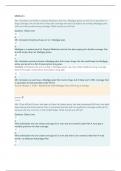
Mrs. Gonzalez is enrolled in Original Medicare and has a Medigap policy as well, but it provides no
drug coverage. She would like to keep the coverage she has but replace her existing Medigap plan
with one that provides drug coverage. What should you tell her?
Question 1Select one:
a.
Mrs. Gonzalez should purchase a K or L Medigap plan.
b.
Medigap is a replacement for Original Medicare and she has been paying for double coverage. She
should simply drop her Medigap policy.
c.
Mrs. Gonzalez cannot purchase a Medigap plan that covers drugs, but she could keep her Medigap
policy and enroll in a Part D prescription drug plan.
Correct: Individuals who are enrolled in Medigap plans may only obtain Medicare drug coverage
(Part D) through a stand-alone prescription drug plan.
d.
Mrs. Gonzalez can purchase a Medigap plan that covers drugs, but it likely won’t offer coverage that
is equivalent to that provided under Part D.
Source: Module 1, Slide - Beneficiaries with Medigap Plans with Drug Coverage
Question 2
Correct
Mrs. Chen will be 65 soon, has been a citizen for twelve years, has been employed full time, and paid
taxes during that entire period. She is concerned that she will not qualify for coverage under part A
because she was not born in the United States. What should you tell her?
Question 2Select one:
a.
Most individuals who are citizens and age 65 or over and are covered under Part A must pay a
monthly premium for that coverage.
b.
Most individuals who are citizens and age 65 or over and wish to be covered under Part A must
enroll in a Medicare Advantage Plan.
c.
,All individuals who are citizens and age 65 or over will be covered under Part A.
d.
Most individuals who are citizens and age 65 or over are covered under Part A by virtue of having
paid Medicare taxes while working, though some may be covered as a result of paying monthly
premiums.
Correct: Most individuals who are citizens and age 65 or older may qualify for coverage either
because they pay a monthly premium or because they paid Medicare taxes while working for a
specific duration.
Source: Module 1, Slide - Eligibility for Part A & B Benefits and Slide - Medicare Premiums Part A
Question 3
Correct
Anthony Boniface turned 65 in 2023. He was not receiving Social Security or Railroad Retirement
Benefits on his 65th birthday. He was interested in obtaining Medicare coverage and is eligible for
premium-free Part A. Before he could enroll in Medicare, his entire area was impacted by a hurricane
causing massive flooding and severe wind damage. The Federal government declared this to be a
natural disaster which has recently ended. During this period Anthony’s initial enrollment period
expired. Anthony asks you how he can now obtain Medicare coverage. What should you say?
Question 3Select one:
a.
Anthony will be automatically enrolled in Medicare Part A within one month from the date the
Federal government declared the disaster ended. If he wishes Part B coverage he must wait until the
next General Enrollment Period.
b.
Anthony is eligible for a special enrollment period (SEP) because he missed an enrollment period due
to the impact of the Federally declared disaster. This SEP will allow Anthony to enroll in Part B up to
six months after the end of the emergency declaration. Anthony may enroll in premium-free Part A
at any time and his Part A coverage will be retroactive for up to 6 months.
Correct: Anthony is eligible for a special enrollment period (SEP) to enroll in Part B because he
missed an enrollment period due to the impact of the Federally declared disaster. This SEP will allow
Anthony to enroll in Part B up to six months after the end of the emergency declaration. Anthony
may enroll in premium-free Part A at any time and his Part A coverage will be retroactive for up to 6
months.
c.
Anthony must wait until the next General Enrollment Period (GEP) which runs from January 1 through
March 31.
,d.
Anthony will have a special enrollment period (SEP) of 3 months beginning after the end of the
emergency declaration, but he will be subject to a late enrollment penalty if he chooses Part B
coverage.
Source: Module 1, Slide – New Special Enrollment Periods (SEPs) for 2023 and beyond; Slide – Parts A
and B After the Initial Enrollment Period
Question 4
Correct
Mrs. Park is an elderly retiree. Mrs. Park has a low fixed income. What could you tell Mrs. Park that
might be of assistance?
Question 4Select one:
a.
She should contact her state Medicaid agency to see if she qualifies for one of several programs that
can help with Medicare costs for which she is responsible.
Correct: Mrs. Park can apply for programs through her State Medicaid office that could assist with
her Medicare costs, such as Medicare Savings Programs, Part D low-income subsidies, and Medicaid.
b.
She should only seek help from private organizations to cover her Medicare costs.
c.
She should not sign up for a Medicare Advantage plan.
d.
She can apply to the Medicare agency for lower premiums and cost-sharing.
Source: Module 1, Slide - Help for Individuals with Limited Income/Resources
Question 5
Correct
Mrs. Peňa is 66 years old, has coverage under an employer plan, and will retire next year. She heard
she must enroll in Part B at the beginning of the year to ensure no gap in coverage. What can you
tell her?
Question 5Select one:
a.
, She must wait at least 30 days after her employment terminates before she may enroll in Medicare
Part B.
b.
She may not enroll in Part B while covered under an employer group health plan and must wait until
the standard general enrollment period after she retires.
c.
She may enroll at any time while she is covered under her employer plan, but she will have a special
eight-month enrollment period after the last month on her employer plan that differs from the
standard general enrollment period, during which she may enroll in Medicare Part B.
Correct: As long as Mrs. Peňa is covered under her employer’s plan, she can enroll in Part B at any
time. If she retires, she will be able to enroll in Part B during a special enrollment period that lasts 8
months following the last month of her employer coverage.
d.
She may only enroll in Part B during the general enrollment period whether she is retired or not.
Source: Module 1, Slide - Enrollment in Parts A & B After the Initial Enrollment Period
Question 6
Correct
Mr. Wu is eligible for Medicare. He has limited financial resources but failed to qualify for the Part D
low-income subsidy. Where might he turn for help with his prescription drug costs?
Question 6Select one:
a.
Mr. Wu has no alternative but to liquidate his remaining assets and apply for coverage through his
state’s Medicaid program.
b.
Mr. Wu may still qualify for help in paying Part D costs through his State Pharmaceutical Assistance
Program.
Correct: A State Pharmaceutical Assistance Program may be able to provide assistance with
prescription drug costs for those who are of limited means but do not qualify for the Part D low-
income subsidy.
c.
Mr. Wu may still qualify for help in paying for Part D costs through the local Office of the Aging.
d.
Mr. Wu may still qualify for help in paying for Part D costs through the Federal Pharmaceutical
Assistance Program.
Source: Part 1, Slide - Help for Individuals with Limited Income/Resources Office.
Mrs. Gonzalez is enrolled in Original Medicare and has a Medigap policy as well, but it provides no
drug coverage. She would like to keep the coverage she has but replace her existing Medigap plan
with one that provides drug coverage. What should you tell her?
Question 1Select one:
a.
Mrs. Gonzalez should purchase a K or L Medigap plan.
b.
Medigap is a replacement for Original Medicare and she has been paying for double coverage. She
should simply drop her Medigap policy.
c.
Mrs. Gonzalez cannot purchase a Medigap plan that covers drugs, but she could keep her Medigap
policy and enroll in a Part D prescription drug plan.
Correct: Individuals who are enrolled in Medigap plans may only obtain Medicare drug coverage
(Part D) through a stand-alone prescription drug plan.
d.
Mrs. Gonzalez can purchase a Medigap plan that covers drugs, but it likely won’t offer coverage that
is equivalent to that provided under Part D.
Source: Module 1, Slide - Beneficiaries with Medigap Plans with Drug Coverage
Question 2
Correct
Mrs. Chen will be 65 soon, has been a citizen for twelve years, has been employed full time, and paid
taxes during that entire period. She is concerned that she will not qualify for coverage under part A
because she was not born in the United States. What should you tell her?
Question 2Select one:
a.
Most individuals who are citizens and age 65 or over and are covered under Part A must pay a
monthly premium for that coverage.
b.
Most individuals who are citizens and age 65 or over and wish to be covered under Part A must
enroll in a Medicare Advantage Plan.
c.
,All individuals who are citizens and age 65 or over will be covered under Part A.
d.
Most individuals who are citizens and age 65 or over are covered under Part A by virtue of having
paid Medicare taxes while working, though some may be covered as a result of paying monthly
premiums.
Correct: Most individuals who are citizens and age 65 or older may qualify for coverage either
because they pay a monthly premium or because they paid Medicare taxes while working for a
specific duration.
Source: Module 1, Slide - Eligibility for Part A & B Benefits and Slide - Medicare Premiums Part A
Question 3
Correct
Anthony Boniface turned 65 in 2023. He was not receiving Social Security or Railroad Retirement
Benefits on his 65th birthday. He was interested in obtaining Medicare coverage and is eligible for
premium-free Part A. Before he could enroll in Medicare, his entire area was impacted by a hurricane
causing massive flooding and severe wind damage. The Federal government declared this to be a
natural disaster which has recently ended. During this period Anthony’s initial enrollment period
expired. Anthony asks you how he can now obtain Medicare coverage. What should you say?
Question 3Select one:
a.
Anthony will be automatically enrolled in Medicare Part A within one month from the date the
Federal government declared the disaster ended. If he wishes Part B coverage he must wait until the
next General Enrollment Period.
b.
Anthony is eligible for a special enrollment period (SEP) because he missed an enrollment period due
to the impact of the Federally declared disaster. This SEP will allow Anthony to enroll in Part B up to
six months after the end of the emergency declaration. Anthony may enroll in premium-free Part A
at any time and his Part A coverage will be retroactive for up to 6 months.
Correct: Anthony is eligible for a special enrollment period (SEP) to enroll in Part B because he
missed an enrollment period due to the impact of the Federally declared disaster. This SEP will allow
Anthony to enroll in Part B up to six months after the end of the emergency declaration. Anthony
may enroll in premium-free Part A at any time and his Part A coverage will be retroactive for up to 6
months.
c.
Anthony must wait until the next General Enrollment Period (GEP) which runs from January 1 through
March 31.
,d.
Anthony will have a special enrollment period (SEP) of 3 months beginning after the end of the
emergency declaration, but he will be subject to a late enrollment penalty if he chooses Part B
coverage.
Source: Module 1, Slide – New Special Enrollment Periods (SEPs) for 2023 and beyond; Slide – Parts A
and B After the Initial Enrollment Period
Question 4
Correct
Mrs. Park is an elderly retiree. Mrs. Park has a low fixed income. What could you tell Mrs. Park that
might be of assistance?
Question 4Select one:
a.
She should contact her state Medicaid agency to see if she qualifies for one of several programs that
can help with Medicare costs for which she is responsible.
Correct: Mrs. Park can apply for programs through her State Medicaid office that could assist with
her Medicare costs, such as Medicare Savings Programs, Part D low-income subsidies, and Medicaid.
b.
She should only seek help from private organizations to cover her Medicare costs.
c.
She should not sign up for a Medicare Advantage plan.
d.
She can apply to the Medicare agency for lower premiums and cost-sharing.
Source: Module 1, Slide - Help for Individuals with Limited Income/Resources
Question 5
Correct
Mrs. Peňa is 66 years old, has coverage under an employer plan, and will retire next year. She heard
she must enroll in Part B at the beginning of the year to ensure no gap in coverage. What can you
tell her?
Question 5Select one:
a.
, She must wait at least 30 days after her employment terminates before she may enroll in Medicare
Part B.
b.
She may not enroll in Part B while covered under an employer group health plan and must wait until
the standard general enrollment period after she retires.
c.
She may enroll at any time while she is covered under her employer plan, but she will have a special
eight-month enrollment period after the last month on her employer plan that differs from the
standard general enrollment period, during which she may enroll in Medicare Part B.
Correct: As long as Mrs. Peňa is covered under her employer’s plan, she can enroll in Part B at any
time. If she retires, she will be able to enroll in Part B during a special enrollment period that lasts 8
months following the last month of her employer coverage.
d.
She may only enroll in Part B during the general enrollment period whether she is retired or not.
Source: Module 1, Slide - Enrollment in Parts A & B After the Initial Enrollment Period
Question 6
Correct
Mr. Wu is eligible for Medicare. He has limited financial resources but failed to qualify for the Part D
low-income subsidy. Where might he turn for help with his prescription drug costs?
Question 6Select one:
a.
Mr. Wu has no alternative but to liquidate his remaining assets and apply for coverage through his
state’s Medicaid program.
b.
Mr. Wu may still qualify for help in paying Part D costs through his State Pharmaceutical Assistance
Program.
Correct: A State Pharmaceutical Assistance Program may be able to provide assistance with
prescription drug costs for those who are of limited means but do not qualify for the Part D low-
income subsidy.
c.
Mr. Wu may still qualify for help in paying for Part D costs through the local Office of the Aging.
d.
Mr. Wu may still qualify for help in paying for Part D costs through the Federal Pharmaceutical
Assistance Program.
Source: Part 1, Slide - Help for Individuals with Limited Income/Resources Office.