

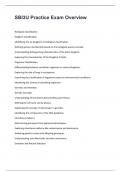
SBI3U Practice Exam Overview
Biological Classification
Kingdom Classification
Identifying the six Kingdoms in biological classification.
Defining species membership based on the biological species concept.
Understanding distinguishing characteristics of the plant kingdom.
Exploring the characteristics of the Kingdom Protista.
Organism Classification
Differentiating between unicellular organisms in various Kingdoms.
Exploring the role of fungi in ecosystems.
Examining the classification of organisms based on environmental conditions.
Identifying the science of classifying organisms.
Genetics and Heredity
Genetic Concepts
Understanding chromosome abnormalities post-mitosis.
Defining the cell cycle and its phases.
Explaining the concept of 'phenotype' in genetics.
Identifying the components of the DNA backbone.
Inheritance Patterns
Determining genotypes from expressed phenotypes.
Exploring inheritance patterns like codominance and dominance.
Analyzing genetic crosses and offspring genotypes.
Understanding sex-linked traits and their inheritance.
Evolution and Natural Selection
, Evolutionary Concepts
Associating scientists with the Theory of Evolution by Natural Selection.
Exploring examples of structural homology in different species.
Defining genetic drift and its implications.
Identifying examples of microevolution.
Natural Selection
Understanding modes of natural selection based on environmental factors.
Exploring reproductive isolating mechanisms.
Analyzing speciation processes like allopatric speciation and adaptive radiation.
Describing the relationship between pH and enzyme activity.
Island Evolution and Species Diversity
Unique species formation on isolated islands
Contributions of natural selection and adaptation
Comparison of mainland and island species diversity
Genetic Drift and Selection Mechanisms
Explanation of bottleneck effect and gene flow
Comparison of convergent and divergent evolution
Understanding reproductive isolating mechanisms
Selection Processes and Speciation
Comparison of natural and artificial selection
Effects of evolutionary genetic drift on new species formation
Illustration of natural selection in insecticide resistance
Human Anatomy and Physiology
Organ Functions
Identifying functions of the liver, pancreas, and large intestine.
Exploring the role of arteries in the circulatory system.
Biological Classification
Kingdom Classification
Identifying the six Kingdoms in biological classification.
Defining species membership based on the biological species concept.
Understanding distinguishing characteristics of the plant kingdom.
Exploring the characteristics of the Kingdom Protista.
Organism Classification
Differentiating between unicellular organisms in various Kingdoms.
Exploring the role of fungi in ecosystems.
Examining the classification of organisms based on environmental conditions.
Identifying the science of classifying organisms.
Genetics and Heredity
Genetic Concepts
Understanding chromosome abnormalities post-mitosis.
Defining the cell cycle and its phases.
Explaining the concept of 'phenotype' in genetics.
Identifying the components of the DNA backbone.
Inheritance Patterns
Determining genotypes from expressed phenotypes.
Exploring inheritance patterns like codominance and dominance.
Analyzing genetic crosses and offspring genotypes.
Understanding sex-linked traits and their inheritance.
Evolution and Natural Selection
, Evolutionary Concepts
Associating scientists with the Theory of Evolution by Natural Selection.
Exploring examples of structural homology in different species.
Defining genetic drift and its implications.
Identifying examples of microevolution.
Natural Selection
Understanding modes of natural selection based on environmental factors.
Exploring reproductive isolating mechanisms.
Analyzing speciation processes like allopatric speciation and adaptive radiation.
Describing the relationship between pH and enzyme activity.
Island Evolution and Species Diversity
Unique species formation on isolated islands
Contributions of natural selection and adaptation
Comparison of mainland and island species diversity
Genetic Drift and Selection Mechanisms
Explanation of bottleneck effect and gene flow
Comparison of convergent and divergent evolution
Understanding reproductive isolating mechanisms
Selection Processes and Speciation
Comparison of natural and artificial selection
Effects of evolutionary genetic drift on new species formation
Illustration of natural selection in insecticide resistance
Human Anatomy and Physiology
Organ Functions
Identifying functions of the liver, pancreas, and large intestine.
Exploring the role of arteries in the circulatory system.

