📄DOWNLOAD PDF
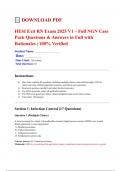
ESI Exit RN Exam 2025 V1 – Full NGN Case
H
Pack Questions & Answers in Full with
Rationales | 100% Verified
Student Name:______________________
Date:_______________
Time Limit:120 minutes
Total Questions:85
Instructions
● T his exam contains 85 questions, including multiple-choice, select-all-that-apply (SATA),
select-next-step, clinical judgment scenarios, and ethical care questions.
● Read each question carefully and select the best answer(s).
● For SATA questions, select all applicable options.
● For NGN-style questions, follow clinical judgment steps or prioritize actions.
● Time limit: 120 minutes.
Section 1: Infection Control (17 Questions)
Question 1 (Multiple Choice)
nurse is caring for a client with methicillin-resistant Staphylococcus aureus (MRSA) in a wound.
A
Which precaution is most appropriate?
A. Droplet precautions
B. Contact precautions
C. Airborne precautions
D. Standard precautions only
orrect Answer:B. Contact precautions
C
Rationale:MRSA is transmitted through direct contact,requiring contact precautions (gloves, gown).
, roplet and airborne precautions are for respiratory infections, and standard precautions alone are
D
insufficient.
Question 2 (SATA)
hich actions should the nurse take when caring for a client with Clostridium difficile infection? (Select
W
all that apply.)
A. Wear gloves during client care
B. Use alcohol-based hand sanitizer
C. Place the client in a private room
D. Clean equipment with bleach-based disinfectant
E. Wear a surgical mask during care
orrect Answers:A, C, D
C
Rationale:C. difficile requires gloves, a privateroom, and bleach disinfection due to spore transmission.
Alcohol-based sanitizer is ineffective against spores, and a surgical mask is not needed unless droplet
precautions are indicated.
Question 3 (Select-Next-Step)
nurse enters a client’s room and finds a used needle on the bed. What is the next step?
A
A. Dispose of the needle in a sharps container
B. Report the incident to the charge nurse
C. Clean the area with alcohol
D. Document the finding in the client’s chart
orrect Answer:A. Dispose of the needle in a sharpscontainer
C
Rationale:Safely disposing of the needle in a sharpscontainer is the immediate priority to prevent
injury. Reporting, cleaning, and documenting follow after ensuring safety.
Question 4 (Multiple Choice)
client with tuberculosis (TB) is admitted. Which room assignment is most appropriate?
A
A. A shared room with another client
B. A room with positive pressure airflow
C. A negative-pressure isolation room
D. A standard room near the nurse’s station
orrect Answer:C. Negative-pressure isolation room
C
Rationale:TB requires airborne precautions, necessitatinga negative-pressure room to prevent spread.
Shared rooms, standard rooms, or positive pressure rooms are unsafe.
Question 5 (Clinical Judgment Scenario)
, cenario:A 45-year-old client is admitted with suspected influenza and fever. The nurse observes the
S
client coughing without a mask.
Question:Which action should the nurse prioritize?
A. Administer antipyretics
B. Place a surgical mask on the client
C. Obtain a nasopharyngeal swab
D. Teach the client about hand hygiene
orrect Answer:B. Place a surgical mask on the client
C
Rationale:Placing a mask on the client preventsdroplet transmission of influenza, a priority in infection
control. Antipyretics, swabs, and teaching are important but secondary to preventing spread.
Question 6 (Multiple Choice)
hich personal protective equipment (PPE) is required for a client with suspected Ebola?
W
A. Gloves and mask only
B. Full-body suit, gloves, mask, and face shield
C. Gown and gloves only
D. Surgical mask and goggles
orrect Answer:B. Full-body suit, gloves, mask, andface shield
C
Rationale:Ebola requires enhanced PPE, includinga full-body suit, due to high-risk contact
transmission. Other options provide inadequate protection.
Question 7 (SATA)
hich interventions prevent catheter-associated urinary tract infections (CAUTIs)? (Select all that apply.)
W
A. Use sterile technique during insertion
B. Maintain a closed drainage system
C. Clean the catheter with alcohol daily
D. Secure the catheter to prevent movement
E. Change the catheter every 48 hours
orrect Answers:A, B, D
C
Rationale:Sterile insertion, a closed system, andsecuring the catheter prevent CAUTIs. Alcohol
cleaning is not recommended, and catheters are changed only when indicated, not routinely.
Question 8 (Multiple Choice)
nurse is teaching a client about preventing surgical site infections. Which instruction is most important?
A
A. Take antibiotics for 7 days post-op
B. Keep the incision clean and dry
C. Avoid dressing changes for 48 hours
D. Apply lotion to the incision daily
ESI Exit RN Exam 2025 V1 – Full NGN Case
H
Pack Questions & Answers in Full with
Rationales | 100% Verified
Student Name:______________________
Date:_______________
Time Limit:120 minutes
Total Questions:85
Instructions
● T his exam contains 85 questions, including multiple-choice, select-all-that-apply (SATA),
select-next-step, clinical judgment scenarios, and ethical care questions.
● Read each question carefully and select the best answer(s).
● For SATA questions, select all applicable options.
● For NGN-style questions, follow clinical judgment steps or prioritize actions.
● Time limit: 120 minutes.
Section 1: Infection Control (17 Questions)
Question 1 (Multiple Choice)
nurse is caring for a client with methicillin-resistant Staphylococcus aureus (MRSA) in a wound.
A
Which precaution is most appropriate?
A. Droplet precautions
B. Contact precautions
C. Airborne precautions
D. Standard precautions only
orrect Answer:B. Contact precautions
C
Rationale:MRSA is transmitted through direct contact,requiring contact precautions (gloves, gown).
, roplet and airborne precautions are for respiratory infections, and standard precautions alone are
D
insufficient.
Question 2 (SATA)
hich actions should the nurse take when caring for a client with Clostridium difficile infection? (Select
W
all that apply.)
A. Wear gloves during client care
B. Use alcohol-based hand sanitizer
C. Place the client in a private room
D. Clean equipment with bleach-based disinfectant
E. Wear a surgical mask during care
orrect Answers:A, C, D
C
Rationale:C. difficile requires gloves, a privateroom, and bleach disinfection due to spore transmission.
Alcohol-based sanitizer is ineffective against spores, and a surgical mask is not needed unless droplet
precautions are indicated.
Question 3 (Select-Next-Step)
nurse enters a client’s room and finds a used needle on the bed. What is the next step?
A
A. Dispose of the needle in a sharps container
B. Report the incident to the charge nurse
C. Clean the area with alcohol
D. Document the finding in the client’s chart
orrect Answer:A. Dispose of the needle in a sharpscontainer
C
Rationale:Safely disposing of the needle in a sharpscontainer is the immediate priority to prevent
injury. Reporting, cleaning, and documenting follow after ensuring safety.
Question 4 (Multiple Choice)
client with tuberculosis (TB) is admitted. Which room assignment is most appropriate?
A
A. A shared room with another client
B. A room with positive pressure airflow
C. A negative-pressure isolation room
D. A standard room near the nurse’s station
orrect Answer:C. Negative-pressure isolation room
C
Rationale:TB requires airborne precautions, necessitatinga negative-pressure room to prevent spread.
Shared rooms, standard rooms, or positive pressure rooms are unsafe.
Question 5 (Clinical Judgment Scenario)
, cenario:A 45-year-old client is admitted with suspected influenza and fever. The nurse observes the
S
client coughing without a mask.
Question:Which action should the nurse prioritize?
A. Administer antipyretics
B. Place a surgical mask on the client
C. Obtain a nasopharyngeal swab
D. Teach the client about hand hygiene
orrect Answer:B. Place a surgical mask on the client
C
Rationale:Placing a mask on the client preventsdroplet transmission of influenza, a priority in infection
control. Antipyretics, swabs, and teaching are important but secondary to preventing spread.
Question 6 (Multiple Choice)
hich personal protective equipment (PPE) is required for a client with suspected Ebola?
W
A. Gloves and mask only
B. Full-body suit, gloves, mask, and face shield
C. Gown and gloves only
D. Surgical mask and goggles
orrect Answer:B. Full-body suit, gloves, mask, andface shield
C
Rationale:Ebola requires enhanced PPE, includinga full-body suit, due to high-risk contact
transmission. Other options provide inadequate protection.
Question 7 (SATA)
hich interventions prevent catheter-associated urinary tract infections (CAUTIs)? (Select all that apply.)
W
A. Use sterile technique during insertion
B. Maintain a closed drainage system
C. Clean the catheter with alcohol daily
D. Secure the catheter to prevent movement
E. Change the catheter every 48 hours
orrect Answers:A, B, D
C
Rationale:Sterile insertion, a closed system, andsecuring the catheter prevent CAUTIs. Alcohol
cleaning is not recommended, and catheters are changed only when indicated, not routinely.
Question 8 (Multiple Choice)
nurse is teaching a client about preventing surgical site infections. Which instruction is most important?
A
A. Take antibiotics for 7 days post-op
B. Keep the incision clean and dry
C. Avoid dressing changes for 48 hours
D. Apply lotion to the incision daily