DNA - 12th Grade Level Notes
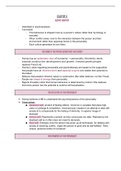
1. Introduction to DNA
DNA (Deoxyribonucleic Acid) is the hereditary material in all known living organisms. It carries
genetic instructions used in growth, development, functioning, and reproduction.
2. Structure of DNA
- DNA is composed of two long strands forming a double helix.
- Each strand is made up of nucleotides, which include:
* A phosphate group
* A deoxyribose sugar
* A nitrogenous base (Adenine, Thymine, Cytosine, Guanine)
- Base pairing rules: Adenine pairs with Thymine (A-T), and Cytosine pairs with Guanine (C-G).
3. Function of DNA
- Stores genetic information.
- Directs the synthesis of proteins through transcription and translation.
- Passes genetic information from one generation to the next.
4. DNA Replication
- DNA replication is the process by which DNA makes a copy of itself during cell division.
- It is semi-conservative: each new DNA molecule has one old strand and one new strand.
- Key enzymes involved: DNA helicase (unwinds the DNA), DNA polymerase (adds new
nucleotides), and DNA ligase (joins fragments).
5. Importance in Genetics
- DNA determines the genetic makeup of an organism.
1. Introduction to DNA
DNA (Deoxyribonucleic Acid) is the hereditary material in all known living organisms. It carries
genetic instructions used in growth, development, functioning, and reproduction.
2. Structure of DNA
- DNA is composed of two long strands forming a double helix.
- Each strand is made up of nucleotides, which include:
* A phosphate group
* A deoxyribose sugar
* A nitrogenous base (Adenine, Thymine, Cytosine, Guanine)
- Base pairing rules: Adenine pairs with Thymine (A-T), and Cytosine pairs with Guanine (C-G).
3. Function of DNA
- Stores genetic information.
- Directs the synthesis of proteins through transcription and translation.
- Passes genetic information from one generation to the next.
4. DNA Replication
- DNA replication is the process by which DNA makes a copy of itself during cell division.
- It is semi-conservative: each new DNA molecule has one old strand and one new strand.
- Key enzymes involved: DNA helicase (unwinds the DNA), DNA polymerase (adds new
nucleotides), and DNA ligase (joins fragments).
5. Importance in Genetics
- DNA determines the genetic makeup of an organism.