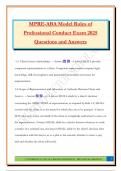
MPRE-ABA Model Rules of
Professional Conduct Exam 2025
Questions and Answers
1.1: Client-Lawyer relationships - --Answer --A lawyer SHALL provide
competent representation to a client. Competent representation requires legal
knowledge, skill, thoroughness and preparation reasonably necesssary for
representation
1.2: Scope of Representation and Allocation of Authority Between Client and
Lawyer - --Answer --(a) A lawyer SHALL abide by a client's decision
concerning the OBJECTIVES of representation, as required by Rule 1.4, SHALL
consult with the client as to the means by which they are to be pursued. A lawyer
MAY take such action on behalf of the client as is impliedly authorized to carry out
the representation. A lawyer SHALL abide by a client's decision whatever to settle
a matter. In a criminal case, the lawyer SHALL abide by the client's decision after
consultation with the lawyer, as to a plea to the entered, whether to waive a jury
trial and whether the client will testify.
....COPYRIGHT ©️ 2025 ALL RIGHTS RESERVED...TRUSTED & VERIFIED 1
,(b) A lawyer's representation of a client, including representation by appointment,
does not constitute an endorsement of the client's political, economic, social or
moral views or activities.
1.3: Diligence - --Answer --A lawyer SHALL act with reasonable diligence
and promptness in representing a client.
1.4: Communication - --Answer --(a) A lawyer SHALL: 1. promplty inform
the client of any decision or circumstance with respect to which the client's
informed consent is required. 2. reasonably consult with the client about the means
by which the client's objectives are to be accomplished. 3. keep the client
reasonably informed about the status of the matter 4. promptly comply with
reasonable requests for information; 5. consult with the client about any relefant
limitation on the lawyer's conduct when the lawyer knows that the client expects
assistance not permitted by the Rules of Professional Conduct or other law. 6. A
lawyer shall explain a matter to the extent reasonably necesssary to permit the
client to make informed decisions regarding representation.
(b) A lawyer SHALL explain a matter to the extent reasonably necessary to permit
the client to make informed decisions regarding the representation.
1.5: Fees (a) - --Answer --(a) A lawyer shall not make agreement for, charge,
or collect unreasonable fee or an unreasonable amount for expenses according to
the following factors: 1. the time and labor required, the novelty and difficulty of
....COPYRIGHT ©️ 2025 ALL RIGHTS RESERVED...TRUSTED & VERIFIED 2
,the questions proposed, and the skill requisite to perform the legal service
properly; 2. the likelihood, if apparent to client, that the acceptance of the
particular employment will preclude other employment by the lawyers; 3. the fee
customarily charged in the locality for similar legal services; 4. the amount involved
and results obtained; 5. the time limitations imposed by the client or by the
circumstances; 6. the nature and length of professional relationship with the client;
7. the experience, reputation, and ability of the lawyer or lawyers performing the
service; and 8. whether the fee is fixed or contingent.
1.6: Confidentiality - --Answer --(a) A lawyer SHALL NOT reveal any
information relating to representation of a client unless the client gives informed
consent, the disclosure is impliedly authorized in order to carry out representation.
(b) A lawyer MAY reveal to the extent the lawyer reasonably believes necessary: 1.
to prevent reasonably certain dealth or substantial bodily harm 2. to prevent the
client from committing a crime or fraud that is reasoably certain to result in
substantial injury to the financial interests or property of another and in
furtherance of which the client has or is using the lawyer's services
1.7: Conflicts of Interest: Current Clients - --Answer --(a) A lawyer SHALL
NOT represent a client if the representation inovles a CONCURRENT conflict of
interest,
....COPYRIGHT ©️ 2025 ALL RIGHTS RESERVED...TRUSTED & VERIFIED 3
, (b) Notwithstanding the existing of a concurrent conflict, a lawyer MAY represent
a client if: 1. the lawyer reasonably believes that he will be able to provide
competent and diligent representation to each affected clients 2. it is not prohibited
by law 3. the representation does not inolve the assertion of a claim by one client
against another client represented by the lawyer in the same litigation or other
proceeding before a tribunal 4. each affected client gives informed consent,
confirmed in writing.
1.8: Conflict of Interests Specific Rules - --Answer --(a) A lawyer SHALL
NOT enter into a business transaction with a client or knowingly aquire an
ownership, possesory, security or other pecuniary interest adverse to a client
unless: 1. the transaction and terms on which the lawyer acquires the interest are
fair and reasonable to the client and are fully disclosed and transmitted in writing
and in a matter that can be reasonably understood by the client 2. the client is
advised in writing of the desireability of seeking and is given a reasonable
opportining to seek the advice of indepedent legal counsel ont he transaction 3. the
client gives informed consent, in a writing and signed by client, to essential terms
of the transaction and the lawyer's role in the transaction, including whether the
lawyer is representing the client in the transaction.
1.9: Duties to Former Clients - --Answer --(a) A lawyer who has formerly
represented a client in a matter shall not thereafter represent another person in the
same or a substantially related matter in which that person's interests are materially
....COPYRIGHT ©️ 2025 ALL RIGHTS RESERVED...TRUSTED & VERIFIED 4
Professional Conduct Exam 2025
Questions and Answers
1.1: Client-Lawyer relationships - --Answer --A lawyer SHALL provide
competent representation to a client. Competent representation requires legal
knowledge, skill, thoroughness and preparation reasonably necesssary for
representation
1.2: Scope of Representation and Allocation of Authority Between Client and
Lawyer - --Answer --(a) A lawyer SHALL abide by a client's decision
concerning the OBJECTIVES of representation, as required by Rule 1.4, SHALL
consult with the client as to the means by which they are to be pursued. A lawyer
MAY take such action on behalf of the client as is impliedly authorized to carry out
the representation. A lawyer SHALL abide by a client's decision whatever to settle
a matter. In a criminal case, the lawyer SHALL abide by the client's decision after
consultation with the lawyer, as to a plea to the entered, whether to waive a jury
trial and whether the client will testify.
....COPYRIGHT ©️ 2025 ALL RIGHTS RESERVED...TRUSTED & VERIFIED 1
,(b) A lawyer's representation of a client, including representation by appointment,
does not constitute an endorsement of the client's political, economic, social or
moral views or activities.
1.3: Diligence - --Answer --A lawyer SHALL act with reasonable diligence
and promptness in representing a client.
1.4: Communication - --Answer --(a) A lawyer SHALL: 1. promplty inform
the client of any decision or circumstance with respect to which the client's
informed consent is required. 2. reasonably consult with the client about the means
by which the client's objectives are to be accomplished. 3. keep the client
reasonably informed about the status of the matter 4. promptly comply with
reasonable requests for information; 5. consult with the client about any relefant
limitation on the lawyer's conduct when the lawyer knows that the client expects
assistance not permitted by the Rules of Professional Conduct or other law. 6. A
lawyer shall explain a matter to the extent reasonably necesssary to permit the
client to make informed decisions regarding representation.
(b) A lawyer SHALL explain a matter to the extent reasonably necessary to permit
the client to make informed decisions regarding the representation.
1.5: Fees (a) - --Answer --(a) A lawyer shall not make agreement for, charge,
or collect unreasonable fee or an unreasonable amount for expenses according to
the following factors: 1. the time and labor required, the novelty and difficulty of
....COPYRIGHT ©️ 2025 ALL RIGHTS RESERVED...TRUSTED & VERIFIED 2
,the questions proposed, and the skill requisite to perform the legal service
properly; 2. the likelihood, if apparent to client, that the acceptance of the
particular employment will preclude other employment by the lawyers; 3. the fee
customarily charged in the locality for similar legal services; 4. the amount involved
and results obtained; 5. the time limitations imposed by the client or by the
circumstances; 6. the nature and length of professional relationship with the client;
7. the experience, reputation, and ability of the lawyer or lawyers performing the
service; and 8. whether the fee is fixed or contingent.
1.6: Confidentiality - --Answer --(a) A lawyer SHALL NOT reveal any
information relating to representation of a client unless the client gives informed
consent, the disclosure is impliedly authorized in order to carry out representation.
(b) A lawyer MAY reveal to the extent the lawyer reasonably believes necessary: 1.
to prevent reasonably certain dealth or substantial bodily harm 2. to prevent the
client from committing a crime or fraud that is reasoably certain to result in
substantial injury to the financial interests or property of another and in
furtherance of which the client has or is using the lawyer's services
1.7: Conflicts of Interest: Current Clients - --Answer --(a) A lawyer SHALL
NOT represent a client if the representation inovles a CONCURRENT conflict of
interest,
....COPYRIGHT ©️ 2025 ALL RIGHTS RESERVED...TRUSTED & VERIFIED 3
, (b) Notwithstanding the existing of a concurrent conflict, a lawyer MAY represent
a client if: 1. the lawyer reasonably believes that he will be able to provide
competent and diligent representation to each affected clients 2. it is not prohibited
by law 3. the representation does not inolve the assertion of a claim by one client
against another client represented by the lawyer in the same litigation or other
proceeding before a tribunal 4. each affected client gives informed consent,
confirmed in writing.
1.8: Conflict of Interests Specific Rules - --Answer --(a) A lawyer SHALL
NOT enter into a business transaction with a client or knowingly aquire an
ownership, possesory, security or other pecuniary interest adverse to a client
unless: 1. the transaction and terms on which the lawyer acquires the interest are
fair and reasonable to the client and are fully disclosed and transmitted in writing
and in a matter that can be reasonably understood by the client 2. the client is
advised in writing of the desireability of seeking and is given a reasonable
opportining to seek the advice of indepedent legal counsel ont he transaction 3. the
client gives informed consent, in a writing and signed by client, to essential terms
of the transaction and the lawyer's role in the transaction, including whether the
lawyer is representing the client in the transaction.
1.9: Duties to Former Clients - --Answer --(a) A lawyer who has formerly
represented a client in a matter shall not thereafter represent another person in the
same or a substantially related matter in which that person's interests are materially
....COPYRIGHT ©️ 2025 ALL RIGHTS RESERVED...TRUSTED & VERIFIED 4