WGU D459 Task 3 - Complete And Verified (Latest Update)
D459 Task 3 Analysis of Complex Problems Tabitha E. Hendrix
WGU's Four-Step Tool (based on "Six Steps to Thinking Systemically" by Michael Goodman and
Richard Karash)
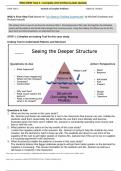
The Iceberg Tool is a way to see how the structure (that is, the background of the case) ties together the individual
events and the patterns and trends that emerge from recurring events. Using the Iceberg Tool allows you to see the
basic facts and interconnections, an important first step.
STEP 1: Complete an Iceberg Tool for this case study.
Iceberg Tool to Understand Patterns and Structure
Questions to Ask
1. What are the key events in this case study?
Ms. Jackson purchases art materials for a cart in her classroom that anyone can use. Initially the
students used them responsibly but after awhile the use them more liberally and become
frustrated when the items aren’t refilled. Ms. Jackson is consistently spending more money and
time to refill the cart.
2. What patterns do you notice in the key events of this case study?
I notice the negative pattern in the scenario. Ms. Jackson is trying to help the students be more
creative, but the demand is hard to keep up with. The students are driven to use more of the
supplies off the cart to get higher grades or impress Ms. Jackson but if the cart is low on supplies
it is causing arguments in the classroom.
3. What structure(s) explain the patterns of events in this case study?
The students believe that bigger elaborate projects will get them better grades so the demand for
supplies is increasing. This causes frustration for the students and Ms. Jackson as well as a
decrease in creativity in the classroom.
This study source was downloaded by 100000900141495 from CourseHero.com on 07-21-2025 19:24:12 GMT -05:00
https://www.coursehero.com/file/249570092/D459-Task-3-Tabitha-E-Hendrixdocx/
D459 Task 3 Analysis of Complex Problems Tabitha E. Hendrix
WGU's Four-Step Tool (based on "Six Steps to Thinking Systemically" by Michael Goodman and
Richard Karash)
The Iceberg Tool is a way to see how the structure (that is, the background of the case) ties together the individual
events and the patterns and trends that emerge from recurring events. Using the Iceberg Tool allows you to see the
basic facts and interconnections, an important first step.
STEP 1: Complete an Iceberg Tool for this case study.
Iceberg Tool to Understand Patterns and Structure
Questions to Ask
1. What are the key events in this case study?
Ms. Jackson purchases art materials for a cart in her classroom that anyone can use. Initially the
students used them responsibly but after awhile the use them more liberally and become
frustrated when the items aren’t refilled. Ms. Jackson is consistently spending more money and
time to refill the cart.
2. What patterns do you notice in the key events of this case study?
I notice the negative pattern in the scenario. Ms. Jackson is trying to help the students be more
creative, but the demand is hard to keep up with. The students are driven to use more of the
supplies off the cart to get higher grades or impress Ms. Jackson but if the cart is low on supplies
it is causing arguments in the classroom.
3. What structure(s) explain the patterns of events in this case study?
The students believe that bigger elaborate projects will get them better grades so the demand for
supplies is increasing. This causes frustration for the students and Ms. Jackson as well as a
decrease in creativity in the classroom.
This study source was downloaded by 100000900141495 from CourseHero.com on 07-21-2025 19:24:12 GMT -05:00
https://www.coursehero.com/file/249570092/D459-Task-3-Tabitha-E-Hendrixdocx/