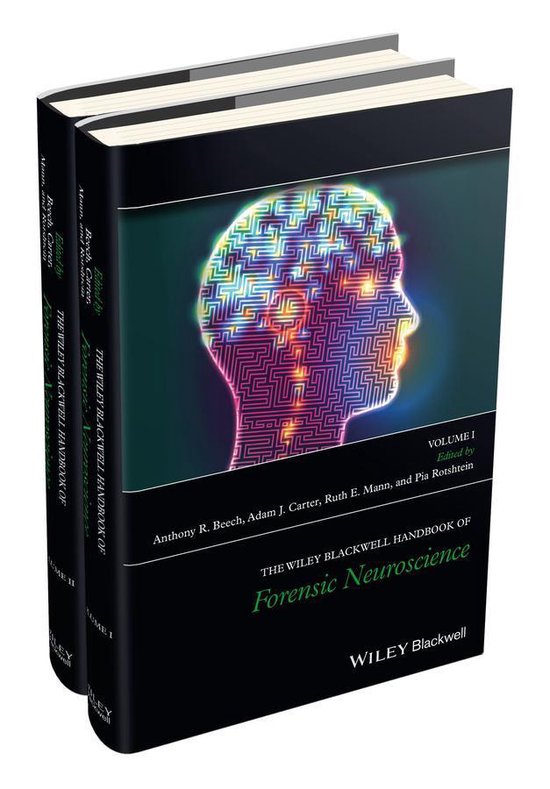
CH1 - Neuroscience in Forensic Settings: Origins and Recent
Developments
The limbic system is a collection of structures that includes the hippocampus,
amygdala, anterior thalamic nuclei, fornix, columns of fornix, mammillary body, septum
pellucidum, habenular commissure, cingulate gyrus, parahippocampal gyrus, limbic
cortex, and limbic midbrain areas. It supports a variety of functions including emotion,
behavior, and motivation. Emotional life is largely housed in the limbic system, and it has
a great deal to do with the formation of memories.
Monoamine oxidases (MAO) are enzymes that are involved in the breakdown of
neurotransmitters such as serotonin, norepinephrine, and dopamine. They are capable of
influencing the feelings, mood, and behavior of individuals. A deficiency in the MAO-A
gene has been shown to be related to higher levels of aggression in males.
White matter actively affects how the brain learns and functions. While grey matter
is primarily associated with processing and cognition, white matter modulates the
distribution of action potentials, acting as a relay and coordinating communication
between different brain regions.
XYY syndrome (1960s) is a genetic condition in which a human male has an extra
male (Y) chromosome, giving a total of 47 chromosomes instead of the more usual 46.
This produces a 47,XYY karyotype, which occurs every 1 in 1,000 male births. The
syndrome has been associated with increased risk of learning disability and criminal
behavior in some cases.
Gage (the guy with the rod in his head) had damaged the lower medial parts of the
prefrontal cortex, more specifically the vmPFC, part of the OFC.
Lombroso's typology (1876)
Born criminals: degenerate, less evolutionary-d in physical appearance
Criminaloids: mental and emotional make-up predisposes them to criminal
behaviour under certain conditions
o Would today be described as ASPD
Insane criminals: suffering from mental/physical illnesses.
Lombroso's ideas were adopted by Kraepelin, the father of modern psychiatry and psychiatric
genetics. He described moral insanity, a psychiatric redefinition of Lombroso's "born criminal".
Departing from the idea of identification by appearance for now.
From 1904 onwards there was mention of the term psychopathic personalities
(Kraepelin's book).
Hans Eysenck (1964) noted some individuals are predisposed to crime throigh
personality. High extraversion (E) + high neuroticism (N). He later added the personality
dimension of Psychopathy (P).
o Extraversion was said to be related to under-arousal of the cortex, making
them seek stimulation and makign them hard to condition.
o Neuroticism was related to the lability of the ANS, highly anxious.
1980s: attention returned to why humans need such large brains -> social brain
hypothesis.
The Social Brain
Limbic system
, o OFC: critical for the adaptation of behaviour in response to predicted
changes in reinforcement. Bridges the activities of the cerebral cortex (analysis of
social events) and amygdala (emotional reactions).
The vmPFC is the medial part of the OFC and is associated with
morality and bodily awareness.
o Amygdala:
Basolateral complex: the principle input region (input from
hippocampus and OFC)
Centromedial complex: relevant for responding to fearful stimuli/
aversive conditioning.
o Anterior cingulate cortex (ACC): in between the cortices and the corpus
callosum; provides the basic circuitry for communication, cooperation, and
empathy. It integrates emotional and attentional processing.
o Insular cortex: Deep in the brain, between the frontal and parietal lobe; the
source of social emotions like lust, disgust, pride, humiliation, guilt, and shame.
o Basal ganglia: set of nuclei in the forebrain
o Habenula: receives information from the limbic system and basal ganglia
and sends it to areas of the midbrain involved with dopamine and serotonin release.
One of the most consistent findings in the neuropsychological aspects of criminality is that
antisocial populations have lower verbal IQs compared to non-antisocial groups even in
adolescence.
From a very lengthy longitudinal study, it was concluded that the most important risk factors
were family criminality, risk taking, low school attainment, poverty, and adverse parenting).
Only two risk factors were identified for violence here – low resting heart rate and poor
concentration – which were found, independently of all other potential risk factors, to predict
violence. Low resting heart rate is, in fact, the best-replicated biological correlate of antisocial
behavior in juvenile samples. This is explained by people with lower heart rate being less fearful,
as well as having low physiological arousal -> more sensation seeking behaviour.
Adult human male testosterone levels vary in different circumstances, and
are associated moderately with levels of aggression and violence. Testosterone only accounts
for around 2% of the variance in aggression across a number of studies.
low MAO-A activity in combination with abuse experienced during childhood ( or high
testosterone, maternal smoking during pregnancy, poor material living standards, dropping out of school, and low IQ)
increased risk of aggressive behavior as an adult.
Heritability accounts for about 41% of childhood CD, while in adulthood heritability
accounts for only 28% of adult APD. Thus, genes become less impactful compared to
environmental factors the older people get.
CH9 - The Neurobiological Underpinnings of Psychopathy
Affective decision making = considering options, estimating likelihoods of reward or
punishment, and then choosing the most beneficial option (utility theory).
o The Iowa Gambling Task (with the 4 decks of cards) measures affective
decision making. Some pps continue to choose 'bad' dekcs, showing an apparent
desire for reward overcoming a sensitivity to punishment.
Extinction tasks = tasks that require the pps to stop responding to an initially
rewarded stimulus when rewards cease.
Developments
The limbic system is a collection of structures that includes the hippocampus,
amygdala, anterior thalamic nuclei, fornix, columns of fornix, mammillary body, septum
pellucidum, habenular commissure, cingulate gyrus, parahippocampal gyrus, limbic
cortex, and limbic midbrain areas. It supports a variety of functions including emotion,
behavior, and motivation. Emotional life is largely housed in the limbic system, and it has
a great deal to do with the formation of memories.
Monoamine oxidases (MAO) are enzymes that are involved in the breakdown of
neurotransmitters such as serotonin, norepinephrine, and dopamine. They are capable of
influencing the feelings, mood, and behavior of individuals. A deficiency in the MAO-A
gene has been shown to be related to higher levels of aggression in males.
White matter actively affects how the brain learns and functions. While grey matter
is primarily associated with processing and cognition, white matter modulates the
distribution of action potentials, acting as a relay and coordinating communication
between different brain regions.
XYY syndrome (1960s) is a genetic condition in which a human male has an extra
male (Y) chromosome, giving a total of 47 chromosomes instead of the more usual 46.
This produces a 47,XYY karyotype, which occurs every 1 in 1,000 male births. The
syndrome has been associated with increased risk of learning disability and criminal
behavior in some cases.
Gage (the guy with the rod in his head) had damaged the lower medial parts of the
prefrontal cortex, more specifically the vmPFC, part of the OFC.
Lombroso's typology (1876)
Born criminals: degenerate, less evolutionary-d in physical appearance
Criminaloids: mental and emotional make-up predisposes them to criminal
behaviour under certain conditions
o Would today be described as ASPD
Insane criminals: suffering from mental/physical illnesses.
Lombroso's ideas were adopted by Kraepelin, the father of modern psychiatry and psychiatric
genetics. He described moral insanity, a psychiatric redefinition of Lombroso's "born criminal".
Departing from the idea of identification by appearance for now.
From 1904 onwards there was mention of the term psychopathic personalities
(Kraepelin's book).
Hans Eysenck (1964) noted some individuals are predisposed to crime throigh
personality. High extraversion (E) + high neuroticism (N). He later added the personality
dimension of Psychopathy (P).
o Extraversion was said to be related to under-arousal of the cortex, making
them seek stimulation and makign them hard to condition.
o Neuroticism was related to the lability of the ANS, highly anxious.
1980s: attention returned to why humans need such large brains -> social brain
hypothesis.
The Social Brain
Limbic system
, o OFC: critical for the adaptation of behaviour in response to predicted
changes in reinforcement. Bridges the activities of the cerebral cortex (analysis of
social events) and amygdala (emotional reactions).
The vmPFC is the medial part of the OFC and is associated with
morality and bodily awareness.
o Amygdala:
Basolateral complex: the principle input region (input from
hippocampus and OFC)
Centromedial complex: relevant for responding to fearful stimuli/
aversive conditioning.
o Anterior cingulate cortex (ACC): in between the cortices and the corpus
callosum; provides the basic circuitry for communication, cooperation, and
empathy. It integrates emotional and attentional processing.
o Insular cortex: Deep in the brain, between the frontal and parietal lobe; the
source of social emotions like lust, disgust, pride, humiliation, guilt, and shame.
o Basal ganglia: set of nuclei in the forebrain
o Habenula: receives information from the limbic system and basal ganglia
and sends it to areas of the midbrain involved with dopamine and serotonin release.
One of the most consistent findings in the neuropsychological aspects of criminality is that
antisocial populations have lower verbal IQs compared to non-antisocial groups even in
adolescence.
From a very lengthy longitudinal study, it was concluded that the most important risk factors
were family criminality, risk taking, low school attainment, poverty, and adverse parenting).
Only two risk factors were identified for violence here – low resting heart rate and poor
concentration – which were found, independently of all other potential risk factors, to predict
violence. Low resting heart rate is, in fact, the best-replicated biological correlate of antisocial
behavior in juvenile samples. This is explained by people with lower heart rate being less fearful,
as well as having low physiological arousal -> more sensation seeking behaviour.
Adult human male testosterone levels vary in different circumstances, and
are associated moderately with levels of aggression and violence. Testosterone only accounts
for around 2% of the variance in aggression across a number of studies.
low MAO-A activity in combination with abuse experienced during childhood ( or high
testosterone, maternal smoking during pregnancy, poor material living standards, dropping out of school, and low IQ)
increased risk of aggressive behavior as an adult.
Heritability accounts for about 41% of childhood CD, while in adulthood heritability
accounts for only 28% of adult APD. Thus, genes become less impactful compared to
environmental factors the older people get.
CH9 - The Neurobiological Underpinnings of Psychopathy
Affective decision making = considering options, estimating likelihoods of reward or
punishment, and then choosing the most beneficial option (utility theory).
o The Iowa Gambling Task (with the 4 decks of cards) measures affective
decision making. Some pps continue to choose 'bad' dekcs, showing an apparent
desire for reward overcoming a sensitivity to punishment.
Extinction tasks = tasks that require the pps to stop responding to an initially
rewarded stimulus when rewards cease.