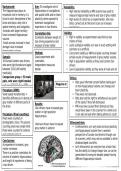
BACKGROUND : CONCLUSIONS :
>
Expanded on-Piaget + saw moral development > A child will
-
accept a
stage I argument but not
stage z
as a
gradual process.avoid obtain
as
only more forward .
>
-
Why we
obey
:·
to punishment,
rewards avoid dislike to be
, , respected + "Moral development occurs in same sequence
to avoid self-condemnation. With no effects from social ,
cultural , religious veins .
AIM : To
investigate how morals
change over time ↑
Each successive
stage has better
cognitive organisation
-to devise stages of moral development . than the previous .
7
RESEARCH : M -
RESUltS :
Method-self report -
longitudinal
Design - O
Morals Develop in stages all
go through
KOHLBERG
same
pattern
-
Data-qualitative
-
I
S
In same order .
(1968)
SAMPLE : CLASSIC MORAL DEVELOPMENT ·
some hadn't reached final end.
stage by the
>
-
- Also looked at children from ↳ DEVELOPMENTAL AREA
75 Taiwan Canada Mexico
boys
·
Turkey
, , ,
, ·
stage s more common in American boys than Mexican/Y
·
from USA UK Level 1 : conventional
.
Taiwan.
o
Aged 10-16 at start
Stage 3 conformity
:
S
·
followed for 12 *
thinking
every years years related to
approval
3 of others ·
When confronted with a child in another
stage the
·
Aged 22-18 at end conformity moved forward .
↓
LEDURE :
Stage 4 Law order
*
:
+
o
Middle Class Children more advanced than lower class .
Thinking based around rules + laws .
- Dilemmas
Boys given interveiws
involving moral Obey to maintain social order. ·
No
significant difference between religions .
every
3 too
years . 12
years
Level 3 : Post conventional ·
cultural differences between reasoning
.
Level 1 :
Pre-conventional Stage S :
universal human ethics
stage 1 Obedience vs punishment Develop
↳
:
Stage 2 :
reward + self intrests own morals + defends
·
child obeys authority .
*
child is self centred them even despite consequences .
·
Behaviour - Punishment =
Helps others if favour returned Stage 6 :
Human rights
bad not
recognise right
-
reward-good Aware of rules Laws are
changeable .
>
-
authority veIW .
*
protection of human life rule breaking.
, Replicated Closs
Culturally
Low external -
validity due
(Malaysia ,
Taiwan Canada , , to
being qualitative interpritations
Mexico
* ,
UK ,
Turkey) . may vary between researchers .
S
Longitudinal study
-
(over
is more difficult to
& Andsocentric
12
years)
-
All replicate due to time+
Boys RELIABILITY :
costs
*
.
.
*
1
↑
&
Highlights
&
that
development occurs in fixed
GENERALISAB-ITY : *
F Preditermined StagesUsa
schools for children based on
years
Low Internal validity
its difficult to control for all
as over 12
kHLBEPS 7 USEFUL :
their
age.
extraneous variables eg . circumstances. Z
VALUATION ISSUES Can help to provide
+ DEBATES more support +
opportunities
ecological validity A
low as # for lower class children
F L-
dilemmas are hypothetical in order to
+
encourage
unrealistic to dilemma experienced VALIDITY : ·
development .
by a child as young as 10 .
# RESEARCH METHOD :
what
people think they ↓ *
would do is different to what o
self
report Invalid data as pets could
would actually do . Lie about
reasoning
they of a moral
longitudinal dilemma . social desirability bins.
· -
A
#
* *
High validity as Gathers more data &
subject attrition It
provides insight into
Its the same
boy whos as its over time which allows (ppts drop out) . the
ppts thoughts and
assessed over 12
years Kohlburg to assess how (time feelings.
which reduces variables.
ppt aging affects Morals.
>
Expanded on-Piaget + saw moral development > A child will
-
accept a
stage I argument but not
stage z
as a
gradual process.avoid obtain
as
only more forward .
>
-
Why we
obey
:·
to punishment,
rewards avoid dislike to be
, , respected + "Moral development occurs in same sequence
to avoid self-condemnation. With no effects from social ,
cultural , religious veins .
AIM : To
investigate how morals
change over time ↑
Each successive
stage has better
cognitive organisation
-to devise stages of moral development . than the previous .
7
RESEARCH : M -
RESUltS :
Method-self report -
longitudinal
Design - O
Morals Develop in stages all
go through
KOHLBERG
same
pattern
-
Data-qualitative
-
I
S
In same order .
(1968)
SAMPLE : CLASSIC MORAL DEVELOPMENT ·
some hadn't reached final end.
stage by the
>
-
- Also looked at children from ↳ DEVELOPMENTAL AREA
75 Taiwan Canada Mexico
boys
·
Turkey
, , ,
, ·
stage s more common in American boys than Mexican/Y
·
from USA UK Level 1 : conventional
.
Taiwan.
o
Aged 10-16 at start
Stage 3 conformity
:
S
·
followed for 12 *
thinking
every years years related to
approval
3 of others ·
When confronted with a child in another
stage the
·
Aged 22-18 at end conformity moved forward .
↓
LEDURE :
Stage 4 Law order
*
:
+
o
Middle Class Children more advanced than lower class .
Thinking based around rules + laws .
- Dilemmas
Boys given interveiws
involving moral Obey to maintain social order. ·
No
significant difference between religions .
every
3 too
years . 12
years
Level 3 : Post conventional ·
cultural differences between reasoning
.
Level 1 :
Pre-conventional Stage S :
universal human ethics
stage 1 Obedience vs punishment Develop
↳
:
Stage 2 :
reward + self intrests own morals + defends
·
child obeys authority .
*
child is self centred them even despite consequences .
·
Behaviour - Punishment =
Helps others if favour returned Stage 6 :
Human rights
bad not
recognise right
-
reward-good Aware of rules Laws are
changeable .
>
-
authority veIW .
*
protection of human life rule breaking.
, Replicated Closs
Culturally
Low external -
validity due
(Malaysia ,
Taiwan Canada , , to
being qualitative interpritations
Mexico
* ,
UK ,
Turkey) . may vary between researchers .
S
Longitudinal study
-
(over
is more difficult to
& Andsocentric
12
years)
-
All replicate due to time+
Boys RELIABILITY :
costs
*
.
.
*
1
↑
&
Highlights
&
that
development occurs in fixed
GENERALISAB-ITY : *
F Preditermined StagesUsa
schools for children based on
years
Low Internal validity
its difficult to control for all
as over 12
kHLBEPS 7 USEFUL :
their
age.
extraneous variables eg . circumstances. Z
VALUATION ISSUES Can help to provide
+ DEBATES more support +
opportunities
ecological validity A
low as # for lower class children
F L-
dilemmas are hypothetical in order to
+
encourage
unrealistic to dilemma experienced VALIDITY : ·
development .
by a child as young as 10 .
# RESEARCH METHOD :
what
people think they ↓ *
would do is different to what o
self
report Invalid data as pets could
would actually do . Lie about
reasoning
they of a moral
longitudinal dilemma . social desirability bins.
· -
A
#
* *
High validity as Gathers more data &
subject attrition It
provides insight into
Its the same
boy whos as its over time which allows (ppts drop out) . the
ppts thoughts and
assessed over 12
years Kohlburg to assess how (time feelings.
which reduces variables.
ppt aging affects Morals.