NUR-215 (Fundamentals of Nursing) Unit 3 Test Exam Questions & Answers (With Rationales)
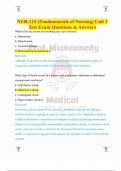
NUR-215 (Fundamentals of Nursing) Unit 3 Test Exam Questions & Answers (With Rationales)-What is the key factor in describing any type of shock? a. Hypoxemia b. Hypotension c. Vascular collapse d. Decreased tissue perfusion-d Rationale: Although all the factors may be present, the end result is decreased supply of oxygen and nutrients to body cells from decreased tissue perfusion. What type of shock occurs in a patient with pulmonary embolism or abdominal compartment syndrome? a. Distributive shock b. Obstructive shock c. Cardiogenic shock d. Hypovolemic shock-b. Rationale: Obstructive shock occurs when a physical obstruction impedes the filling or outflow of blood, resulting in reduced cardiac output (CO). Distributive shock is evident with massive vasodilation and impaired cellular metabolism (neurogenic shock) or increased capillary permeability (anaphylactic shock). Cardiogenic shock occurs when the systolic or diastolic dysfunction of the heart's pumping action results in reduced CO. Hypovolemic shock is the absolute or relative loss of blood or fluid. What physical problems can precipitate hypovolemic shock? Select all that apply. 1. Burns 2. Ascites 3. Vaccines 4. Insect bites 5. Hemorrhage 6. Ruptured spleen a. 1,2,3 b. 3,4,5,6 c. 2,4,6 d. 1,2,5,6 e. All f. None-d Rationale: Hypovolemic shock occurs when there is a loss of intravascular fluid volume from fluid loss (e.g., hemorrhage or severe vomiting and diarrhea), fluid shift (e.g., burns or ascites), or internal bleeding (e.g., with a ruptured spleen). Vaccines and insect bites would precipitate the anaphylactic type of distributive shock. A 70-year-old patient with malnourishment and a history of type 2 diabetes is admitted from the nursing home with pneumonia and tachypnea. Which kind of shock is this patient most likely to develop? a. Septic shock b. Neurogenic shock c. Cardiogenic shock d. Anaphylactic shock-a. Septic shock Rationale: Older adults with chronic diseases and malnourished or debilitated patients are at risk of developing septic shock, especially when they have an infection (e.g., pneumonia, urinary tract infection) or indwelling lines or catheters. Fever, hypothermia, tachycardia, tachypnea, altered mental status, significant edema, or hyperglycemia without diabetes are criteria for diagnosis of sepsis.
Información del documento
- Subido en
- 15 de julio de 2025
- Número de páginas
- 61
- Escrito en
- 2024/2025
- Tipo
- Examen
- Contiene
- Preguntas y respuestas