1 1.
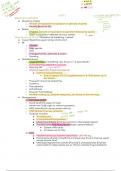
The Economic Problem
① Definitions ③ Economic Agents ⑦ Factors of Production ⑤ Resources
Economic Goods Goods
: that are scarce resources with an
opportunity cost. Government : -
Act on behalf of consumers Land : Natural resources or
physical space
The Environment is a scarce resource
consisting of
: Have value which trade .
of healthcare
consumers will
pay
+ -
Intervene to different extents e
g.
. UK : provision e
.
g
. coal oil
,
renewable + nonrenewable resources.
Free Goods : Goods that have no
opportunity cost as
they are not scarce. US :
private healthcare earns rent
e
g.
. Water + air Renewable : Can be replenished within a liktime
Basic Economic Problem : Unlimited with finite Firms : Aim Labour Human capital workforce g Oxygen fish
solar power
resources
profits
: resources
wants -
to maximise : e
.
.
, ,
,
have to be distributed + used ... Choices must be . Reward from taking risks sustainable
making workers
made : are resources
- +
investments e
g.
.
Scarcity The shortage of
: resources in relation to the
quantity ↳ Firms can have different objectives i . e . maximise social welfare earn wages/salaries
of human wants.
environmental aid Nonrenewable : Cannot be renewed , finite resources
philanthropic help Capital Machinery, goods used
:
in
production process
↳
scarcity means that
they are unsustainable resources
e machines ↳ choices have to be made
g
.
.
Households : -
Make decisions on how to spend limited resources earns interest + dividends e .
. oil coal, natural gas
g ,
Maximise of self
-
utility
② Statements - Workers demand wages+ good working conditions Enterprise Having :
an idea
,
managerial ability
FoP
Maximisation for consumers : when consumers aim to
generate the
greatest Taking risks
,
innovates + uses
Positive Statements :
Objective statements which can be assessed with factual evidence
utility possible from an economis decision e
.
g
.
founding of a coffee shop
Total satisfaction received from
L can be accepted or rejected Utility :
consuming good/service
a earns
profit incentive to take risks
'will'is
'
↳
me
g
. "Higher temperatures will
.
lead to an increase in demand for icecreum . "
Normative Statements : Subjective statements based on
opinion , they are value judgements.
↳ should
"
↳ "The Government should increase the tax on alcohol .
↳ Can
influence economic decision making
+ policy.
, The Allocation of Resources
② Economic
Allocation of Resources : How resources are distributed
among producers and how
goods + services are distributed
among consumers .
Efficiency
↳ How to
satisfy infinite wants with scarce resources
Productive When used to the
Efficiency possible output at the lowest possible
create
D Incentives
: resources are
maximum cost
&
Consumers incentivised lower Maximises welfare but be wasteful
by
·
consumer can
are
prices not always necessarily the case
↓
Producers/Firms are incentivised
by higher prices Benefitting one consumer means another consumer is
disadvantaged
↳ need incentives to take risks
Allocative Efficiency : When resources are allocated to the best interests of society ,
where there is maximum social welfare + maximum utility
.
③ Methods of allocation
Free Market
Command/Planned Economy Mixed
Economy Economy
↳ Where the Government allocates all ↳ Where the allocation decided
of the scarce the ↳ Features of both command free marhet of scarce resources is
by private individuals through the price mechanism.
economy
resources in +
economies
(North Korea Cuba,
(UK quite central
=
,
US =
slightly free
more ·
Price Mechanism :
Signalling (signs to consumer /producers) Incentive
,
, Rationing (Demand)
Production based Government preference Production based both Government Production based preference
preferences
on
on on consumer + consumer
Produced by the Government Produced Production
by firms producers
+ its labour
by producers making profits + the Government +
seeking profit
Allocated the Government's Preference Allocated both Government's of Allocated to greatest purchasing power
to to
preference +
purchasing power private individuals
Advantages Advantages Advantages
Greater theoretical wealth
equality Ability to allocate some public goods (NHS)
Consumer Sovereignty
Mora organised + efficient Regulation of industries prevent ,
market failure
·
Efficiency of resource allocation due to demand: Min output
Job ↳
Encourage due to the
stability (Theoretically unemployment) Cuba industry Maintain for firms be rich :
incentive i-innovation innovation incentive to innovation
,
no e
.
g
.
sugar · ,
Assured quality of life ·
Some level of income redistribution (taxation) Prevents exploitation of large bureaucratic Government
BETTER THAN ALTERNATIVES
Disadvantages Disadvantages
Liability to
corruption i . .
e North Korea ·
Possibility of Government Failure Disadvantages
↳ Limited economic/financial freedom ↳ Can be corrupt and/or inefficient Monopoly power of firms :. exploitation
Limited economic
growth Too much regulation can limit incentive to innovate ↳ can ↑ prices + ↓ wages
↳ No incentive no innovation ↳
crowding out investment large inequality
Government Failure misallocation of resources Overconsumption of demerit goods :
negative externalities
,
Low dynamic efficiency No public goods = underprovision of merit
goods
Prome to 'boom and bust' cycle
3 growth then recession
,
constant
change
, Cost
Opportunity
① Conceptual Idea ② Production Possibility Curve ③ Changes in the PPC/PPF
Cost The value of giving Productive Possibility (PPC)/Production Frontier (PPF) Shifts
Opportunity the next best alternative Curve
Possibility
:
up
choices Cursed productive possibility
↳ Refers to
making Used to show the maximum productive potential of an
economy when resources are
fully employed by changes in
↳ Caused by the existence of scarce resources with infinite wants to the production of two goods + services
↳
changes in
quantity of For finding i . e. more resources
(mining)
↳Trade off' When
: one
thing is lost or
gain to
something else more
labour (immigration
Assumptions of the PPF/PPC
creating new factors of production (investment in new capital
FoP
Opportunity Cost causes choices to be
necessary for
economic
agents . The economy makes
only two outputs
re
changes in
quality of i . .
e investment
The resources are fixed skilled labour (education + training)
Capital Goods : Goods used to The consumer
produce other goods factors of production are mobile
goods
Consumer Goods : Goods which cannot be used to
produce other goods
Consumea
Usefulnes of Opportunity
.. Capital Outward shift (PPF-PPF)
pPFz PPFo PPF ,
Capital
goods
Cost shows economic growth
Good,
Alternatives not
always quantifiable Gradient shows and of made Inward shift (PPF -
PPF2) shows decline
increasing opportunity
are cost economic
as more more one output is .
↳
subjectivity => not comparable n
Opportunity cost increases due to the Law of Diminishing Returns
Movements Along
OpportunityCost relates to future events : hard to place monetary value
Maximum
↳ can show
Opportunity Cost
productively efficient point
:
A most
,
B :
Impossible at current state of factors of production consumer
goods
C :
Inefficient ,
factors of production are not used to their full productive potential A
· B
·
D
·
C
capital
goods
A Overconcentration
:
on consumer goods can limit future growth
B :
Middleground of balancing capitalI goods consumer Coutput
C :
High investment in Capital goods. promoting long-term : economic
growth
D :
Productive Inefficiency
Around B It : is allocative
efficiency where scarce resources are used to produce a bundle of goods a services
both
which satisfy consumer
preference + welfare
C) where production
Anywhere It
productively efficient (A B achieved lowest average
+
on PPC : is is at cost
,
↳ be considered
↳ D is NOT productively efficient C can NOT
productively efficient
The Economic Problem
① Definitions ③ Economic Agents ⑦ Factors of Production ⑤ Resources
Economic Goods Goods
: that are scarce resources with an
opportunity cost. Government : -
Act on behalf of consumers Land : Natural resources or
physical space
The Environment is a scarce resource
consisting of
: Have value which trade .
of healthcare
consumers will
pay
+ -
Intervene to different extents e
g.
. UK : provision e
.
g
. coal oil
,
renewable + nonrenewable resources.
Free Goods : Goods that have no
opportunity cost as
they are not scarce. US :
private healthcare earns rent
e
g.
. Water + air Renewable : Can be replenished within a liktime
Basic Economic Problem : Unlimited with finite Firms : Aim Labour Human capital workforce g Oxygen fish
solar power
resources
profits
: resources
wants -
to maximise : e
.
.
, ,
,
have to be distributed + used ... Choices must be . Reward from taking risks sustainable
making workers
made : are resources
- +
investments e
g.
.
Scarcity The shortage of
: resources in relation to the
quantity ↳ Firms can have different objectives i . e . maximise social welfare earn wages/salaries
of human wants.
environmental aid Nonrenewable : Cannot be renewed , finite resources
philanthropic help Capital Machinery, goods used
:
in
production process
↳
scarcity means that
they are unsustainable resources
e machines ↳ choices have to be made
g
.
.
Households : -
Make decisions on how to spend limited resources earns interest + dividends e .
. oil coal, natural gas
g ,
Maximise of self
-
utility
② Statements - Workers demand wages+ good working conditions Enterprise Having :
an idea
,
managerial ability
FoP
Maximisation for consumers : when consumers aim to
generate the
greatest Taking risks
,
innovates + uses
Positive Statements :
Objective statements which can be assessed with factual evidence
utility possible from an economis decision e
.
g
.
founding of a coffee shop
Total satisfaction received from
L can be accepted or rejected Utility :
consuming good/service
a earns
profit incentive to take risks
'will'is
'
↳
me
g
. "Higher temperatures will
.
lead to an increase in demand for icecreum . "
Normative Statements : Subjective statements based on
opinion , they are value judgements.
↳ should
"
↳ "The Government should increase the tax on alcohol .
↳ Can
influence economic decision making
+ policy.
, The Allocation of Resources
② Economic
Allocation of Resources : How resources are distributed
among producers and how
goods + services are distributed
among consumers .
Efficiency
↳ How to
satisfy infinite wants with scarce resources
Productive When used to the
Efficiency possible output at the lowest possible
create
D Incentives
: resources are
maximum cost
&
Consumers incentivised lower Maximises welfare but be wasteful
by
·
consumer can
are
prices not always necessarily the case
↓
Producers/Firms are incentivised
by higher prices Benefitting one consumer means another consumer is
disadvantaged
↳ need incentives to take risks
Allocative Efficiency : When resources are allocated to the best interests of society ,
where there is maximum social welfare + maximum utility
.
③ Methods of allocation
Free Market
Command/Planned Economy Mixed
Economy Economy
↳ Where the Government allocates all ↳ Where the allocation decided
of the scarce the ↳ Features of both command free marhet of scarce resources is
by private individuals through the price mechanism.
economy
resources in +
economies
(North Korea Cuba,
(UK quite central
=
,
US =
slightly free
more ·
Price Mechanism :
Signalling (signs to consumer /producers) Incentive
,
, Rationing (Demand)
Production based Government preference Production based both Government Production based preference
preferences
on
on on consumer + consumer
Produced by the Government Produced Production
by firms producers
+ its labour
by producers making profits + the Government +
seeking profit
Allocated the Government's Preference Allocated both Government's of Allocated to greatest purchasing power
to to
preference +
purchasing power private individuals
Advantages Advantages Advantages
Greater theoretical wealth
equality Ability to allocate some public goods (NHS)
Consumer Sovereignty
Mora organised + efficient Regulation of industries prevent ,
market failure
·
Efficiency of resource allocation due to demand: Min output
Job ↳
Encourage due to the
stability (Theoretically unemployment) Cuba industry Maintain for firms be rich :
incentive i-innovation innovation incentive to innovation
,
no e
.
g
.
sugar · ,
Assured quality of life ·
Some level of income redistribution (taxation) Prevents exploitation of large bureaucratic Government
BETTER THAN ALTERNATIVES
Disadvantages Disadvantages
Liability to
corruption i . .
e North Korea ·
Possibility of Government Failure Disadvantages
↳ Limited economic/financial freedom ↳ Can be corrupt and/or inefficient Monopoly power of firms :. exploitation
Limited economic
growth Too much regulation can limit incentive to innovate ↳ can ↑ prices + ↓ wages
↳ No incentive no innovation ↳
crowding out investment large inequality
Government Failure misallocation of resources Overconsumption of demerit goods :
negative externalities
,
Low dynamic efficiency No public goods = underprovision of merit
goods
Prome to 'boom and bust' cycle
3 growth then recession
,
constant
change
, Cost
Opportunity
① Conceptual Idea ② Production Possibility Curve ③ Changes in the PPC/PPF
Cost The value of giving Productive Possibility (PPC)/Production Frontier (PPF) Shifts
Opportunity the next best alternative Curve
Possibility
:
up
choices Cursed productive possibility
↳ Refers to
making Used to show the maximum productive potential of an
economy when resources are
fully employed by changes in
↳ Caused by the existence of scarce resources with infinite wants to the production of two goods + services
↳
changes in
quantity of For finding i . e. more resources
(mining)
↳Trade off' When
: one
thing is lost or
gain to
something else more
labour (immigration
Assumptions of the PPF/PPC
creating new factors of production (investment in new capital
FoP
Opportunity Cost causes choices to be
necessary for
economic
agents . The economy makes
only two outputs
re
changes in
quality of i . .
e investment
The resources are fixed skilled labour (education + training)
Capital Goods : Goods used to The consumer
produce other goods factors of production are mobile
goods
Consumer Goods : Goods which cannot be used to
produce other goods
Consumea
Usefulnes of Opportunity
.. Capital Outward shift (PPF-PPF)
pPFz PPFo PPF ,
Capital
goods
Cost shows economic growth
Good,
Alternatives not
always quantifiable Gradient shows and of made Inward shift (PPF -
PPF2) shows decline
increasing opportunity
are cost economic
as more more one output is .
↳
subjectivity => not comparable n
Opportunity cost increases due to the Law of Diminishing Returns
Movements Along
OpportunityCost relates to future events : hard to place monetary value
Maximum
↳ can show
Opportunity Cost
productively efficient point
:
A most
,
B :
Impossible at current state of factors of production consumer
goods
C :
Inefficient ,
factors of production are not used to their full productive potential A
· B
·
D
·
C
capital
goods
A Overconcentration
:
on consumer goods can limit future growth
B :
Middleground of balancing capitalI goods consumer Coutput
C :
High investment in Capital goods. promoting long-term : economic
growth
D :
Productive Inefficiency
Around B It : is allocative
efficiency where scarce resources are used to produce a bundle of goods a services
both
which satisfy consumer
preference + welfare
C) where production
Anywhere It
productively efficient (A B achieved lowest average
+
on PPC : is is at cost
,
↳ be considered
↳ D is NOT productively efficient C can NOT
productively efficient