

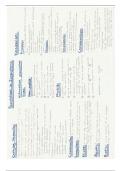
Summary 3.7.4 Populations in ecosystems
Populations of different species form a community. A community and the non-living components of its environment together form an ecosystem. Ecosystems can range in size from the very small to the very large. Within a habitat, a species occupies a niche governed by adaptation to both abiotic and biotic conditions. An ecosystem supports a certain size of population of a species, called the carrying capacity. This population size can vary as a result of: the effect of abiotic factors interactions between organisms: interspecific and intraspecific competition and predation. The size of a population can be estimated using: randomly placed quadrats, or quadrats along a belt transect, for slow-moving or non-motile organisms the mark-release-recapture method for motile organisms. The assumptions made when using the mark-release-recapture method. Ecosystems are dynamic systems. Primary succession, from colonisation by pioneer species to climax community. At each stage in succession, certain species may be recognised which change the environment so that it becomes more suitable for other species with different adaptations. The new species may change the environment in such a way that it becomes less suitable for the previous species. Changes that organisms produce in their abiotic environment can result in a less hostile environment and change biodiversity. Conservation of habitats frequently involves management of succession. Students should be able to: show understanding of the need to manage the conflict between human needs and conservation in order to maintain the sustainability of natural resources evaluate evidence and data concerning issues relating to the conservation of species and habitats and consider conflicting evidence use given data to calculate the size of a population estimated using the mark-release-recapture method.
Información del documento
- Nivel de Estudio
- A/AS Level
- Tema
- A Level Biology
- Subido en
- 10 de julio de 2025
- Número de páginas
- 1
- Escrito en
- 2024/2025
- Tipo
- Resumen

