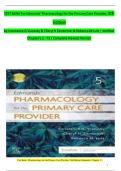
TEST BANK For Edmunds' Pharmacology for the Primary Care Provider,
CC CC CC CC CC CC CC CC CC
5th Edition
CC CC
by Constance G Visovsky & Cheryl H Zambroski & Rebecca M Lutz |
CC CC CC CC CC CC CC CC CC CC CC CC
Verified Chapter's 1 - 73 | Complete Newest Version
CC CC CC CC CC CC CC CC CC
Test Bank - Pharmacology for the Primary Care Provider, 5th Edition (Edmunds), Chapter
CC CC CC CC CC CC CC CC CC CC CC CC
1-73
CC
1
,Test Bank - Pharmacology for the Primary Care Provider, 5th Edition (Edmunds), Chapter
CC CC CC CC CC CC CC CC CC CC CC CC
1-73
CC
2
,Test Bank - Pharmacology for the Primary Care Provider, 5th Edition (Edmunds), Chapter
CC CC CC CC CC CC CC CC CC CC CC CC
1-73
CC
3
, Chapter 01: Prescriptive Authority and Role Implementation: Tradition vs. ChangeTest
CC CC CC CC CC CC CC CC CC C
Bank
CC
MULTIPLE CHOICE CC
1. Which of the following has influenced an emphasis on primary care education in
CC CC CC CC CC CC CC CC CC CC CC CC
CC medicalschools? C
a. Changes in Medicare CC CC
reimbursementmethods
CC C
recommended in 1992
CC CC CC
b. Competition from nonphysicians CC CC
desiringto meet primary care
CC C CC CC CC
shortages
CC
c. The need for monopolistic control in
CC CC CC CC CC
themarketplace of primary outpatient
CC C CC CC CC
care
CC
d. The recognition that nonphysicians
CC CC CC
havevariable success providing
CC C CC CC
primary care
CC CC
ANS: A CC
The Physician Payment Review Commission in 1992 directly increased financial
CC CC CC CC CC CC CC CC CC
reimbursement to clinicians who provide primary care. Coupled with a shortage of
CC CC CC CC CC CC CC CC CC CC CC CC
primary care providers, this incentive led medical schools to place greater emphasis
CC CC CC CC CC CC CC CC CC CC CC CC
onpreparing primary care physicians. Competition from nonphysicians increased
CC C CC CC CC CC CC CC CC
coincidentally as professionals from other disciplines stepped up to meet the needs.
CC CC CC CC CC CC CC CC CC CC CC CC
Nonphysicians have had increasing success at providing primary care and have
CC CC CC CC CC CC CC CC CC CC
beenshown to be safe and effective.
CC C CC CC CC CC CC
DIF: Cognitive Level: Remembering (Knowledge)
CC CC CC REF: 2 CC
2. Which of the following statements is true about the prescribing practices of physicians?
CC CC CC CC CC CC CC CC CC CC CC CC
a. Older physicians tend to prescribe
CC CC CC CC
moreappropriate medications than
CC C CC CC
younger physicians.
CC CC
b. Antibiotic medications remain in the CC CC CC CC
topfive classifications of medications
CC C CC CC CC
prescribed.
CC
c. Most physicians rely on a “therapeutic
CC CC CC CC CC
armamentarium” that consists of less
CC CC CC CC CC
than
CC
100 drug preparations per physician.
CC CC CC CC
d. The dominant form of drug information
CC CC CC CC CC
used by primary care physicians
CC CC CC CC CC
continuesto be that provided by
CC C CC CC CC CC
pharmaceutical companies.
CC CC
Test Bank - Pharmacology for the Primary Care Provider, 5th Edition (Edmunds), Chapter
CC CC CC CC CC CC CC CC CC CC CC CC
1-73
CC
4
CC CC CC CC CC CC CC CC CC
5th Edition
CC CC
by Constance G Visovsky & Cheryl H Zambroski & Rebecca M Lutz |
CC CC CC CC CC CC CC CC CC CC CC CC
Verified Chapter's 1 - 73 | Complete Newest Version
CC CC CC CC CC CC CC CC CC
Test Bank - Pharmacology for the Primary Care Provider, 5th Edition (Edmunds), Chapter
CC CC CC CC CC CC CC CC CC CC CC CC
1-73
CC
1
,Test Bank - Pharmacology for the Primary Care Provider, 5th Edition (Edmunds), Chapter
CC CC CC CC CC CC CC CC CC CC CC CC
1-73
CC
2
,Test Bank - Pharmacology for the Primary Care Provider, 5th Edition (Edmunds), Chapter
CC CC CC CC CC CC CC CC CC CC CC CC
1-73
CC
3
, Chapter 01: Prescriptive Authority and Role Implementation: Tradition vs. ChangeTest
CC CC CC CC CC CC CC CC CC C
Bank
CC
MULTIPLE CHOICE CC
1. Which of the following has influenced an emphasis on primary care education in
CC CC CC CC CC CC CC CC CC CC CC CC
CC medicalschools? C
a. Changes in Medicare CC CC
reimbursementmethods
CC C
recommended in 1992
CC CC CC
b. Competition from nonphysicians CC CC
desiringto meet primary care
CC C CC CC CC
shortages
CC
c. The need for monopolistic control in
CC CC CC CC CC
themarketplace of primary outpatient
CC C CC CC CC
care
CC
d. The recognition that nonphysicians
CC CC CC
havevariable success providing
CC C CC CC
primary care
CC CC
ANS: A CC
The Physician Payment Review Commission in 1992 directly increased financial
CC CC CC CC CC CC CC CC CC
reimbursement to clinicians who provide primary care. Coupled with a shortage of
CC CC CC CC CC CC CC CC CC CC CC CC
primary care providers, this incentive led medical schools to place greater emphasis
CC CC CC CC CC CC CC CC CC CC CC CC
onpreparing primary care physicians. Competition from nonphysicians increased
CC C CC CC CC CC CC CC CC
coincidentally as professionals from other disciplines stepped up to meet the needs.
CC CC CC CC CC CC CC CC CC CC CC CC
Nonphysicians have had increasing success at providing primary care and have
CC CC CC CC CC CC CC CC CC CC
beenshown to be safe and effective.
CC C CC CC CC CC CC
DIF: Cognitive Level: Remembering (Knowledge)
CC CC CC REF: 2 CC
2. Which of the following statements is true about the prescribing practices of physicians?
CC CC CC CC CC CC CC CC CC CC CC CC
a. Older physicians tend to prescribe
CC CC CC CC
moreappropriate medications than
CC C CC CC
younger physicians.
CC CC
b. Antibiotic medications remain in the CC CC CC CC
topfive classifications of medications
CC C CC CC CC
prescribed.
CC
c. Most physicians rely on a “therapeutic
CC CC CC CC CC
armamentarium” that consists of less
CC CC CC CC CC
than
CC
100 drug preparations per physician.
CC CC CC CC
d. The dominant form of drug information
CC CC CC CC CC
used by primary care physicians
CC CC CC CC CC
continuesto be that provided by
CC C CC CC CC CC
pharmaceutical companies.
CC CC
Test Bank - Pharmacology for the Primary Care Provider, 5th Edition (Edmunds), Chapter
CC CC CC CC CC CC CC CC CC CC CC CC
1-73
CC
4