

NBR C PRACTICE EXAM/ACTUAL EXAM QUESTIONS WITH WELL DETAILE
ANSWERS/GRADE A+ ASSURED
Study online at https://quizlet.com/_h9qzqa
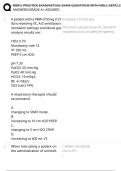
1. A patient with a PBW of 55 kg (121 B increqsing to 10 cmh2o peep
lb) is receiving VC, A/C ventilation.
Ventilator settings and blood gas (The increase in peep will increase FRC, decrease the
analysis results are: intrapulmonary shunt, and address the hypoxemia)
FIO2 0.70
Mandatory rate 14
VT 350 mL
PEEP 5 cm H2O
pH 7.35
PaCO2 35 mm Hg
PaO2 40 mm Hg
HCO3- 19 mEq/L
BE -6 mEq/L
SO2 (calc) 74%
A respiratory therapist should
recommend
A.
changing to SIMV mode.
B.
increasing to 10 cm H2O PEEP.
C.
changing to 5 cm H2O CPAP.
D.
increasing to 400 mL VT.
2. When instructing a patient on C. Breathe in fast and deep
the administration of unmecli- (This is a DPI)
, NBR C PRACTICE EXAM/ACTUAL EXAM QUESTIONS WITH WELL DETAILE
ANSWERS/GRADE A+ ASSURED
Study online at https://quizlet.com/_h9qzqa
dinium/vilanterol (anoro Elliot's),
which of the following is most im-
portant to emphasize?
A. Gargle immediately after use
B. Inhale slowly with a breath
hold.
C. Breathe in fast and deep
D. Shake medication vigorously
before use
3. Following placement of a tra- D. Semi fowlers
cheostomy tube for long term (Decreased incident of VAP has been observed with an
mechanical ventilation, which of elevated head of bed compared to supine)
the following patient positions
best prevents ventilator associat-
ed pneumonia?
A. Prone
B. Trendelenburg
C. Supine
D. Semi-fowlers
4. Which of the following is used to D. Stow-Severinghaus electrode
monitor the partial pressure of (A stow-severinghaus electrode blood has electrode is
transcutaneous carbon dioxide? used in transcutaneous monitors)
A. Red-light absorption sensor
B. Electromechanical transducer
C. Infrared analyzer
D. Stow-severinghaus electrode
5. An adult patient requires fre-
quent blood sampling and med-
, NBR C PRACTICE EXAM/ACTUAL EXAM QUESTIONS WITH WELL DETAILE
ANSWERS/GRADE A+ ASSURED
Study online at https://quizlet.com/_h9qzqa
ication administrations through A. Peripherally inserted central catheter
an iv for 1 month: the preferred (A PICC is the best choice for long term iv access and
vascular access is a: allows for blood sampling)
A. Peripherally inserted central
catheter
B. Subclavian central vascular
line
C. Standard peripheral IV line
D. Internal jugular catheter
6. A 170-cm (5-ft 7-in), 69-kg (152-lb) A. Decrease FI02 to .60
male with ARDS has the following ( since the pao2 is adequate; it is now appropriate to
ABG analysis results: decrease the fio2)
pH 7.37
PCO2 43 mm Hg
PO2 95 mm Hg
HCO3- 25 mEq/L
BE -1 mEq/L
SO2 (calc) 97%
The patient is receiving VC, A/C
ventilation with the following set-
tings:
FIO2 0.70
Mandatory rate 12
VT 450 mL
PEEP 8 cm H2O
Which of the following is most ap-
, NBR C PRACTICE EXAM/ACTUAL EXAM QUESTIONS WITH WELL DETAILE
ANSWERS/GRADE A+ ASSURED
Study online at https://quizlet.com/_h9qzqa
propriate?
A.
Decrease the FIO2 to 0.60.
B.
Change the PEEP to 5 cm H2O.
C.
Increase the minute ventilation.
D.
Maintain the current settings.
7. following an emergent c-section; D. Trigger sensitivity
a 35 year old is receiving vc (The patient is having difficulty triggering the breath,
a/c ventilation. And the following which is shown by the significant negative force created
pressure loop is observed: (fish before the breath is delivered. The trigger should be
tail) adjusted to be more sensitive to improve the patients
ability to trigger a breath)
Which ventilator settings should
be adjusted?
A. Peep
B. Flow rate
C. Tidal volume
D. Trigger sensitivity
8. Which of the following tech- B. Abdominal thrusts
niques is preferred for a quadri- (An abdominal thrusts is used to assist patients with de-
plegic patient having difficulty ex- creased respiratory muscle function, such as quadripleg-
pectorating secretions? ics to more forcefully cough out secretions)
A: pursed lip breathing
B. Abdominal thrusts
ANSWERS/GRADE A+ ASSURED
Study online at https://quizlet.com/_h9qzqa
1. A patient with a PBW of 55 kg (121 B increqsing to 10 cmh2o peep
lb) is receiving VC, A/C ventilation.
Ventilator settings and blood gas (The increase in peep will increase FRC, decrease the
analysis results are: intrapulmonary shunt, and address the hypoxemia)
FIO2 0.70
Mandatory rate 14
VT 350 mL
PEEP 5 cm H2O
pH 7.35
PaCO2 35 mm Hg
PaO2 40 mm Hg
HCO3- 19 mEq/L
BE -6 mEq/L
SO2 (calc) 74%
A respiratory therapist should
recommend
A.
changing to SIMV mode.
B.
increasing to 10 cm H2O PEEP.
C.
changing to 5 cm H2O CPAP.
D.
increasing to 400 mL VT.
2. When instructing a patient on C. Breathe in fast and deep
the administration of unmecli- (This is a DPI)
, NBR C PRACTICE EXAM/ACTUAL EXAM QUESTIONS WITH WELL DETAILE
ANSWERS/GRADE A+ ASSURED
Study online at https://quizlet.com/_h9qzqa
dinium/vilanterol (anoro Elliot's),
which of the following is most im-
portant to emphasize?
A. Gargle immediately after use
B. Inhale slowly with a breath
hold.
C. Breathe in fast and deep
D. Shake medication vigorously
before use
3. Following placement of a tra- D. Semi fowlers
cheostomy tube for long term (Decreased incident of VAP has been observed with an
mechanical ventilation, which of elevated head of bed compared to supine)
the following patient positions
best prevents ventilator associat-
ed pneumonia?
A. Prone
B. Trendelenburg
C. Supine
D. Semi-fowlers
4. Which of the following is used to D. Stow-Severinghaus electrode
monitor the partial pressure of (A stow-severinghaus electrode blood has electrode is
transcutaneous carbon dioxide? used in transcutaneous monitors)
A. Red-light absorption sensor
B. Electromechanical transducer
C. Infrared analyzer
D. Stow-severinghaus electrode
5. An adult patient requires fre-
quent blood sampling and med-
, NBR C PRACTICE EXAM/ACTUAL EXAM QUESTIONS WITH WELL DETAILE
ANSWERS/GRADE A+ ASSURED
Study online at https://quizlet.com/_h9qzqa
ication administrations through A. Peripherally inserted central catheter
an iv for 1 month: the preferred (A PICC is the best choice for long term iv access and
vascular access is a: allows for blood sampling)
A. Peripherally inserted central
catheter
B. Subclavian central vascular
line
C. Standard peripheral IV line
D. Internal jugular catheter
6. A 170-cm (5-ft 7-in), 69-kg (152-lb) A. Decrease FI02 to .60
male with ARDS has the following ( since the pao2 is adequate; it is now appropriate to
ABG analysis results: decrease the fio2)
pH 7.37
PCO2 43 mm Hg
PO2 95 mm Hg
HCO3- 25 mEq/L
BE -1 mEq/L
SO2 (calc) 97%
The patient is receiving VC, A/C
ventilation with the following set-
tings:
FIO2 0.70
Mandatory rate 12
VT 450 mL
PEEP 8 cm H2O
Which of the following is most ap-
, NBR C PRACTICE EXAM/ACTUAL EXAM QUESTIONS WITH WELL DETAILE
ANSWERS/GRADE A+ ASSURED
Study online at https://quizlet.com/_h9qzqa
propriate?
A.
Decrease the FIO2 to 0.60.
B.
Change the PEEP to 5 cm H2O.
C.
Increase the minute ventilation.
D.
Maintain the current settings.
7. following an emergent c-section; D. Trigger sensitivity
a 35 year old is receiving vc (The patient is having difficulty triggering the breath,
a/c ventilation. And the following which is shown by the significant negative force created
pressure loop is observed: (fish before the breath is delivered. The trigger should be
tail) adjusted to be more sensitive to improve the patients
ability to trigger a breath)
Which ventilator settings should
be adjusted?
A. Peep
B. Flow rate
C. Tidal volume
D. Trigger sensitivity
8. Which of the following tech- B. Abdominal thrusts
niques is preferred for a quadri- (An abdominal thrusts is used to assist patients with de-
plegic patient having difficulty ex- creased respiratory muscle function, such as quadripleg-
pectorating secretions? ics to more forcefully cough out secretions)
A: pursed lip breathing
B. Abdominal thrusts

