FORENSICS
, TOP-DOWN APPROACH (USA)
Offender Profiling – a tool used by police to narrow the field of enquiry and likely
suspects by compiling a hypothesis of their probable characteristics
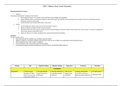
Organised Disorganised
▪ Plan crimes ▪ Little evidence of planning
▪ Deliberate victims ▪ Spontaneous and impulsive
▪ Often has a ‘type’ ▪ Body abandoned
▪ High degree of control ▪ Little control
▪ Methodological, surgical precision ▪ Lower IQ average
▪ Little evidence ▪ Sexual dysfunction and failed relationships
▪ Above average IQ ▪ Lives alone
▪ Socially/sexually competent ▪ Unemployed and not skilled
▪ Usually married with kids ▪ Reckless and not serial
FBI Profile Construction
Data Assimilation
o Profiler reviews evidence (crime scene, photos, pathology reports)
Crime Scene Classification
o Classifies offender typology as either organised or disorganised
Crime Reconstruction
o Hypotheses in terms of sequence of events and victim behaviour
Profile Generation
o Hypotheses related to offender (demographic, background, behaviour, physical
characteristics)
Evaluation:
- Classification system is too simplistic as categories are not mutually exclusive
- Jeffrey Dahmer had a set type (Asian/African gay men)
- Canter analysed data from 100 murders in the USA and found evidence of
organised types but not disorganised (undermines system)
- Approach is best suited to macabre crimes (rape, arson, torture, dissection)
- Common crimes reveal little details about the suspect
- Low generalisability and application
- The typology was developed from 36 sexually motivated killers (serial) suing self-
report, police interviews on this unrepresentative sample which required
analysis and may have been lies
- Unreliable, low internal validity
, TOP-DOWN APPROACH (USA)
Offender Profiling – a tool used by police to narrow the field of enquiry and likely
suspects by compiling a hypothesis of their probable characteristics
Organised Disorganised
▪ Plan crimes ▪ Little evidence of planning
▪ Deliberate victims ▪ Spontaneous and impulsive
▪ Often has a ‘type’ ▪ Body abandoned
▪ High degree of control ▪ Little control
▪ Methodological, surgical precision ▪ Lower IQ average
▪ Little evidence ▪ Sexual dysfunction and failed relationships
▪ Above average IQ ▪ Lives alone
▪ Socially/sexually competent ▪ Unemployed and not skilled
▪ Usually married with kids ▪ Reckless and not serial
FBI Profile Construction
Data Assimilation
o Profiler reviews evidence (crime scene, photos, pathology reports)
Crime Scene Classification
o Classifies offender typology as either organised or disorganised
Crime Reconstruction
o Hypotheses in terms of sequence of events and victim behaviour
Profile Generation
o Hypotheses related to offender (demographic, background, behaviour, physical
characteristics)
Evaluation:
- Classification system is too simplistic as categories are not mutually exclusive
- Jeffrey Dahmer had a set type (Asian/African gay men)
- Canter analysed data from 100 murders in the USA and found evidence of
organised types but not disorganised (undermines system)
- Approach is best suited to macabre crimes (rape, arson, torture, dissection)
- Common crimes reveal little details about the suspect
- Low generalisability and application
- The typology was developed from 36 sexually motivated killers (serial) suing self-
report, police interviews on this unrepresentative sample which required
analysis and may have been lies
- Unreliable, low internal validity