Chapter 20: Infections of the Respiratory Tract
MULTIPLE CHOICE
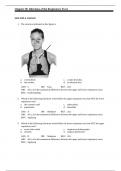
1. The structure indicated on this figure is
a. a bronchiole. c. a main bronchus.
b. the trachea. d. an alveolar duct.
ANS: C DIF: Easy REF: 20.1
OBJ: 20.1a List the anatomical differences between the upper and lower respiratory tracts.
MSC: Understanding
2. Which of the following infections would affect the upper respiratory tract but NOT the lower
respiratory tract?
a. the common cold c. tuberculosis
b. pneumonia d. bronchitis
ANS: A DIF: Moderate REF: 20.1
OBJ: 20.1a List the anatomical differences between the upper and lower respiratory tracts.
MSC: Applying
3. Which of the following infections would affect the lower respiratory tract but NOT the upper
respiratory tract?
a. acute otitis media c. streptococcal pharyngitis
b. sinusitis d. atypical pneumonia
ANS: D DIF: Moderate REF: 20.1
OBJ: 20.1a List the anatomical differences between the upper and lower respiratory tracts.
MSC: Applying
, 4. Which of the following structures is considered part of the upper respiratory tract?
a. trachea c. alveoli
b. primary bronchi d. larynx
ANS: D DIF: Easy REF: 20.1
OBJ: 20.1a List the anatomical differences between the upper and lower respiratory tracts.
MSC: Remembering
5. The structure indicated on this figure is a(n)
a. sinus. c. inner ear.
b. lacrimal duct. d. Eustachian tube.
ANS: A DIF: Moderate REF: 20.1
OBJ: 20.1b Describe the relationship of eyes, ears, and nose with the upper airways.
MSC: Understanding
6. What is the significance of the anatomical difference shown?
a. Adults are more prone to developing sinus infections.
b. Children are more prone to developing sinus infections.
c. Adults are more prone to developing middle ear infections.
d. Children are more prone to developing middle ear infections.
ANS: D DIF: Moderate REF: 20.1
MULTIPLE CHOICE
1. The structure indicated on this figure is
a. a bronchiole. c. a main bronchus.
b. the trachea. d. an alveolar duct.
ANS: C DIF: Easy REF: 20.1
OBJ: 20.1a List the anatomical differences between the upper and lower respiratory tracts.
MSC: Understanding
2. Which of the following infections would affect the upper respiratory tract but NOT the lower
respiratory tract?
a. the common cold c. tuberculosis
b. pneumonia d. bronchitis
ANS: A DIF: Moderate REF: 20.1
OBJ: 20.1a List the anatomical differences between the upper and lower respiratory tracts.
MSC: Applying
3. Which of the following infections would affect the lower respiratory tract but NOT the upper
respiratory tract?
a. acute otitis media c. streptococcal pharyngitis
b. sinusitis d. atypical pneumonia
ANS: D DIF: Moderate REF: 20.1
OBJ: 20.1a List the anatomical differences between the upper and lower respiratory tracts.
MSC: Applying
, 4. Which of the following structures is considered part of the upper respiratory tract?
a. trachea c. alveoli
b. primary bronchi d. larynx
ANS: D DIF: Easy REF: 20.1
OBJ: 20.1a List the anatomical differences between the upper and lower respiratory tracts.
MSC: Remembering
5. The structure indicated on this figure is a(n)
a. sinus. c. inner ear.
b. lacrimal duct. d. Eustachian tube.
ANS: A DIF: Moderate REF: 20.1
OBJ: 20.1b Describe the relationship of eyes, ears, and nose with the upper airways.
MSC: Understanding
6. What is the significance of the anatomical difference shown?
a. Adults are more prone to developing sinus infections.
b. Children are more prone to developing sinus infections.
c. Adults are more prone to developing middle ear infections.
d. Children are more prone to developing middle ear infections.
ANS: D DIF: Moderate REF: 20.1