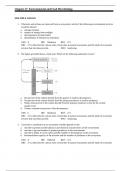
Chapter 27: Environmental and Food Microbiology
MULTIPLE CHOICE
1. If bacteria and archaea are removed from an ecosystem, which of the following environmental services
would be absent?
a. nitrogen fixation
b. capture of energy from sunlight
c. decomposition of dead matter
d. dissimilation of biomass by respiration
ANS: A DIF: Moderate REF: 27.1
OBJ: 27.1a Describe the various roles of microbes in natural ecosystems and the kinds of ecosystem
services that microbes provide. MSC: Analyzing
2. The figure provided shows a food web. Which of the following statements is true?
a. Ten percent of the carbon dioxide fixed by grazers is used by decomposers.
b. Ten percent of the carbon dioxide fixed by primary producers is used by predators.
c. Ninety-nine percent of the carbon dioxide fixed by primary producers is lost by the second
trophic level.
d. Grazers consume ten percent of the decomposers.
ANS: C DIF: Moderate REF: 27.1
OBJ: 27.1a Describe the various roles of microbes in natural ecosystems and the kinds of ecosystem
services that microbes provide. MSC: Analyzing
3. A microbe’s contribution to an ecosystem’s health depends on the
a. microbe’s genome and the physical and chemical characteristics of the environment.
b. microbe’s age and number of primary producers in the environment.
c. microbe’s ability to cycle carbon and the number of decomposers in the ecosystem.
d. bioremediation capacity of the microbe and the number of predators in the ecosystem.
ANS: A DIF: Difficult REF: 27.1
OBJ: 27.1a Describe the various roles of microbes in natural ecosystems and the kinds of ecosystem
, services that microbes provide. MSC: Applying
4. Which of the following statements describes the relationship between physical factors and the ability
of microbes to grow?
a. Most microbes survive best at normal human body temperature.
b. Different microbial species are able to survive different physical conditions.
c. All microbes require oxygen for growth.
d. Microbial growth is not influenced by physical factors.
ANS: B DIF: Moderate REF: 27.1
OBJ: 27.1a Describe the various roles of microbes in natural ecosystems and the kinds of ecosystem
services that microbes provide. MSC: Applying
5. High salt concentrations limit the growth of microbes adapted to freshwater conditions because
a. salt prevents microbes from using oxygen as an electron acceptor during aerobic cellular
respiration.
b. high salt concentrations increase the temperature of the environment above the range at
which most microbes can survive.
c. freshwater is a hypotonic solution and microbes living in freshwater do not have a need
for mechanisms to reduce water loss.
d. a high salt concentration leads to a sharp decline in the pH of the environment.
ANS: C DIF: Difficult REF: 27.1
OBJ: 27.1b Explain how physical factors determine which microbes grow in a given habitat.
MSC: Evaluating
6. Which of the following relationships is shown in this soil food web?
a. Vertebrate animals are consumed by birds.
b. Some nematodes consume fungi and bacteria.
c. Fungi utilize carbon dioxide produced by plants.
d. Bacteria consume protozoa.
ANS: B DIF: Easy REF: 27.1
OBJ: 27.1c Outline how microbes participate in the food chains of ocean, soil, and wetland.
, MSC: Applying
7. The figure shown indicates a dead zone within the Gulf of Mexico. Which of the following would you
expect to find in the area labeled “Lower Mississippi”?
a. an increase in the number of fish and invertebrates
b. a decrease in algal growth within the Mississippi River and tributaries
c. an increase in photosynthetic bacteria
d. an increase in nitrates from agricultural fertilizers
ANS: D DIF: Easy REF: 27.1
OBJ: 27.1d Explain the phenomenon of biochemical oxygen demand and the cause of dead zones.
MSC: Applying
8. A high school student visiting Lake Erie reads a sign indicating that it is unsafe to swim at a beach
because of a toxin called microcystin. The student does some research and finds the following
relationship between fertilizer, algae, heterotrophic bacteria, and fish: fertilizer runoff causes
a. algal blooms, which lead to an increase in heterotrophic bacteria and a decrease in fish.
b. increases in heterotrophic bacteria, which leads to an increase in algal blooms and a
decrease in fish.
c. increases in fish populations, which leads to decreases in heterotrophic bacteria and algae
populations.
d. algal blooms, which lead to a decrease in heterotrophic bacteria and an increase in fish.
ANS: A DIF: Moderate REF: 27.1
OBJ: 27.1d Explain the phenomenon of biochemical oxygen demand and the cause of dead zones.
MSC: Understanding
9. Which of the following statements correctly describes the relationship between biochemical oxygen
demand (BOD), heterotrophic bacteria, and fish?
a. The presence of fish increases the number of heterotrophic bacteria in an area, which
decreases the BOD.
b. Increases in the number of heterotrophic bacteria decrease the BOD, which decreases the
number of fish.
c. The BOD of a marine environment is independent of populations of heterotrophic bacteria
and fish.
d. Heterotrophic bacteria generate oxygen, which increases the BOD and increases the
MULTIPLE CHOICE
1. If bacteria and archaea are removed from an ecosystem, which of the following environmental services
would be absent?
a. nitrogen fixation
b. capture of energy from sunlight
c. decomposition of dead matter
d. dissimilation of biomass by respiration
ANS: A DIF: Moderate REF: 27.1
OBJ: 27.1a Describe the various roles of microbes in natural ecosystems and the kinds of ecosystem
services that microbes provide. MSC: Analyzing
2. The figure provided shows a food web. Which of the following statements is true?
a. Ten percent of the carbon dioxide fixed by grazers is used by decomposers.
b. Ten percent of the carbon dioxide fixed by primary producers is used by predators.
c. Ninety-nine percent of the carbon dioxide fixed by primary producers is lost by the second
trophic level.
d. Grazers consume ten percent of the decomposers.
ANS: C DIF: Moderate REF: 27.1
OBJ: 27.1a Describe the various roles of microbes in natural ecosystems and the kinds of ecosystem
services that microbes provide. MSC: Analyzing
3. A microbe’s contribution to an ecosystem’s health depends on the
a. microbe’s genome and the physical and chemical characteristics of the environment.
b. microbe’s age and number of primary producers in the environment.
c. microbe’s ability to cycle carbon and the number of decomposers in the ecosystem.
d. bioremediation capacity of the microbe and the number of predators in the ecosystem.
ANS: A DIF: Difficult REF: 27.1
OBJ: 27.1a Describe the various roles of microbes in natural ecosystems and the kinds of ecosystem
, services that microbes provide. MSC: Applying
4. Which of the following statements describes the relationship between physical factors and the ability
of microbes to grow?
a. Most microbes survive best at normal human body temperature.
b. Different microbial species are able to survive different physical conditions.
c. All microbes require oxygen for growth.
d. Microbial growth is not influenced by physical factors.
ANS: B DIF: Moderate REF: 27.1
OBJ: 27.1a Describe the various roles of microbes in natural ecosystems and the kinds of ecosystem
services that microbes provide. MSC: Applying
5. High salt concentrations limit the growth of microbes adapted to freshwater conditions because
a. salt prevents microbes from using oxygen as an electron acceptor during aerobic cellular
respiration.
b. high salt concentrations increase the temperature of the environment above the range at
which most microbes can survive.
c. freshwater is a hypotonic solution and microbes living in freshwater do not have a need
for mechanisms to reduce water loss.
d. a high salt concentration leads to a sharp decline in the pH of the environment.
ANS: C DIF: Difficult REF: 27.1
OBJ: 27.1b Explain how physical factors determine which microbes grow in a given habitat.
MSC: Evaluating
6. Which of the following relationships is shown in this soil food web?
a. Vertebrate animals are consumed by birds.
b. Some nematodes consume fungi and bacteria.
c. Fungi utilize carbon dioxide produced by plants.
d. Bacteria consume protozoa.
ANS: B DIF: Easy REF: 27.1
OBJ: 27.1c Outline how microbes participate in the food chains of ocean, soil, and wetland.
, MSC: Applying
7. The figure shown indicates a dead zone within the Gulf of Mexico. Which of the following would you
expect to find in the area labeled “Lower Mississippi”?
a. an increase in the number of fish and invertebrates
b. a decrease in algal growth within the Mississippi River and tributaries
c. an increase in photosynthetic bacteria
d. an increase in nitrates from agricultural fertilizers
ANS: D DIF: Easy REF: 27.1
OBJ: 27.1d Explain the phenomenon of biochemical oxygen demand and the cause of dead zones.
MSC: Applying
8. A high school student visiting Lake Erie reads a sign indicating that it is unsafe to swim at a beach
because of a toxin called microcystin. The student does some research and finds the following
relationship between fertilizer, algae, heterotrophic bacteria, and fish: fertilizer runoff causes
a. algal blooms, which lead to an increase in heterotrophic bacteria and a decrease in fish.
b. increases in heterotrophic bacteria, which leads to an increase in algal blooms and a
decrease in fish.
c. increases in fish populations, which leads to decreases in heterotrophic bacteria and algae
populations.
d. algal blooms, which lead to a decrease in heterotrophic bacteria and an increase in fish.
ANS: A DIF: Moderate REF: 27.1
OBJ: 27.1d Explain the phenomenon of biochemical oxygen demand and the cause of dead zones.
MSC: Understanding
9. Which of the following statements correctly describes the relationship between biochemical oxygen
demand (BOD), heterotrophic bacteria, and fish?
a. The presence of fish increases the number of heterotrophic bacteria in an area, which
decreases the BOD.
b. Increases in the number of heterotrophic bacteria decrease the BOD, which decreases the
number of fish.
c. The BOD of a marine environment is independent of populations of heterotrophic bacteria
and fish.
d. Heterotrophic bacteria generate oxygen, which increases the BOD and increases the