Medical law & Ethics Midterm Exam 2025 graded A
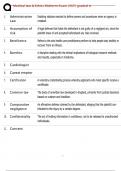
1. Administrative Enabling statutes enacted to define powers and procedures when an agency is
Law created.
2. Assumption of A legal defense that holds the defendant is not guilty of a negligent act, since the
risk plaintitt knew of and accepted beforehand any risks involved.
3. Beneficence Refers to the acts health care practitioners perform to help people stay healthy or
recover from an illness.
4. Bioethics A discipline dealing with the ethical implications of biological research methods
and results, especially in medicine.
5. Cardiologist
6. Caveat emptor
7. Certification A voluntary credentialing process whereby applicants who meet specific receive a
certificate
8. Common law The body of unwritten law developed in England, primarily from judicial decisions
based on custom and tradition.
9. Comparative An aflrmative defense claimed by the defendant, alleging that the plaintitt con-
negligence tributed to the injury by a certain degree.
10. Confidentiality The act of holding information in confidence, not to be released to unauthorized
individuals.
11. Consent
1/5
, Medical law & Ethics Midterm Exam 2025 graded A
Permission from a patient, either expressed or implied, for something to be done
by another. For example, consent is required for a physician to examine a patient,
to perform tests that aid in diagnosis, and/or to treat for a medical condition.
12. Constitutional Law that derives from federal and state constitutions.
law
13. Contributory An aflrmative defense that alleges that the plaintitt, through a lack of care, caused
negligence or contributed to his or her own injury.
14. Defendant The person or party against whom criminal or civil charges are brought in a lawsuit.
15. Deposition Sworn testimony given and recorded outside the courtroom during the pretrial
phase of a case.
16. Doctrine of in- The legal basis for informed consent, usually outlined in a state's medical practice
formed consent acts.
17. Emergency A type of aflrmative defense in which the person who comes to the aid of a victim
in an emergency is not held liable under certain circumstances.
18. Ethics Standards of behavior, developed as a result of one's concept of right and wrong.
19. Felony An ottense punishable by death or by imprisonment in a state or federal prison for
more than 1 year.
20. Fidelity Being faithful to the scope of practice for your profession, as in role fidelity.
21. Fraud Dishonest or deceitful practices in depriving, or attempting to deprive, another of
his or her rights.
22. Health mainte- A health plan that combines coverage of health care costs and delivery of health
nance organiza- care for a prepaid premium.
tion
2/5
1. Administrative Enabling statutes enacted to define powers and procedures when an agency is
Law created.
2. Assumption of A legal defense that holds the defendant is not guilty of a negligent act, since the
risk plaintitt knew of and accepted beforehand any risks involved.
3. Beneficence Refers to the acts health care practitioners perform to help people stay healthy or
recover from an illness.
4. Bioethics A discipline dealing with the ethical implications of biological research methods
and results, especially in medicine.
5. Cardiologist
6. Caveat emptor
7. Certification A voluntary credentialing process whereby applicants who meet specific receive a
certificate
8. Common law The body of unwritten law developed in England, primarily from judicial decisions
based on custom and tradition.
9. Comparative An aflrmative defense claimed by the defendant, alleging that the plaintitt con-
negligence tributed to the injury by a certain degree.
10. Confidentiality The act of holding information in confidence, not to be released to unauthorized
individuals.
11. Consent
1/5
, Medical law & Ethics Midterm Exam 2025 graded A
Permission from a patient, either expressed or implied, for something to be done
by another. For example, consent is required for a physician to examine a patient,
to perform tests that aid in diagnosis, and/or to treat for a medical condition.
12. Constitutional Law that derives from federal and state constitutions.
law
13. Contributory An aflrmative defense that alleges that the plaintitt, through a lack of care, caused
negligence or contributed to his or her own injury.
14. Defendant The person or party against whom criminal or civil charges are brought in a lawsuit.
15. Deposition Sworn testimony given and recorded outside the courtroom during the pretrial
phase of a case.
16. Doctrine of in- The legal basis for informed consent, usually outlined in a state's medical practice
formed consent acts.
17. Emergency A type of aflrmative defense in which the person who comes to the aid of a victim
in an emergency is not held liable under certain circumstances.
18. Ethics Standards of behavior, developed as a result of one's concept of right and wrong.
19. Felony An ottense punishable by death or by imprisonment in a state or federal prison for
more than 1 year.
20. Fidelity Being faithful to the scope of practice for your profession, as in role fidelity.
21. Fraud Dishonest or deceitful practices in depriving, or attempting to deprive, another of
his or her rights.
22. Health mainte- A health plan that combines coverage of health care costs and delivery of health
nance organiza- care for a prepaid premium.
tion
2/5