CAPT. MANALO, M.E BSMT
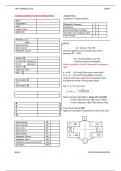
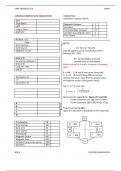
COMPASS ERROR BY MOON OBSERVATION CORRECTING
(add EAST / subtract WEST)
Date
Stop Watch Magnetic Compass C
LMT Deviation D
Long in Time Corrected Mag. Compass M
GMT/UTC Variation (use original name) V
True Course T
Position: Lat.
Long. NOTES:
Gyro bearing
Gyro Course A = Tan Lat / Tan LHA
Magnetic Course (named opposite of Lat. Except when LHA is
between 90ᵒ - 270ᵒ)
GHA of B = Tan Declination / Sin LHA
Inc and corr (always+) (named same as declination)
V corr (always+) (When solving for A and B, disregard the negative
GHA of sign)
Long. (E+ / W-)
LHA C = A+B ( if A and B have same name add)
C= A – B (if A and B have different names
subtract the lesser value from the greater value
Declination and take the name of the greater value)
‘d’
Declination Tan Z = 1 / ( C x Cos Lat)
1
Z = Tan -1 C X Cos Lat
Name azimuth angle (Z) by: Name of C and LHA
- If LHA is between 0 to 180 name is West
A - If LHA is between 180 to 360 name is East
B
To get True bearing (Zn):
C
Apply the operation of quadrants to the value of Z.
Z
Zn
N
True bearing TB
Gyro bearing GB IV - 360 I As is
Gyro error GE
W E
Gyro Course GC
True Course TC II - 180
III + 180
Magnetic Course MC
Magnetic Error ME
Variation (reverse the name) VAR S
Deviation DEV
NAV 4 CELESTIAL NAVIGATION
, CAPT. MANALO, M.E BSMT
GUIDELINES on using the form:
Date Date of actual observation
Stop Watch Applied to LMT to get the actual time of
LMT observation
Long in Time Divide the Longitude by 15ᵒ to get Longitude in
time and apply to LMT to get the GMT/ UTC of
GMT/UTC
observation
Can be taken directly as UTC or GMT
Position: Lat. Position of the observer when taking the
Long. observation.
Gyro bearing Bearing of the celestial object
Gyro Course Gyro Course and magnetic course of the vessel
Magnetic Course when taking the observation
Taken from the Nautical almanac using hour of the UTC
GHA of Taken from the increments and correction table of the
Inc and corr (always added) Nautical Almanac using the minutes and seconds of UTC
Taken from the ‘v’ column of the moon using GMT. Take
V corr (always added)
note of the value of ‘v’ and look for corresponding value
GHA of of correction from the increments and correction table
Long. (E+ / W-) using the minutes of UTC.
LHA Apply Long by adding if Long is East and subtract if
West. The answer will be the LHA of the Moon.
Declination of Taken from the Nautical almanac using hour of the UTC.
‘d’ Found at the ‘d’ column of the moon using GMT. Take
Declination of note of the value of ‘d’ and look for corresponding value
of correction from the increments and correction table
using the minutes of UTC. Add to declination if
declination is increasing or subtract if declination is
decreasing to get the final value of declination
True bearing of the Star
True bearing (Zn) TB Gyro bearing taken by azimuth circle
Gyro bearing GB Difference of TB-GB. (named E or W: Compass BEST
Gyro error GE error West/ Compass LEAST error EAST)
Gyro Course GC Gyro course during the time of observation
True Course TC Gyro Course applied by Gyro error ( Add E error /
Magnetic Course MC subtract W error)
Magnetic Error ME Magnetic course during the time of observation
Variation VAR (always reverse Difference of TC – MC (named E or W: Compass
the name) BEST error West/ Compass LEAST error EAST)
Deviation DEV Same name add, different names subtract
Named according to which ever has greater value
between ME and VAR.
Magnetic Compass C Magnetic course during the time of observation
Deviation D Add if deviation is East subtract if West
Corrected Mag. Compass M
Variation V (use original name) Add if Var is East / Subtract if Var is West
True Course T Should be the same as the True course above
NAV 4 CELESTIAL NAVIGATION
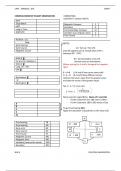
COMPASS ERROR BY MOON OBSERVATION CORRECTING
(add EAST / subtract WEST)
Date
Stop Watch Magnetic Compass C
LMT Deviation D
Long in Time Corrected Mag. Compass M
GMT/UTC Variation (use original name) V
True Course T
Position: Lat.
Long. NOTES:
Gyro bearing
Gyro Course A = Tan Lat / Tan LHA
Magnetic Course (named opposite of Lat. Except when LHA is
between 90ᵒ - 270ᵒ)
GHA of B = Tan Declination / Sin LHA
Inc and corr (always+) (named same as declination)
V corr (always+) (When solving for A and B, disregard the negative
GHA of sign)
Long. (E+ / W-)
LHA C = A+B ( if A and B have same name add)
C= A – B (if A and B have different names
subtract the lesser value from the greater value
Declination and take the name of the greater value)
‘d’
Declination Tan Z = 1 / ( C x Cos Lat)
1
Z = Tan -1 C X Cos Lat
Name azimuth angle (Z) by: Name of C and LHA
- If LHA is between 0 to 180 name is West
A - If LHA is between 180 to 360 name is East
B
To get True bearing (Zn):
C
Apply the operation of quadrants to the value of Z.
Z
Zn
N
True bearing TB
Gyro bearing GB IV - 360 I As is
Gyro error GE
W E
Gyro Course GC
True Course TC II - 180
III + 180
Magnetic Course MC
Magnetic Error ME
Variation (reverse the name) VAR S
Deviation DEV
NAV 4 CELESTIAL NAVIGATION
, CAPT. MANALO, M.E BSMT
GUIDELINES on using the form:
Date Date of actual observation
Stop Watch Applied to LMT to get the actual time of
LMT observation
Long in Time Divide the Longitude by 15ᵒ to get Longitude in
time and apply to LMT to get the GMT/ UTC of
GMT/UTC
observation
Can be taken directly as UTC or GMT
Position: Lat. Position of the observer when taking the
Long. observation.
Gyro bearing Bearing of the celestial object
Gyro Course Gyro Course and magnetic course of the vessel
Magnetic Course when taking the observation
Taken from the Nautical almanac using hour of the UTC
GHA of Taken from the increments and correction table of the
Inc and corr (always added) Nautical Almanac using the minutes and seconds of UTC
Taken from the ‘v’ column of the moon using GMT. Take
V corr (always added)
note of the value of ‘v’ and look for corresponding value
GHA of of correction from the increments and correction table
Long. (E+ / W-) using the minutes of UTC.
LHA Apply Long by adding if Long is East and subtract if
West. The answer will be the LHA of the Moon.
Declination of Taken from the Nautical almanac using hour of the UTC.
‘d’ Found at the ‘d’ column of the moon using GMT. Take
Declination of note of the value of ‘d’ and look for corresponding value
of correction from the increments and correction table
using the minutes of UTC. Add to declination if
declination is increasing or subtract if declination is
decreasing to get the final value of declination
True bearing of the Star
True bearing (Zn) TB Gyro bearing taken by azimuth circle
Gyro bearing GB Difference of TB-GB. (named E or W: Compass BEST
Gyro error GE error West/ Compass LEAST error EAST)
Gyro Course GC Gyro course during the time of observation
True Course TC Gyro Course applied by Gyro error ( Add E error /
Magnetic Course MC subtract W error)
Magnetic Error ME Magnetic course during the time of observation
Variation VAR (always reverse Difference of TC – MC (named E or W: Compass
the name) BEST error West/ Compass LEAST error EAST)
Deviation DEV Same name add, different names subtract
Named according to which ever has greater value
between ME and VAR.
Magnetic Compass C Magnetic course during the time of observation
Deviation D Add if deviation is East subtract if West
Corrected Mag. Compass M
Variation V (use original name) Add if Var is East / Subtract if Var is West
True Course T Should be the same as the True course above
NAV 4 CELESTIAL NAVIGATION