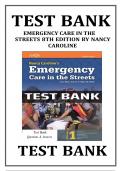
Test Bank for Success in Practical Vocational
Nursing 9th Edition by Knecht | Complete
Chapters 1-42
, Test Bank for Success in Practical
Vocational Nursing 9th Edition by Knecht
Chapter 1: Personal Resources of an Adult Learner Knecht:
Success in Practical/Vocational Nursing
MULTIPLE CHOICE
1. Which individual in a practical/vocational nursing class would be identified as a traditional
adult learner?
a. One who has been out of school for many years
b. One who has children and grandchildren
c. One who knows the routine of education
d. One who is in his or her early 20s
ANS: D
Traditional adult learners are individuals who come to the educational program directly from
high school or another program of study. They are usually in their late teens or early 20s. The
learner who has been out of school for many years and the learner who has children and
grandchildren would be identified as a returning adult learner. The learner who knows the
routine of education does not provide sufficient information for classification.
DIF: Cognitive Level: Application REF: p. 3 OBJ: 1
TOP: Adult Learner KEY: Nursing Process Step:
N/A MSC: NCLEX: N/A
2. A student enrolled in an LPN/LVN program states, “I’m fresh out of high school and living
alone for the first time in my life. I’m learning how to take care of myself as well as learning
to care for my patients.” This statement identifies the student as
a. a traditional adult learner.
b. a returning adult learner.
c. someone in need of counseling.
d. someone who is not accustomed to formal education.
ANS: A
Traditional adult learners are individuals who are in their late teens or early 20s who have
come to the practical/vocational program directly from high school or another program of
study. A returning adult learner is someone who has been out of school for several years. A
person in needed of counseling is commonly a student who has been evaluated by the
instructor as having areas that need improvement. This student is a traditional adult learner,
and traditional adult learners are accustomed to formal education.
DIF: Cognitive Level: Analysis REF: p. 3 OBJ: 1
TOP: Adult Learner KEY: Nursing Process Step:
N/A MSC: NCLEX: N/A
3. A nursing student states, “I have taken advantage of informal learning experiences.” Another
student asks, “Could you give me an example?” The best example of an informal learning
experience is
a. caring for a disabled family member.
, b. taking a continuing education course.
c. enrolling in an academic program.
d. attending credit classes at the mall.
ANS: A
Informal learning experiences are those that take place outside a formal educational setting. A
person who cares for a disabled family member would gain knowledge and skill in providing
personal care. An education course, academic program, and credited classes all take place in a
formal educational setting.
DIF: Cognitive Level: Comprehension REF: p. 3 OBJ: 2
TOP: Informal educational experience KEY: Nursing Process Step:
N/A MSC: NCLEX: N/A
4. What astrategy acan abe aused aby aa anursing astudent ato aeffectively acombat aa afear aof afailure?
a. Picture ain ayour amind athe arewards aof asucceeding
b. Positive aself-talk
c. Create aa amental ascript aof apositive athoughts
d. All aof athe aabove
ANS: aD
Picturing athe arewards aof asucceeding, apositive aself-talk, aand aa amental ascript aof apositive
athoughtsaall acontribute aa apositive amental aattitude aand aare aall aways ato acombat athe afear aof
afailure.
DIF: a Cognitive aLevel: aComprehension aREF: a p. a4 OBJ: a 2
TOP: a Promoting asuccess ain athe aprogram aof astudy KEY: aNursing aProcess
aStep:aN/A aMSC: a aNCLEX: aN/A
5. An aexample aof aa aself-talk a“script” athat apromotes asuccess ain aa apractical/vocational
anursingaprogram ais
a. “I aget asick afrom asmelling abad aodors.”
b. “What aif aI’m a‘all athumbs’ ain apractice alab?”
c. “I adon’t athink athe ainstructor alikes ame.”
d. “I awork awell awith amy ahands.”
ANS: aD
The astatement a“I awork awell awith amy ahands” ais aa apositive athought. aIt afocuses aon aa astrength
aandapromotes athe aexpectation athat athe aindividual awill asucceed. aAll aother aoptions aare
aexamples aof anegative athinking athat acreate aexpectations afor aproblems aand afailure.
DIF: a Cognitive aLevel: aAnalysis REF: a a ap. a3 OBJ: a2
aTOP: a Hidden adangers KEY: aNursing aProcess
aStep:aN/A aMSC: a aNCLEX: aN/A
6. Select athe afactor acommon ato aALL atypes aof aadult alearners athat apredisposes athem ato
asuccess ain aaanursing aprogram.
a. They ahave afew aresponsibilities aat ahome.
b. They ahave athe amotivation ato asucceed.
c. They aautomatically aqualify afor afinancial aaid.
d. They ahave afew adaily adistractions.
, ANS: aB
The aonly astatement aapplicable ato aall atypes aof aadult alearners ais athat athe amajority ais
amotivated atoasucceed. aThe aother afactors amay abe aapplicable ato aone aor atwo aclassifications
aof alearners abut anot ato aall athree.
DIF: a Cognitive aLevel: aComprehension aREF: a p. a4 OBJ: a2
aTOP: a Factors apredisposing ato asuccess KEY:
aNursing aProcess aStep:aN/A aMSC: a aNCLEX: aN/A
7. When aa aclass aof anursing astudents adiscusses atheir aconcerns aabout atheir aprogram, athe
aconcernashared aby amost alearners ais agenerally athe afear aof
a. succeeding.
b. economic aproblems.
c. failure.
d. ridicule.
ANS: aC
Some adegree aof afear aof afailure ais anearly auniversal aand aoften arelates ato aearlier afailures
aor asetbacks athe alearner ahas aexperienced ain aother aeducational asettings. aFew aindividuals
aare aafraidaof asucceeding. aUncertainty aabout aeconomic aissues ais acommon aamong astudents
abut ais anot aas auniversal aas afear aof afailure. aFear aof aridicule ais ararely aa aconcern; aif
apresent, ait ais ausually asuperseded aby afear aof afailure.
DIF: a Cognitive aLevel: aAnalysis REF: a a ap. a4 OBJ: a2
aTOP: a Hidden adangers KEY: aNursing aProcess
aStep:aN/A aMSC: a aNCLEX: aN/A
8. The aFirst aAmendment aof athe aU.S. aConstitution aguarantees astudents athe aright ato
a. graduate afrom aa aprogram.
b. fail aan aacademic aprogram.
c. express aoneself ain aclass.
d. have aunlimited aabsences.
ANS: aC
The aFirst aAmendment aprovides afor afreedom aof aexpression aas along aas awhat ais
aexpressed adoes anot adisrupt aclass aor ainfringe aon athe arights aof apeers. aThe aremaining
aoptions aare atopics athat aareanot aaddressed aby athis aamendment.
DIF: a Cognitive aLevel: aKnowledge REF: a a ap. a6 OBJ: a6
aTOP: a Learner arights KEY: aNursing aProcess
aStep:aN/A aMSC: a aNCLEX: aN/A
9. Which aamendment ato athe aU.S. aConstitution aprotects athe alearner afrom abeing aasked ato
aleave aanaeducational aprogram awithout adue aprocess?
a. Eleventh
b. Twelfth
c. Thirteenth
d. Fourteenth
ANS: aD
The aFourteenth aAmendment aguarantees adue aprocess. aThe alearner ahas athe aright ato adefend
ahim-
Nursing 9th Edition by Knecht | Complete
Chapters 1-42
, Test Bank for Success in Practical
Vocational Nursing 9th Edition by Knecht
Chapter 1: Personal Resources of an Adult Learner Knecht:
Success in Practical/Vocational Nursing
MULTIPLE CHOICE
1. Which individual in a practical/vocational nursing class would be identified as a traditional
adult learner?
a. One who has been out of school for many years
b. One who has children and grandchildren
c. One who knows the routine of education
d. One who is in his or her early 20s
ANS: D
Traditional adult learners are individuals who come to the educational program directly from
high school or another program of study. They are usually in their late teens or early 20s. The
learner who has been out of school for many years and the learner who has children and
grandchildren would be identified as a returning adult learner. The learner who knows the
routine of education does not provide sufficient information for classification.
DIF: Cognitive Level: Application REF: p. 3 OBJ: 1
TOP: Adult Learner KEY: Nursing Process Step:
N/A MSC: NCLEX: N/A
2. A student enrolled in an LPN/LVN program states, “I’m fresh out of high school and living
alone for the first time in my life. I’m learning how to take care of myself as well as learning
to care for my patients.” This statement identifies the student as
a. a traditional adult learner.
b. a returning adult learner.
c. someone in need of counseling.
d. someone who is not accustomed to formal education.
ANS: A
Traditional adult learners are individuals who are in their late teens or early 20s who have
come to the practical/vocational program directly from high school or another program of
study. A returning adult learner is someone who has been out of school for several years. A
person in needed of counseling is commonly a student who has been evaluated by the
instructor as having areas that need improvement. This student is a traditional adult learner,
and traditional adult learners are accustomed to formal education.
DIF: Cognitive Level: Analysis REF: p. 3 OBJ: 1
TOP: Adult Learner KEY: Nursing Process Step:
N/A MSC: NCLEX: N/A
3. A nursing student states, “I have taken advantage of informal learning experiences.” Another
student asks, “Could you give me an example?” The best example of an informal learning
experience is
a. caring for a disabled family member.
, b. taking a continuing education course.
c. enrolling in an academic program.
d. attending credit classes at the mall.
ANS: A
Informal learning experiences are those that take place outside a formal educational setting. A
person who cares for a disabled family member would gain knowledge and skill in providing
personal care. An education course, academic program, and credited classes all take place in a
formal educational setting.
DIF: Cognitive Level: Comprehension REF: p. 3 OBJ: 2
TOP: Informal educational experience KEY: Nursing Process Step:
N/A MSC: NCLEX: N/A
4. What astrategy acan abe aused aby aa anursing astudent ato aeffectively acombat aa afear aof afailure?
a. Picture ain ayour amind athe arewards aof asucceeding
b. Positive aself-talk
c. Create aa amental ascript aof apositive athoughts
d. All aof athe aabove
ANS: aD
Picturing athe arewards aof asucceeding, apositive aself-talk, aand aa amental ascript aof apositive
athoughtsaall acontribute aa apositive amental aattitude aand aare aall aways ato acombat athe afear aof
afailure.
DIF: a Cognitive aLevel: aComprehension aREF: a p. a4 OBJ: a 2
TOP: a Promoting asuccess ain athe aprogram aof astudy KEY: aNursing aProcess
aStep:aN/A aMSC: a aNCLEX: aN/A
5. An aexample aof aa aself-talk a“script” athat apromotes asuccess ain aa apractical/vocational
anursingaprogram ais
a. “I aget asick afrom asmelling abad aodors.”
b. “What aif aI’m a‘all athumbs’ ain apractice alab?”
c. “I adon’t athink athe ainstructor alikes ame.”
d. “I awork awell awith amy ahands.”
ANS: aD
The astatement a“I awork awell awith amy ahands” ais aa apositive athought. aIt afocuses aon aa astrength
aandapromotes athe aexpectation athat athe aindividual awill asucceed. aAll aother aoptions aare
aexamples aof anegative athinking athat acreate aexpectations afor aproblems aand afailure.
DIF: a Cognitive aLevel: aAnalysis REF: a a ap. a3 OBJ: a2
aTOP: a Hidden adangers KEY: aNursing aProcess
aStep:aN/A aMSC: a aNCLEX: aN/A
6. Select athe afactor acommon ato aALL atypes aof aadult alearners athat apredisposes athem ato
asuccess ain aaanursing aprogram.
a. They ahave afew aresponsibilities aat ahome.
b. They ahave athe amotivation ato asucceed.
c. They aautomatically aqualify afor afinancial aaid.
d. They ahave afew adaily adistractions.
, ANS: aB
The aonly astatement aapplicable ato aall atypes aof aadult alearners ais athat athe amajority ais
amotivated atoasucceed. aThe aother afactors amay abe aapplicable ato aone aor atwo aclassifications
aof alearners abut anot ato aall athree.
DIF: a Cognitive aLevel: aComprehension aREF: a p. a4 OBJ: a2
aTOP: a Factors apredisposing ato asuccess KEY:
aNursing aProcess aStep:aN/A aMSC: a aNCLEX: aN/A
7. When aa aclass aof anursing astudents adiscusses atheir aconcerns aabout atheir aprogram, athe
aconcernashared aby amost alearners ais agenerally athe afear aof
a. succeeding.
b. economic aproblems.
c. failure.
d. ridicule.
ANS: aC
Some adegree aof afear aof afailure ais anearly auniversal aand aoften arelates ato aearlier afailures
aor asetbacks athe alearner ahas aexperienced ain aother aeducational asettings. aFew aindividuals
aare aafraidaof asucceeding. aUncertainty aabout aeconomic aissues ais acommon aamong astudents
abut ais anot aas auniversal aas afear aof afailure. aFear aof aridicule ais ararely aa aconcern; aif
apresent, ait ais ausually asuperseded aby afear aof afailure.
DIF: a Cognitive aLevel: aAnalysis REF: a a ap. a4 OBJ: a2
aTOP: a Hidden adangers KEY: aNursing aProcess
aStep:aN/A aMSC: a aNCLEX: aN/A
8. The aFirst aAmendment aof athe aU.S. aConstitution aguarantees astudents athe aright ato
a. graduate afrom aa aprogram.
b. fail aan aacademic aprogram.
c. express aoneself ain aclass.
d. have aunlimited aabsences.
ANS: aC
The aFirst aAmendment aprovides afor afreedom aof aexpression aas along aas awhat ais
aexpressed adoes anot adisrupt aclass aor ainfringe aon athe arights aof apeers. aThe aremaining
aoptions aare atopics athat aareanot aaddressed aby athis aamendment.
DIF: a Cognitive aLevel: aKnowledge REF: a a ap. a6 OBJ: a6
aTOP: a Learner arights KEY: aNursing aProcess
aStep:aN/A aMSC: a aNCLEX: aN/A
9. Which aamendment ato athe aU.S. aConstitution aprotects athe alearner afrom abeing aasked ato
aleave aanaeducational aprogram awithout adue aprocess?
a. Eleventh
b. Twelfth
c. Thirteenth
d. Fourteenth
ANS: aD
The aFourteenth aAmendment aguarantees adue aprocess. aThe alearner ahas athe aright ato adefend
ahim-