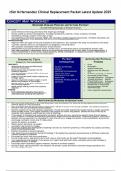
vSim M Hernandez Clinical Replacement Packet Latest Update 2025
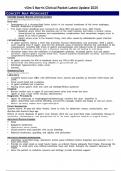
CONCEPT MAP WORKSHEET DESCRIBE DISEASE PROCESS AFFECTING PATIENT (Include Pathophysiology of Disease Process) Overview ▪ Acute infection of the lung parenchyma that impairs gas exchange ▪ May be caused by various microorganisms, including mycobacteria, bacteria, viruses, protozoa, and fungi ▪ Classified by etiology, location in the lungs, or type ▪ Also classified as community-acquired, health care-associated, hospital-acquired (nosocomial), ventilator-associated, and aspiration pneumonia; or as pneumonia that occurs in an immunocompromised host Pathophysiology ▪ Organism enters the upper airway and multiplies in the epithelium, then spreads to the lungs via secretions or the blood. ▪ A gel-like substance forms as microorganisms and phagocytic cells break down. ▪ This substance consolidates within the lower airway structure. ▪ Inflammation occurs and involves the alveoli, alveolar ducts, and interstitial spaces surrounding the alveolar walls. ▪ With lobar pneumonia, inflammation starts in one area and may extend to one or more lobes. In bronchopneumonia, it starts simultaneously in several areas, producing patchy, diffuse consolidation. In atypical pneumonia, inflammation is confined to the alveolar ducts and interstitial spaces. DIAGNOSTIC TESTS (Reason for Test and Results) PATIENT INFORMATION ANTICIPATED PHYSICAL FINDING Laboratory ▪ White blood cell count and differential identifies leukocytosis. ▪ Blood culture tests are positive for the causative organism. ▪ Arterial blood gas analysis (ABG) values may show hypoxemia. ▪ Fungal or acid-fast bacilli cultures identify the etiologic agent. ▪ Assay for Legionella-soluble antigen in urine detects the presence of the antigen. ▪ Sputum culture, Gram stain, and smear reveal the infecting organism. ▪ Rapid antigen testing reveals the causative organism. Imaging ▪ Chest radiography generally shows patchy, interstitial, or lobar infiltrates (bilateral with viral pneumonia; unilateral with bacterial 72 year old Female, Hispanic Admitted for Pneumonia. Chest Xray shows infiltrates in the right lower lobe. Influenza 10 days prior to admission ▪ Fever ▪ Pharyngitis ▪ Sputum production ▪ Dullness over the affected area ▪ Crackles, wheezing, or rhonchi ▪ Decreased breath sounds ▪ Increased fremitu▪s Tachypnea ▪ Tracheal deviatio▪n Rhinitis ▪ Pleural friction ru▪b Orthopnea ▪ Lymphadenopath▪y Myalgia ▪ Bradycardia or tachycardia ▪ Use of accessory muscles diminished gag ▪ reflex (aspiration pneumonia) ANTICIPATED NURSING INTERVENTIONS ▪ Give prescribed drugs based on the underlying cause, such as antibiotics for bacterial and Mycoplasma pneumonia and antiviral agents for viral pneumonia. ▪ Give prescribed IV fluids and electrolyte replacement, initiate IV access if not already available, and maintain IV patency. Provide IV site care according to facility protocol. ▪ Maintain a patent airway and adequate oxygenation. Provide prescribed supplemental oxygen based on oxygen saturation levels and ABG results. Give oxygen cautiously if the patient has chronic lung disease. Elevate the head of the bed to maximize chest expansion and to ease the work of breathing. ▪ If the patient is intubated and mechanically ventilated, perform oral care, elevate the patient's head 30 to 45 degrees, assess readiness to extubate through daily spontaneous awakening and breathing trials, implement subglottic suctioning in patients who are expected to be intubated for more than 48 hours, engage the patient in early mobilization and exercise, and change ventilator circuits only if visibly soiled. ▪ Suction the patient, as needed. ▪ Obtain sputum specimens, as needed. ▪ Auscultate lung sounds for changes. ▪ Encourage coughing and diaphragmatic breathing exercises and incentive spirometry; if the patient has copious secretions, perform chest physiotherapy. ▪ Position the patient to prevent aspiration. ▪ Take steps to prevent aspiration during NG feedings; if the patient has aspiration pneumonia due to difficulty swallowing, institute aspiration precautions. ▪ Encourage and assist with early mobilization. ▪ Provide a high-calorie, high-protein diet of soft, easy-to-chew foods, per the speech therapist's recommendation. ▪ Give supplemental oral feedings; if the patient can't ingest foods and fluids orally, anticipate enteral tube feedings or parenteral nutrition, if needed. ▪ Encourage proper respiratory hygiene measures; dispose of secretions properly. ▪ Provide a quiet, calm environment with frequent rest periods; cluster activities to minimize energy expenditure and decrease oxygen demand. Last Updated 12/19/2022 1 | P a g e VSIM ISBAR ACTIVITY Student Worksheet INTRODUCTION Milagros Ballesteros, LPN, Medical Unit Your name, position (RN), unit you are working on SITUATION Mrs. Hernandez is a 72-year-old Hispanic female who was admitted to the medical unit yesterday afternoon with a diagnosis of pneumonia in her right lobe. Chest X-ray shows infiltrates in right lower lobe, indicative of pneumonia. She was started on antibiotics after a sputum specimen for Gram stain culture was obtained. We are monitoring her respiratory status closely. Patient’s name, age, specific reason for visit BACKGROUND Mrs. Hernandez was experiencing symptoms of dry cough, fever, and malaise, and was diagnosed with influenza 10 days prior to admission. Her symptoms got progressively worse, and yesterday she had a temperature of 38.4 °C (101.2 °F), shaking, chills, and a productive cough of rust- colored sputum. Her primary care provider saw her yesterday and decided to admit her for treatment of pneumonia. Patient’s primary diagnosis, date of admission, current orders for patient ASSESSMENT Mrs. Hernandez is alert and oriented ×3, but appears tired. She reports sharp chest pain with coughing and shortness of breath with activity. She rated the pain as a 1 on a scale of 0–10 and Last dose of acetaminophen 650 mg given at 1400. Current vitals signs are- Heart rate: 119. Blood pressure: 145/86 mm Hg. Respiration: 22. SpO2: 87%. Temp: 101 F. Her respirations were labored when she came back from the bathroom, but improved when she settled back in bed. Patient cough is productive worse in the morning. Current pertinent assessment data using head-to-toe approach, pertinent diagnostics, vital signs. RECOMMENDATION Monitor O2 saturation, encourage and educate cough and deep breathe as well as the use of the incentive spirometer. Educate patient on disease process and management. Medicate as per order and monitor for worsening respiratory symptoms. Any orders or recommendations you may have for this patient PATIENT EDUCATION WORKSHEET NAME OF MEDICATION, CLASSIFICATION AND INCLUDE PROTOTYPE en N: r longer than 3 days, children for longer than 5 days, or adults for longer than 10 days. atient to consult prescriber for fever lasting longer than 3 days or recurrent fever. : Warn patient that high doses or unsupervised long-term use can cause liver damage. e alcohol use may increase the risk of liver damage. Caution long-term alcoholics to limit 2 g/day or less. on patient to contact health care provider if signs and symptoms of liver damage (illogical severe dyspepsia, jaundice, inability to eat, weakness) occur. : Warn patient to stop drug and seek medical attention immediately if rash or other s occurs while using acetaminophen. reastfeeding patient that drug appears in human milk in low levels. Drug may be used therapy is short-term and doesn’t exceed recommended doses. MEDICATION, CLASSIFICATION AND INCLUDE PROTOTYPE 19/2022 2 | P a g e MEDICATION: Acetaminoph CLASSIFICATIO Analgesics PROTOTYPE: CONTRAINDICATIONS: Alert: May cause serious, potentially fatal skin reactions, including SJS, toxic epidermal necrolysis, and acute generalized exanthematous pustulosis. Reaction may occur with first or subsequent use when acetaminophen is used as monotherapy or when it is one component of combination drug therapy. Monitor for reddening of the skin, rash, blisters, and detachment of the upper surface of the skin. Stop drug immediately if skin reaction is suspected. Contraindicated in patients hypersensitive to drug. IV form is contraindicated in patients with severe hepatic impairment or severe active liver disease. Use cautiously in patients with any type of liver disease, G6PD deficiency, chronic malnutrition, severe hypovolemia (dehydration, blood loss), or severe renal impairment (CrCl of 30 mL/minute or less). Use cautiously in patients with long-term alcohol use because therapeutic doses cause hepatotoxicity in these patients. Chronic alcoholics shouldn’t take more than 2 g of acetaminophen every 24 hours. ADVERSE EFFECTS: CNS: agitation (IV), anxiety, fatigue, headache, insomnia, pyrexia. CV: HTN, hypotension, peripheral edema, periorbital edema, tachycardia (IV). GI: nausea, vomiting, abdominal pain, diarrhea, constipation (IV). GU: oliguria (IV). Hematologic: hemolytic anemia, leukopenia, neutropenia, pancytopenia, anemia. Hepatic: jaundice. Metabolic: hypoalbuminemia (IV) , hypoglycemia, hypokalemia, hypervolemia, hypomagnesemia, hypophosphatemia (IV). Musculoskeletal: muscle spasms, extremity pain (IV). Respiratory: abnormal breath sounds, dyspnea, hypoxia, atelectasis, pleural effusion, pulmonary edema, stridor, wheezing (IV). Skin: rash, urticaria; infusion-site pain (IV), pruritus. BLACK BOX WARNINGS: Drug can cause acute liver failure, which may require a liver transplant or cause death. Most cases of liver injury are associated with drug doses exceeding 4,000 mg/day and often involve more than one acetaminophen-containing product. Advise patient or caregiver that many OTC products contain acetaminophen and should be counted when calculating total daily dose. Many OTC and prescription products contain acetaminophen; be aware of this when calculating total daily dose. Use caution when prescribing, preparing, and administering IV acetaminophen to SAFE DOSE OR DOSE RANGE, SAFE ROUTE ROUTE: PO, IV, Rectal DOSAGE: Adults: 325 to 650 mg PO every 4 to 6 hours. Or, two extended-release caplets PO every 8 hours. Maximum, 3,250 mg daily unless under health care provider supervision, when 4 g daily (immediate-release) may be used. For long-term therapy, don’t exceed 2.6 g daily unless prescribed and monitored closely by health care provider. PURPOSE FOR TAKING THIS MEDICATION Mild to moderate pain, fever PATIENT EDUCATION WHILE TAKING THIS MEDICATION • Tell parents to consult prescriber before giving drug to children younger than age 2. • Advise parents that drug is only for short-term use; urge them to consult prescriber if giving to infants fo CONTRAINDICATIONS: • Tell p • Alert Excessiv drug to • Cauti thinking, • Alert reaction • Tell b safely if PATIENT NAME OF Last Updated 12/ Liquid forms of this product may contain sugar and/or alcohol. Caution is advised if you have diabetes, liver disease, or any other condition that requires you to limit/avoid these substances in your diet. The liquid forms and powder packets of this medication may contain aspartame. If you have phenylketonuria (PKU) or any other condition that requires you to restrict your intake of aspartame (or phenylalanine), consult your doctor or pharmacist about using this product safely. ADVERSE EFFECTS: Get emergency medical help if you have signs of an allergic reaction to guaifenesin: hives; difficult breathing; swelling of your face, lips, tongue, or throat. Common guaifenesin side effects may include: • dizziness, headache; • drowsiness; • rash; or • nausea, vomiting, stomach upset. BLACK BOX WARNINGS: You should not use this medicine if you are allergic to guaifenesin. Use this medicine exactly as directed on the label, or as prescribed by your doctor. Do not use it in larger amounts or for longer than recommended. Guaifenesin is commonly found as part of over-the-counter combination medications for cold and Last Updated 12/19/2022 3 | P a g e MEDICATION: Guaifenesin CLASSIFICATION: Expectorants PROTOTYPE: Codeine SAFE DOSE OR DOSE RANGE, SAFE ROUTE ROUTE: PO Dosage: Tablet 200 mg, 400 mg Tablet, extended-release 600 mg, 1200 mg PURPOSE FOR TAKING THIS MEDICATION Guaifenesin is used to treat coughs and congestion caused by the common cold, bronchitis, and other breathing illnesses. Guaifenesin is usually not used for ongoing cough from smoking or long-term breathing problems (such as chronic bronchitis emphysema) unless directed by your doctor. Guaifenesin is an expectorant. It works by thinning and loosening mucus in the airways, clearing congestion, and making breathing easier. PATIENT EDUCATION WHILE TAKING THIS MEDICATION Use exactly as directed on the label, or as prescribed by your doctor. Cold or cough medicine is only for short-term use until your symptoms clear up. Always follow directions on the medicine label about giving cough or cold medicine to a child. Do not use the medicine only to make a child sleepy. Death can occur from the misuse of cough or cold medicines in very young children. Measure liquid medicine carefully. Use the dosing syringe provided, or use a medicine dose-measuring device (not a kitchen spoon). To use guaifenesin granules, pour out the entire packet onto your tongue and swallow without chewing. Call your doctor if your symptoms do not improve after 7 days, or if you have a fever, rash, or headaches. This medicine can affect the results of certain medical tests. Tell any doctor who treats you that you are using guaifenesin. Last Updated 12/19/2022 4 | P a g e etics : bleeding ive zide PATIENT EDUCATION WORKSHEET NAME OF MEDICATION, CLASSIFICATION AND INCLUDE PROTOTYPE MEDICATION: CONTRAINDICATIONS: Hypersensitivity with thiazides or sulfonamides. Precautions with Hydrochlorothia patients who have anuria. Patients who are lactating or pregnant. Caution with patients with renal or hepatic impairment. ADVERSE EFFECTS: ▪ shortness of breath, wheezing, cough with foamy ▪ A light-headed feeling mucus, chest pain ▪ Eye pain, vision problems ▪ dehydration symptoms - feeling very thirsty or hot, CLASSIFICATION ▪ Jaundice (of the skin or eyes) being unable to urinate, heavy sweating, or hot ▪ pale skin, easy bruising, unusual and dry skin Antihypertens ▪ (nose, mouth, vagina, or rectum) ▪ signs of an electrolyte imbalance - increased thirst or urination, confusion, vomiting, constipation, muscle Diuretic BLACK BOX WARNINGS: pain, leg cramps, bone pain, lack of energy, irregular Thiazide Diur Avoid drinking alcohol, which can increase some of the side effects of HCTZ. PROTOTYPE: Avoid becoming overheated or dehydrated during exercise and in hot HCTZ weather. Follow your doctor's instructions about the type and amount of liquids you should drink. In some cases, drinking too much liquid can be SAFE DOSE OR DOSE RANGE, SAFE ROUTE Route: Oral Dosage Adult/Adolescent: PO 12.5-25mg/day in 1-2 divided doses; may titrate up Child/Infant (6 mo and older): PO 1-2 mg/kg day in two divided doses. Neonate (younger than 6 mo): PO 2-3.3mg/kg day in two divided doses PURPOSE FOR TAKING THIS MEDICATION Management of mild to moderate hypertension; treatment of edema associated with CHF, renal dysfuction, cirrhosis, corticosteroid therapy, and estrogen therapy. PATIENT EDUCATION WHILE TAKING THIS MEDICATION Change position slowly to minimize effects of orthostatic hyhpotension Consume high potassium foods Use sunscreen Report any unusual bleeding, bruising, sore throat, or shortness of breath Report any allergic reaction to suldonamides prior to starting therapy Report sever abdominal pain or yellow coloration of skin or whites of eyes.
Escuela, estudio y materia
- Institución
- Herzing University
- Grado
- PN 126
Información del documento
- Subido en
- 1 de julio de 2025
- Número de páginas
- 11
- Escrito en
- 2024/2025
- Tipo
- Examen
- Contiene
- Preguntas y respuestas
Temas
-
vsim m hernandez clinical replacement packet lates

Documento también disponible en un lote