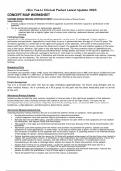
vSim Yoa Li Clinical Packet Latest Update 2025
DESCRIBE DISEASE PROCESS AFFECTING PATIENT (Include Pathophysiology of Disease Process) Appendectomy ▪ Involves surgical removal of inflamed vermiform appendix to prevent imminent rupture or perforation of the appendix ▪ Can be performed using open or laparoscopic approach o Laparoscopic approach is associated with lower infection rates, a shorter recovery period, and less reported pain but a slightly higher risk of urinary tract infection, abdominal abscess, and abdominal bleeding Pathophysiology Appendicitis is the inflammation of the vermiform appendix, usually acute. If undiagnosed, it leads rapidly to perforation and peritonitis. Appendicitis is most likely to occur in persons between the ages of 10 and 30 years. The vermiform appendix is a small tube in the right lower quadrant of the abdomen. The lumen of the proximal end is shared with that of the cecum, whereas the distal end is closed. The appendix fills and empties regularly in the same way as the cecum. However, the lumen is tiny and easily obstructed. The most common causes of appendicitis are obstruction of the lumen by a fecalith (accumulated feces), foreign bodies, and tumor of the cecum or appendix. If it becomes obstructed and inflamed, pathogenic bacteria (E. coli) begin to multiply in the appendix and cause an infection with the forma-tion of pus. If distention and infection are severe enough, the appendix may rupture, releasing its contents into the abdomen. The infection may be contained within an appendiceal abscess or may spread to the abdominal cavity, causing generalized peritonitis. Nursing DIAGNOSTICS TESTS (Reason for Test and Results) The health care provider orders a WBC count with differential. Most patients have a WBC level above 10,000/mm3 (the normal range is 4500 to 11,000/mm3. An abdominal CT scan and abdominal ultrasound are excellent diagnostic tools. Urinalysis also may be performed to rule out a urinary tract infection as the source of pain. PATIENT INFORMATION Yoa Li is a 26-year-old male who had an open emergency appendectomy. No known drug allergies and no other medical history. He is currently on a PCA pump for the pain and has been medicated prior to arrival of the unit. ANTICIPATED PHYSICAL FINDINGS Subjective data include the most common complaint of constant pain in the right lower quadrant of the abdomen, around McBurney’s point (halfway between the umbilicus and the crest of the right ileum). The pain may be accompanied by nausea and anorexia. Objective data include vomiting, fever, an elevated WBC count, rebound tenderness, a rigid abdomen, and decreased or absent bowel sounds. ANTICIPATED NURSING INTERVENTIONS Teaching should be family centered. Be sure to include the patient's family or caregiver, when appropriate. ▪ Nursing interventions include following general pre-operative procedure. ▪ Explain diagnostic tests and possible surgical procedures to relieve anxiety. ▪ Maintain bed rest and NPO status, provide comfort measures for pain relief so that symptoms are not masked by medication, and replace fluids and electrolytes. ▪ The patient’s vital signs are monitored and documented every hour because of the threat of perforation with peritonitis. ▪ Administer prescribed opioids after the health care provider has assessed the patient. Opioids can mask symptoms of acute appendicitis. In some cases, an ice bag to relieve pain is given; no heat is applied because this increases circulation to the appendix and could lead to rupture. A cleansing enema is not ordered because of the danger of rupture. General postoperative care is performed. ▪ Patient teaching may include the reason for IV fluids with gradual advancement of the diet from clear liquids to regular diet as peristalsis returns. If antibiotics or oral medications are continued postoperatively, ensure the patient understands the name, purpose, and side effects of each medication. If complications occur, necessitating an NG tube or drainage tubes, explain the reason for these interventions to the patient. ▪ Explain that if there are no complications, usually the patient will be discharged the same day for a laparoscopic procedure and from 1 to 5 days for an open-technique procedure. ▪ Review the signs and symptoms of complications, such as infection and intestinal obstruction. Instruct the patient to notify the practitioner if any of these signs or symptoms occurs. ▪ Teach the patient how to inspect and care for the wound, as indicated. ▪ Tell a patient who underwent the laparoscopic approach that pain may occur in the right shoulder due to the carbon dioxide inserted into the abdomen during the procedure; teach the patient that walking helps decrease the gas and pain. ▪ Inform the patient of any activity guidelines, including permitted and restricted activities and the duration of any restrictions. ▪ Emphasize the importance of follow-up care to evaluate healing. Instruct the patient to schedule a postoperative follow-up, usually within 1 week after laparoscopic appendectomy. VSIM ISBAR ACTIVITY Student Worksheet INTRODUCTION Milagros Ballesteros, LPN, Med Surg Unit Your name, position (RN), unit you are SITUATION Yoa Li is a 26-year-old male who had an open emergency appendectomy. He had the procedure during the night and was in recovery for 1.5 hrs. Patient’s name, age, specific reason for visit BACKGROUND Primary diagnosis of emergency appendectomy. Admitted on 9/19/21. Vital signs every 15 min for the first 2 hours of opioid therapy Then every 2 hours for the first 24 hours of opioid therapy Assess sedation level and respiratory status every 15 min for the first 2 hours of opioid therapy Then every 2 hours for the first 24 hours of opioid therapy Assess pain level every hour. Notify the provider if the patient has unrelieved pain Continuous SpO2 monitoring Oxygen to keep SpO2 above 92% Perform focused abdominal and dressing assessment Diet: NPO except for sips and ice chips; advance diet as tolerated Activity: Progress ambulation as tolerated Meds: Lactated Ringer's and 5% dextrose IV, infuse 125 mL/hr Oxycodone/acetaminophen 2.5/325 mg PO every 6 hours for moderate to severe pain Acetaminophen 500 mg PO every 6 hours for mild pain Prochlorperazine 10 mg IV every 4 hours prn for nausea/vomiting If patient is heavily sedated or unresponsive, and/or respiratory rate is less than 10/min Patient’s primary diagnosis, date of admission, current orders for patient ASSESSMENT Morphine bolus given 30 minutes prior to arrival. Following was after medication administration. His vital signs were BP: 116/62 mm Hg, HR: 72/min, RR: 12/min, and SpO2 94%. He rated his pain as 3/10 and he was sleepy but easily wakened. He was complaining of increasing nausea; 10 mg of IV prochlorperazine given prior to arrival Current pertinent assessment data using head-to-toe approach, pertinent diagnostics, vital signs. RECOMMENDATION Continue to monitor patient for sedation level and vitals. If any worsening symptoms or if patient continues to decrease in level of consciousness to respiratory rate less than 10/min administer naloxone as prescribed and notify provider. Also assess incision and monitor patient for sings of post op complications/infection. Any orders or recommendations you may have for this patient NAME OF MEDICATION, CLASSIFICATION AND INCLUDE PROTOTYPE MEDICATION: Lactated Ringers CLASSIFICATION: Intravenous nutritional products PROTOTYPE: Lactated Ringers CONTRAINDICATIONS: Newborns, In patients older than 28 days (including adults), ceftriaxone must not be administered simultaneously with IV calcium-containing solutions, including Lactated Ringer's Injection, through the same infusion line. Patients with a known hypersensitivity to sodium lactate. ADVERSE EFFECTS: Immune System Disorders: Hypersensitivity/infusion reactions, including anaphylactic/anaphylactoid reactions, and the following manifestations: angioedema, chest pain, chest discomfort, decreased heart rate, tachycardia, blood pressure decreased, respiratory distress, bronchospasm, dyspnea, cough, urticaria, rash, pruritus, erythema, flushing, throat irritation, paresthesia, hypoesthesia oral, dysgeusia, nausea, anxiety, pyrexia, headache. Metabolism and Nutrition Disorders: Hyperkalemia. General Disorders and Administration Site Conditions: Infusion site reactions, including phlebitis, infusion site inflammation, infusion site swelling, infusion site rash, infusion site pruritus, infusion site erythema, infusion site pain, infusion site burning. BLACK BOX WARNINGS: Although Lactated Ringer's Injection has a potassium concentration similar to the concentration in plasma, it is insufficient to produce a useful effect in case of severe potassium deficiency; therefore, it should not be used for this purpose. Lactated Ringer's Injection is not for use for the treatment of lactic acidosis or severe metabolic acidosis. Lactated Ringer's Injection should not be administered simultaneously with citrate anticoagulated/preserved blood through the same administration set because of the likelihood of coagulation. The infusion must be stopped immediately if any signs or symptoms of a suspected hypersensitivity reaction develop. Appropriate therapeutic countermeasures must be instituted as clinically indicated. Hypersensitivity reactions are reported more frequently during pregnancy. SAFE DOSE OR DOSE RANGE, SAFE ROUTE Route will be IV; rate and amount will be ordered by MD. PURPOSE FOR TAKING THIS MEDICATION PATIENT EDUCATION WORKSHEET PATIENT EDUCATION WORKSHEET Lactated Ringer's Injection, USP is a sterile, nonpyrogenic solution for fluid and electrolyte replenishment in single dose containers for intravenous administration. It contains no antimicrobial agents PATIENT EDUCATION WHILE TAKING THIS MEDICATION Notify if any signs of infiltration at IV site. Advise patient to notify if they are taking sodium lactate. Advise of symptoms of fluid overload: shortness of breath, edema, distended abdomen. NAME OF MEDICATION, CLASSIFICATION AND INCLUDE PROTOTYPE MEDICATION: Oxycodone/Acetaminophen CLASSIFICATION: Opioid Agonist PROTOTYPE: Oxycodone/Tylenol CONTRAINDICATIONS: You should not use this medicine if you are allergic to acetaminophen or oxycodone, or if you have: severe asthma or breathing problems or a blockage in your stomach or intestines. To make sure acetaminophen and oxycodone is safe for you, tell your doctor if you have ever had: liver disease, a drug or alcohol addiction, kidney disease, a head injury or seizures, urination problems, problems with your thyroid, pancreas, or gallbladder. ADVERSE EFFECTS: ▪ Noisy breathing, sighing, shallow breathing ▪ A light-headed feeling, like you might pass out ▪ Weakness, tiredness, fever, unusual bruising or bleeding ▪ Confusion, unusual thoughts or behavior ▪ Problems with urination ▪ Liver problems - nausea, upper stomach pain, tiredness, loss of appetite, dark urine, clay- colored stools, jaundice (yellowing of the skin or eyes) ▪ Low cortisol levels - nausea, vomiting, loss of appetite, dizziness, worsening tiredness or weakness. BLACK BOX WARNINGS: Stop taking acetaminophen and oxycodone and call your doctor right away if you have skin redness or a rash that spreads and causes blistering and peeling. Fatal side effects can occur if you use opioid medicine with alcohol, or with other drugs that cause drowsiness or slow your breathing SAFE DOSE OR DOSE RANGE, SAFE ROUTE ROUTE: IV, IM, PO Oxycodone 5 mg/acetaminophen 300 or 325 mg: 1 tablet orally every 6 hours as needed for pain Maximum dose: 12 tablets in 24 hours PURPOSE FOR TAKING THIS MEDICATION Oxycodone and acetaminophen combination is used to relieve pain severe enough to require opioid treatment and when other pain medicines did not work well enough or cannot be tolerated. PATIENT EDUCATION WORKSHEET PATIENT EDUCATION WHILE TAKING THIS MEDICATION Instruct patient how and when to ask for pain medication. May cause drowsiness or dizziness. Caution patient to call for assistance when ambulating or smoking and to avoid driving or other activities requiring alertness until response to medication is known. Advise patient that oxycodone is a drug with known abuse potential. Protect it from theft, and never give to anyone other than the individual for whom it was prescribed. Advise to change positions slowly to minimize orthostatic hypotension. Avoid current use of alcohol or other CNS depressants with this medication. Encourage patients who are immobilized or on prolonged bed rest to turn, cough, and breathe deeply every 2 hours to prevent atelectasis. Emphasize importance of aggressive prevention of constipation with the use of oxycodone. NAME OF MEDICATION, CLASSIFICATION AND INCLUDE PROTOTYPE MEDICATION: CLASSIFICATION: PROTOTYPE: Acetaminophen Analgesics Aspirin CONTRAINDICATIONS: Alert: May cause serious, potentially fatal skin reactions, including SJS, toxic epidermal necrolysis, and acute generalized exanthematous pustulosis. Reaction may occur with first or subsequent use when acetaminophen is used as monotherapy or when it is one component of combination drug therapy. Monitor for reddening of the skin, rash, blisters, and detachment of the upper surface of the skin. Stop drug immediately if skin reaction is suspected. Contraindicated in patients hypersensitive to drug. IV form is contraindicated in patients with severe hepatic impairment or severe active liver disease. Use cautiously in patients with any type of liver disease, G6PD deficiency, chronic malnutrition, severe hypovolemia (dehydration, blood loss), or severe renal impairment (CrCl of 30 mL/minute or less). Use cautiously in patients with long-term alcohol use because therapeutic doses cause hepatotoxicity in these patients. Chronic alcoholics shouldn’t take more than 2 g of acetaminophen every 24 hours. ADVERSE EFFECTS: CNS: agitation (IV), anxiety, fatigue, headache, insomnia, pyrexia. CV: HTN, hypotension, peripheral edema, periorbital edema, tachycardia (IV). GI: nausea, vomiting, abdominal pain, diarrhea, constipation (IV). GU: oliguria (IV). Hematologic: hemolytic anemia, leukopenia, neutropenia, pancytopenia, anemia. Hepatic: jaundice. Metabolic: hypoalbuminemia (IV), hypoglycemia, hypokalemia, hypervolemia, hypomagnesemia, hypophosphatemia (IV). Musculoskeletal: muscle spasms, extremity pain (IV). Respiratory: abnormal breath sounds, dyspnea, hypoxia, atelectasis, pleural effusion, pulmonary edema, stridor, wheezing (IV). Skin: rash, urticaria; infusion-site pain (IV), pruritus. BLACK BOX WARNINGS: Drug can cause acute liver failure, which may require a liver transplant or cause death. Most cases of liver injury are associated with drug doses exceeding 4,000 mg/day and often involve more than one acetaminophen-containing product. Advise patient or caregiver that many OTC products contain acetaminophen and should be counted when calculating total daily dose. Many OTC and prescription products contain acetaminophen; be aware of this when calculating total daily dose. Use caution when prescribing, preparing, and administering IV acetaminophen to avoid dosing errors leading to accidental overdose and death. Be careful not to confuse dose in milliGRAMS and dose in milliLITERS. Be sure to base dose on weight for patients weighing less than 50 kg, to properly program infusion pump, and to ensure that total daily dose of acetaminophen from all sources doesn’t exceed maximum daily limit. SAFE DOSE OR DOSE RANGE, SAFE ROUTE ROUTE: PO, IV, Rectal DOSAGE: Adults: 325 to 650 mg PO every 4 to 6 hours. Or, two extended-release caplets PO every 8 hours. Maximum, 3,250 mg daily unless under health care provider supervision, when 4 g daily (immediate-release) may be used. For long-term therapy, don’t exceed 2.6 g daily unless prescribed and monitored closely by health care provider. PURPOSE FOR TAKING THIS MEDICATION Mild to moderate pain, fever
Escuela, estudio y materia
- Institución
- Herzing University
- Grado
- PN 126
Información del documento
- Subido en
- 1 de julio de 2025
- Número de páginas
- 14
- Escrito en
- 2024/2025
- Tipo
- Examen
- Contiene
- Preguntas y respuestas
Temas
-
vsim yoa li clinical packet latest update 2025

Documento también disponible en un lote