Test Bank
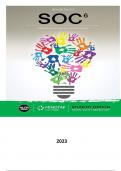
The Real World: An Introduction to Sociology, 9th Edition
by Kerry Ferris and Jill Stein | ALL CHAPTERS 1-16
TEST BANK
,TABLE OF CONTENT
Part I: Thinking Sociologically and Doing Sociology
Chapter 1: Sociology and the Real World
Chapter 2: Studying Social Life: Sociological Research Methods
Part II: Framing Social Life
Chapter 3: Culture
Chapter 4: Socialization, Interaction, and the Self
Chapter 5: Separate and Together: Life in Groups
Chapter 6: Deviance
Part III: Understanding Inequality
Chapter 7: Social Class: The Structure of Inequality
Chapter 8: Race and Ethnicity as Lived Experience
Chapter 9: Constructing Gender and Sexuality
Part IV: Social Institutions and the Micro-Macro Link
Chapter 10: Social Institutions: Politics, Education, and Religion
Chapter 11: The Economy and Work
Chapter 12: Life at Home: Families and Relationships
Chapter 13: Leisure and Media
Chapter 14: Health and Illness
Part V: Envisioning the Future and Creating Social Change
Chapter 15: Populations, Cities, and the Environment
Chapter 16: Social Change
,Test Bank for The Real World: An Introduction to Sociology, 9th E Ferris
Complete Chapters Included ✅
Chapter 1
1. What is a key difference between psychology and sociology?
a. Psychology is concerned with on-the-ground interaction among people,
whereas sociology is only about hard numbers and data.
b. Psychology is focused on historical societies, whereas sociology is focused
on present-day societies.
c. Psychology specializes in internal states of mind, whereas sociology looks
at the individual in relationship to external social forces.
d. Psychology focuses on social forces, whereas sociology focuses on the
individual.
2. How do sociologists observe society?
a. by studying the various parts of a society and the ways they interact with
and influence one another
b. by studying society as a concrete object, the same way a geologist studies
a rock
c. by comparing the past and present, with a focus on the past
d. by studying the relationship between individuals and society, specializing in
internal states of mind
3. What sets sociology apart from the other social sciences?
a. Society is always changing.
b. Sociologists are trained to be everyday actors.
c. There is no disagreement among sociologists about how to define the
discipline.
d. Sociology’s integrative approach makes it more comprehensive than other
social sciences.
4. Sociology can be defined as the systematic and scientific study of human society
and social behavior from __________ to __________.
a. large-scale institutions; individual interactions
, b. practical knowledge; scientific knowledge
c. individual interactions; small groups
d. economics; political science
5. During the Covid-19 pandemic, vaccination requirements and mask mandates
have become a point of controversy. Many individuals argue that such mandates
violate their personal rights, whereas others see them as sound public health
measures. Which sociological concept best allows one to see the connection
between the personal and the public?
a. expert’s mind
b. beginner’s mind
c. culture shock
d. microsociology
6. You have begun studying unemployment rates in a city with fifty million people, of
which fifteen million are unemployed. If you are using your sociological
imagination, what is your first consideration?
a. the economic and political structures of the society
b. the work ethic of the average citizen
c. the intelligence level of the workers who have lost their jobs
d. how much the people who are unemployed want to work
7. How can people benefit from developing a sociological imagination?
a. It will help them avoid examining larger social forces.
b. It can help them become aware of the connections between their own lives
and the larger course of history.
c. It can help them recognize something that is innately understood by nearly
everyone.
d. It will encourage a sole focus on micro-level interactions.
8. Which of the following is a weakness of the sociological approach?
a. It accepts many things as true that cannot be verified or confirmed.
b. It is a practical approach rather than a scientific approach.
The Real World: An Introduction to Sociology, 9th Edition
by Kerry Ferris and Jill Stein | ALL CHAPTERS 1-16
TEST BANK
,TABLE OF CONTENT
Part I: Thinking Sociologically and Doing Sociology
Chapter 1: Sociology and the Real World
Chapter 2: Studying Social Life: Sociological Research Methods
Part II: Framing Social Life
Chapter 3: Culture
Chapter 4: Socialization, Interaction, and the Self
Chapter 5: Separate and Together: Life in Groups
Chapter 6: Deviance
Part III: Understanding Inequality
Chapter 7: Social Class: The Structure of Inequality
Chapter 8: Race and Ethnicity as Lived Experience
Chapter 9: Constructing Gender and Sexuality
Part IV: Social Institutions and the Micro-Macro Link
Chapter 10: Social Institutions: Politics, Education, and Religion
Chapter 11: The Economy and Work
Chapter 12: Life at Home: Families and Relationships
Chapter 13: Leisure and Media
Chapter 14: Health and Illness
Part V: Envisioning the Future and Creating Social Change
Chapter 15: Populations, Cities, and the Environment
Chapter 16: Social Change
,Test Bank for The Real World: An Introduction to Sociology, 9th E Ferris
Complete Chapters Included ✅
Chapter 1
1. What is a key difference between psychology and sociology?
a. Psychology is concerned with on-the-ground interaction among people,
whereas sociology is only about hard numbers and data.
b. Psychology is focused on historical societies, whereas sociology is focused
on present-day societies.
c. Psychology specializes in internal states of mind, whereas sociology looks
at the individual in relationship to external social forces.
d. Psychology focuses on social forces, whereas sociology focuses on the
individual.
2. How do sociologists observe society?
a. by studying the various parts of a society and the ways they interact with
and influence one another
b. by studying society as a concrete object, the same way a geologist studies
a rock
c. by comparing the past and present, with a focus on the past
d. by studying the relationship between individuals and society, specializing in
internal states of mind
3. What sets sociology apart from the other social sciences?
a. Society is always changing.
b. Sociologists are trained to be everyday actors.
c. There is no disagreement among sociologists about how to define the
discipline.
d. Sociology’s integrative approach makes it more comprehensive than other
social sciences.
4. Sociology can be defined as the systematic and scientific study of human society
and social behavior from __________ to __________.
a. large-scale institutions; individual interactions
, b. practical knowledge; scientific knowledge
c. individual interactions; small groups
d. economics; political science
5. During the Covid-19 pandemic, vaccination requirements and mask mandates
have become a point of controversy. Many individuals argue that such mandates
violate their personal rights, whereas others see them as sound public health
measures. Which sociological concept best allows one to see the connection
between the personal and the public?
a. expert’s mind
b. beginner’s mind
c. culture shock
d. microsociology
6. You have begun studying unemployment rates in a city with fifty million people, of
which fifteen million are unemployed. If you are using your sociological
imagination, what is your first consideration?
a. the economic and political structures of the society
b. the work ethic of the average citizen
c. the intelligence level of the workers who have lost their jobs
d. how much the people who are unemployed want to work
7. How can people benefit from developing a sociological imagination?
a. It will help them avoid examining larger social forces.
b. It can help them become aware of the connections between their own lives
and the larger course of history.
c. It can help them recognize something that is innately understood by nearly
everyone.
d. It will encourage a sole focus on micro-level interactions.
8. Which of the following is a weakness of the sociological approach?
a. It accepts many things as true that cannot be verified or confirmed.
b. It is a practical approach rather than a scientific approach.