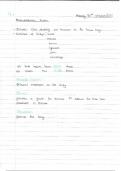
Ethical Relativism - ANS_An action is morally wrong for a person when the person's culture believes it is
wrong
Subjective
Ethical objectivism - ANS_An action is morally wrong or right no matter what anyone thinks
Attractions of ethical relativism - ANS_-Moral disagreement: People disagree about all sorts of ethical
claims - No clear way to resolve moral differences
-Promotes tolerance - allows for different interpretations of different cultures
Objections to ethical relativism - ANS_- Forbids condemning other cultures no matter how bad
- Forbids condemning one's own culture
- Makes moral progress impossible - no matter what a society's moral beliefs are, they are correct
Gensler against ethical relativism - ANS_Cultural relativism forces us to conform to society's norms or
else we'll contradict ourselves - can never disagree with values
Can't say nazis killing Jews and minorities is bad because it's a part of their culture and ER
Ignores that there are subgroups in cultures
, Doesn't establish common norms between societies
Enoch's Three Tests for Objectivity - ANS_Spinach test - If the analogy seems true no matter what, it isn't
funny, therefore objective
Disagreement/Deliberation - when discussing opposing opinions, morality falls on objective side:
phenomenology of deliberation
Counterfactual test - Whether or not something is agreed on, it still remains true: morality falls on
objective side
Euthyphro's Definitions of Piety - ANS_-Piety is prosecuting the wrongdoer
-What is dear to the gods is pious, not impious
-The pious is what all gods love, and the opposite, what all gods hate, is impious
Socrates' objections to Euthyrphro's piety definitions - ANS_-Piety is prosecuting the wrongdoer: Not a
definition, an example
-What is dear to the gods is pious: What's dear to some gods is not dear to others-contradiction
-The pious is what all gods love: Silent on matters of disagreement
Euthyphro Question - ANS_Is the pious thing being loved by the gods because it is pious or is it pious
because it is loved by the gods?
Which is more fundamental:
-Right acts are right because God commands them
-God commands the right acts because they are right
(Inadequate definition of piety)
wrong
Subjective
Ethical objectivism - ANS_An action is morally wrong or right no matter what anyone thinks
Attractions of ethical relativism - ANS_-Moral disagreement: People disagree about all sorts of ethical
claims - No clear way to resolve moral differences
-Promotes tolerance - allows for different interpretations of different cultures
Objections to ethical relativism - ANS_- Forbids condemning other cultures no matter how bad
- Forbids condemning one's own culture
- Makes moral progress impossible - no matter what a society's moral beliefs are, they are correct
Gensler against ethical relativism - ANS_Cultural relativism forces us to conform to society's norms or
else we'll contradict ourselves - can never disagree with values
Can't say nazis killing Jews and minorities is bad because it's a part of their culture and ER
Ignores that there are subgroups in cultures
, Doesn't establish common norms between societies
Enoch's Three Tests for Objectivity - ANS_Spinach test - If the analogy seems true no matter what, it isn't
funny, therefore objective
Disagreement/Deliberation - when discussing opposing opinions, morality falls on objective side:
phenomenology of deliberation
Counterfactual test - Whether or not something is agreed on, it still remains true: morality falls on
objective side
Euthyphro's Definitions of Piety - ANS_-Piety is prosecuting the wrongdoer
-What is dear to the gods is pious, not impious
-The pious is what all gods love, and the opposite, what all gods hate, is impious
Socrates' objections to Euthyrphro's piety definitions - ANS_-Piety is prosecuting the wrongdoer: Not a
definition, an example
-What is dear to the gods is pious: What's dear to some gods is not dear to others-contradiction
-The pious is what all gods love: Silent on matters of disagreement
Euthyphro Question - ANS_Is the pious thing being loved by the gods because it is pious or is it pious
because it is loved by the gods?
Which is more fundamental:
-Right acts are right because God commands them
-God commands the right acts because they are right
(Inadequate definition of piety)