CAT Exam 1
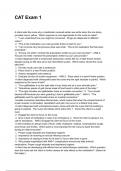
A client asks the nurse why a medication received earlier was white when the one being
provided now is yellow. Which response is most appropriate for the nurse to make?
1. "I can understand how you might be concerned. Drugs are dispensed in different
colors."
2. "This is the medication your care provider thinks is best for you."
3. "I do not know why the previous dose was white. This is the medication that has been
prescribed."
4. "Excuse me while I recheck the prescription written by your care provider." - ANS-4.
"Excuse me while I recheck the prescription written by your care provider."
A client diagnosed with a small bowel obstruction vomits 300 mL of dark brown emesis
despite having an NG tube set to low intermittent suction. Which action should the nurse
take first?
1. Provide mouth care with a toothbrush.
2. Place client in a semi-Fowler position.
3. Assess nasogastric tube patency.
4. Evaluate function of suction equipment. - ANS-2. Place client in a semi-Fowler position.
A client diagnosed with cholecystitis asks the nurse why the right shoulder is painful. Which
response by the nurse is best?
1. "Your gallbladder is on the right side of your body and so is your shoulder pain."
2. "Sometimes pieces of gall stones break off and travel to other parts of the body."
3. "The right shoulder and gallbladder share an invisible connection." 4. "Your should
became stiff because you were guarding it due to gallbladder pain." - ANS-3. "The
gallbladder and the right shoulder share an invisible connection."
Invisible connection describes referred pain, which means that when the visceral branch of
a pain receptor is stimulated, vasodilation and pain may occur in a distant body area.
A client diagnosed with schizophrenia hears voices and tells the nurse that the building is
going to explode. The nurse will initiate which action first. 1. Escort the client to a quiet
room.
2. Engage the client to focus on the nurse.
3. Give a dose of medication in case of an emergency. 4. Since the client is going to run,
call for assistance. - ANS-2 Engage the client to focus on the nurse.
A client exhibits an abrupt onset of fever, chills, headache, malaise, nonproductive cough,
sore throat, and rhinitis. Which point is most important for the nurse to teach the client
during an initial encounter?
1. Proper cough etiquette and respiratory hygiene
2. Importance of receiving an annual influenza vaccine
3. Importance of staying at home for at least 12 hours after fever is gone
4. Why people hospitalized with ANS-1 complications should only take antiviral
medications. Proper cough etiquette and respiratory hygiene
A client may be developing side effects from an anticholinergic medication. Which question
does the nurse ask the client to further assess for side effects to this medication? (Select all
that apply.)
A client asks the nurse why a medication received earlier was white when the one being
provided now is yellow. Which response is most appropriate for the nurse to make?
1. "I can understand how you might be concerned. Drugs are dispensed in different
colors."
2. "This is the medication your care provider thinks is best for you."
3. "I do not know why the previous dose was white. This is the medication that has been
prescribed."
4. "Excuse me while I recheck the prescription written by your care provider." - ANS-4.
"Excuse me while I recheck the prescription written by your care provider."
A client diagnosed with a small bowel obstruction vomits 300 mL of dark brown emesis
despite having an NG tube set to low intermittent suction. Which action should the nurse
take first?
1. Provide mouth care with a toothbrush.
2. Place client in a semi-Fowler position.
3. Assess nasogastric tube patency.
4. Evaluate function of suction equipment. - ANS-2. Place client in a semi-Fowler position.
A client diagnosed with cholecystitis asks the nurse why the right shoulder is painful. Which
response by the nurse is best?
1. "Your gallbladder is on the right side of your body and so is your shoulder pain."
2. "Sometimes pieces of gall stones break off and travel to other parts of the body."
3. "The right shoulder and gallbladder share an invisible connection." 4. "Your should
became stiff because you were guarding it due to gallbladder pain." - ANS-3. "The
gallbladder and the right shoulder share an invisible connection."
Invisible connection describes referred pain, which means that when the visceral branch of
a pain receptor is stimulated, vasodilation and pain may occur in a distant body area.
A client diagnosed with schizophrenia hears voices and tells the nurse that the building is
going to explode. The nurse will initiate which action first. 1. Escort the client to a quiet
room.
2. Engage the client to focus on the nurse.
3. Give a dose of medication in case of an emergency. 4. Since the client is going to run,
call for assistance. - ANS-2 Engage the client to focus on the nurse.
A client exhibits an abrupt onset of fever, chills, headache, malaise, nonproductive cough,
sore throat, and rhinitis. Which point is most important for the nurse to teach the client
during an initial encounter?
1. Proper cough etiquette and respiratory hygiene
2. Importance of receiving an annual influenza vaccine
3. Importance of staying at home for at least 12 hours after fever is gone
4. Why people hospitalized with ANS-1 complications should only take antiviral
medications. Proper cough etiquette and respiratory hygiene
A client may be developing side effects from an anticholinergic medication. Which question
does the nurse ask the client to further assess for side effects to this medication? (Select all
that apply.)