Chapter 8: Gene Expression and Regulation
Individual (single) Gene Structure:
Promoter:
● RNA Polymerase binds → facilitates transcription
● Sigma factor recognizes promoter
Operator:
● Regulatory protein binds here
● Regulatory proteins can inhibit or promote gene expression
Coding Region:
● Template for RNA → protein (usually)
● Functional component
Opersons:
Multiple Genes controlled by a single promoter, transcribed together
● Increases efficiency, saves time and energy
● Genes involved in the same process, or combine to form one protein complex, controlled as one unit
Gene Regulation:
● Gene is regulated due to limited resources and to conserve as much as energy possible
○ What are we regulating? When, Where, and How much?
Four ways bacteria control expression:
1. Promoter strength
When and where RNA Polymerase binds
● Controls gene expression at the DNA/transcriptional level
● Outcome: how much mRNA is produced
● Some promoters are stronger than others
○ Stronger promoters have stronger association with RNA Polymerase
○ Initiate gene expression more frequently
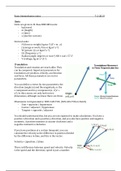
, ● Sigma subunit of RNA Polymerase recognizes promoters based on DNA sequence
● Promoter strength = amount of expression
○ Consensus sequence is the sequence that has the highest binding affinity for a particular
sigma factor
○ Any deviation from the consensus is bound less strongly and less frequently
E.g. Sigma D consensus sequence = TTGACA – N17 – TATAAT
● red = differing nucleotides, sigma binding decreases
● Fewest number of base changes in consensus sequence is favourable (i.e. less reduced affinity).
Sigma Factor:
● Essential component of the RNA Polymerase Holoenzyme (consists of 2 ⍺, 1 β’, 1 β subunits)
● RNA Polymerase binds non-specifically to DNA, slides along until it meets its promoter, which is recognized
by sigma factor
● Bacteria have a variety of sigma factors - each specify a different promoter affinity
○ Will express sigma factor that is suitable for the conditions
, ● Sigma factor often binds to several different promoters
2. Regulatory proteins
● Controls gene expression at the DNA/transcriptional level
● Outcome: how much mRNA is produced
● Regulatory proteins control expression at the DNA (transcriptional) level
● These bind to Operator regions of DNA and either promote or inhibit expression of genes
Activator/Enhancer: recruit RNA Polymerase to Gene, usually located Upstream of Promoter.
Repressor: physically blocks RNA Polymerase. Usually located Downstream of promoter.
Note the position of the operator – it often predicts the function of the regulator.
Allostery of Regulatory Proteins:
Allosteric site: interacts with small molecules (metabolites) and allows regulator to switch conformation
1) Able to bind to DNA OR (i.e. enhance the ability to bind to DNA)
2) Unable to bind to DNA (i.e. preventing ability of regulator to bind to DNA)
Both states must occur under appropriate physical/environmental conditions.
Arg Operon:
● Function: synthesize an amino acid, arginine
, ● ArgR (regulatory protein) is a regulator of the Arg operon
● Arginine is the effector/metabolite regulating ArgR activity
○ Low [Arginine] promotes regulator and enhance gene expression
○ High [Arginine] inhibit regulator
○ Upstream operator from promoter indicating positive regulator (activator)
Be able to predict outcomes of activator/repressors
1) ArgR as an Activator (Enhancer) and Arg as an allosteric inhibitor of ArgR
↑ [Arg] binds to ArgR and prevents it from binding to the Promoter for gene expression
↓ [Arg] = no inhibition of ArgR i.e. Gene expression occurs.
2) ArgR as a Repressor and Arg as an allosteric promoter of ArgR
↑ [Arg] is an activator of ArgR such that Arg allosterically binds to ArgR and prevents ArgR from binding to the
binding site and allows gene expression to proceed.
Gene regulation and the lac operon:
Examining the lac operon as an example of gene regulation by regulatory proteins
The bacterial sweet tooth
Bacteria love sugar
Individual (single) Gene Structure:
Promoter:
● RNA Polymerase binds → facilitates transcription
● Sigma factor recognizes promoter
Operator:
● Regulatory protein binds here
● Regulatory proteins can inhibit or promote gene expression
Coding Region:
● Template for RNA → protein (usually)
● Functional component
Opersons:
Multiple Genes controlled by a single promoter, transcribed together
● Increases efficiency, saves time and energy
● Genes involved in the same process, or combine to form one protein complex, controlled as one unit
Gene Regulation:
● Gene is regulated due to limited resources and to conserve as much as energy possible
○ What are we regulating? When, Where, and How much?
Four ways bacteria control expression:
1. Promoter strength
When and where RNA Polymerase binds
● Controls gene expression at the DNA/transcriptional level
● Outcome: how much mRNA is produced
● Some promoters are stronger than others
○ Stronger promoters have stronger association with RNA Polymerase
○ Initiate gene expression more frequently
, ● Sigma subunit of RNA Polymerase recognizes promoters based on DNA sequence
● Promoter strength = amount of expression
○ Consensus sequence is the sequence that has the highest binding affinity for a particular
sigma factor
○ Any deviation from the consensus is bound less strongly and less frequently
E.g. Sigma D consensus sequence = TTGACA – N17 – TATAAT
● red = differing nucleotides, sigma binding decreases
● Fewest number of base changes in consensus sequence is favourable (i.e. less reduced affinity).
Sigma Factor:
● Essential component of the RNA Polymerase Holoenzyme (consists of 2 ⍺, 1 β’, 1 β subunits)
● RNA Polymerase binds non-specifically to DNA, slides along until it meets its promoter, which is recognized
by sigma factor
● Bacteria have a variety of sigma factors - each specify a different promoter affinity
○ Will express sigma factor that is suitable for the conditions
, ● Sigma factor often binds to several different promoters
2. Regulatory proteins
● Controls gene expression at the DNA/transcriptional level
● Outcome: how much mRNA is produced
● Regulatory proteins control expression at the DNA (transcriptional) level
● These bind to Operator regions of DNA and either promote or inhibit expression of genes
Activator/Enhancer: recruit RNA Polymerase to Gene, usually located Upstream of Promoter.
Repressor: physically blocks RNA Polymerase. Usually located Downstream of promoter.
Note the position of the operator – it often predicts the function of the regulator.
Allostery of Regulatory Proteins:
Allosteric site: interacts with small molecules (metabolites) and allows regulator to switch conformation
1) Able to bind to DNA OR (i.e. enhance the ability to bind to DNA)
2) Unable to bind to DNA (i.e. preventing ability of regulator to bind to DNA)
Both states must occur under appropriate physical/environmental conditions.
Arg Operon:
● Function: synthesize an amino acid, arginine
, ● ArgR (regulatory protein) is a regulator of the Arg operon
● Arginine is the effector/metabolite regulating ArgR activity
○ Low [Arginine] promotes regulator and enhance gene expression
○ High [Arginine] inhibit regulator
○ Upstream operator from promoter indicating positive regulator (activator)
Be able to predict outcomes of activator/repressors
1) ArgR as an Activator (Enhancer) and Arg as an allosteric inhibitor of ArgR
↑ [Arg] binds to ArgR and prevents it from binding to the Promoter for gene expression
↓ [Arg] = no inhibition of ArgR i.e. Gene expression occurs.
2) ArgR as a Repressor and Arg as an allosteric promoter of ArgR
↑ [Arg] is an activator of ArgR such that Arg allosterically binds to ArgR and prevents ArgR from binding to the
binding site and allows gene expression to proceed.
Gene regulation and the lac operon:
Examining the lac operon as an example of gene regulation by regulatory proteins
The bacterial sweet tooth
Bacteria love sugar