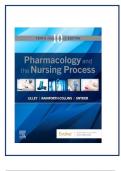
,Nursing Pharmacology Q&A Mega Guide: 2025 NCLEX Success
Through Verified Rationales
Complete 58-Chapter Coverage | 1,160 NCLEX-Style Questions
| Verified and Explained
Aligns with Pharmacology and the Nursing Process, 10th
Edition
"Master Every Chapter – Pass with Confidence | Rationales
Backed by Evidence-Based Guidelines"
Contents:
PART 1: PHARMACOLOGY BASICS
1. The Nursing Process and Drug Therapy
Introduces assessment, diagnosis, planning, implementation, and evaluation in
pharmacologic care—emphasizing patient safety, evidence-based practice, and
documentation.
2. Pharmacologic Principles
Covers drug absorption, distribution, metabolism, and excretion (ADME); mechanisms
of action; dose-response relationships; and therapeutic vs. toxic effects.
3. Lifespan Considerations
Examines how age-related physiological changes in pediatric and geriatric populations
influence pharmacokinetics and dosing.
4. Cultural, Legal, and Ethical Considerations
Highlights cultural competence, informed consent, legal responsibilities, patient rights,
and ethical dilemmas in drug therapy.
5. Medication Errors: Preventing and Responding
Defines error types, contributing factors, reporting systems, and strategies like the “five
rights” and root-cause analysis to improve safety.
6. Patient Education and Drug Therapy
Focuses on teaching strategies to enhance adherence, literacy, and informed decision-
making, using clear communication and written materials.
, 7. Over-the-Counter Drugs and Herbal and Dietary Supplements
Reviews common OTC medications, herbal remedies, regulation issues, safety profiles,
and drug–supplement interactions.
8. Gene Therapy and Pharmacogenomics
Explains how genetic factors affect drug response and the future impact of gene therapy
and personalized medicine.
9. Photo Atlas of Drug Administration
Visual guide to administering medications by various routes—oral, topical, injectable,
inhalational, and parenteral—with proper technique.
PART 2: DRUGS AFFECTING THE CENTRAL NERVOUS SYSTEM
10. Analgesic Drugs
Discusses opioid and nonopioid pain relievers, multimodal approaches, and safety
considerations for acute and chronic pain.
11. General and Local Anesthetics
Explains mechanisms, administration routes, perioperative monitoring, and
complications of anesthetic agents.
12. Central Nervous System Depressants and Muscle Relaxants
Covers sedatives, hypnotics, benzodiazepines, barbiturates, and their use in anxiety,
insomnia, and muscle spasms.
13. Central Nervous System Stimulants and Related Drugs
Focus on ADHD therapies, narcolepsy drugs, and decongestants, detailing stimulant
action and abuse potential.
14. Antiepileptic Drugs
Presents seizure types, drug classifications, mechanisms, monitoring, and dosing for
epilepsy management.
15. Antiparkinson Drugs
Reviews dopaminergic agents, anticholinergics, and COMT inhibitors to alleviate
Parkinson’s symptoms.
16. Psychotherapeutic Drugs
Details antidepressants, antipsychotics, mood stabilizers, side effects, and drug selection
strategies for mental health disorders.
, 17. Substance Use Disorder
Covers addiction biology, detox agents, maintenance therapies (e.g., methadone,
buprenorphine), and relapse prevention.
PART 3: DRUGS AFFECTING THE AUTONOMIC NERVOUS SYSTEM
18. Adrenergic Drugs
Explains sympathetic agonists for shock, asthma, and cardiac support, including dosing
and side effect profiles.
19. Adrenergic-Blocking Drugs
Details beta- and alpha-blockers used in hypertension, angina, and arrhythmias, along
with contraindications.
20. Cholinergic Drugs
Covers parasympathomimetics used for glaucoma, myasthenia gravis, and postoperative
ileus.
21. Cholinergic-Blocking Drugs
Describes anticholinergics for motion sickness, urinary incontinence, and respiratory
conditions.
PART 4: DRUGS AFFECTING THE CARDIOVASCULAR AND RENAL SYSTEMS
22. Antihypertensive Drugs
Reviews ACE inhibitors, ARBs, diuretics, calcium-channel blockers, and lifestyle factors in
blood pressure control.
23. Antianginal Drugs
Includes nitrates, beta-blockers, and calcium-channel blockers to relieve chest pain and
optimize cardiac oxygenation.
24. Heart Failure Drugs
Focuses on ACE inhibitors, beta-blockers, diuretics, and inotropes for managing chronic
and acute heart failure.
25. Antidysrhythmic Drugs
Classifies antiarrhythmics by Vaughan-Williams and addresses indication, toxicity, and
monitoring.
26. Coagulation Modifier Drugs
Covers anticoagulants, antiplatelets, and fibrinolytics in thrombosis, stroke prevention,
and device-related clot prevention.
, 27. Antilipemic Drugs
Discusses statins, fibric acids, and PCSK9 inhibitors for cholesterol management.
28. Diuretic Drugs
Explains classifications, indications, electrolyte effects, and use in hypertension and fluid
overload.
29. Fluids and Electrolytes
Reviews IV fluid types and fluid/electrolyte balance in acute and chronic conditions.
PART 5: DRUGS AFFECTING THE ENDOCRINE AND REPRODUCTIVE SYSTEMS
30. Pituitary Drugs
Discusses hormones and analogs for endocrine disorders, diagnostic tests, and diabetes
insipidus.
31. Thyroid and Antithyroid Drugs
Focuses on replacement therapy and antithyroid drugs, dosing, and monitoring.
32. Antidiabetic Drugs
Covers insulins, oral hypoglycemics, and newer agents used in diabetes care.
33. Adrenal Drugs
Reviews corticosteroids and mineralocorticoids, their uses, side effects, and tapering
strategies.
34. Women’s Health Drugs
Includes contraceptives, hormone therapy, and reproductive health medications.
35. Men’s Health Drugs
Covers medications for androgen deficiency, erectile dysfunction, and fertility
treatments.
PART 6: DRUGS AFFECTING THE RESPIRATORY SYSTEM
36. Antihistamines, Decongestants, Antitussives, and Expectorants
Details symptomatic relief agents for colds, allergies, and airway secretions.
37. Respiratory Drugs
Reviews bronchodilators, corticosteroids, leukotriene modifiers, and biologics used in
asthma and COPD.
,PART 7: ANTIINFECTIVE AND ANTIINFLAMMATORY DRUGS
38. Antibiotics Part 1
Covers cell wall and protein synthesis inhibitors (e.g., beta-lactams, macrolides), their
action and resistance.
39. Antibiotics Part 2
Focuses on other classes (e.g., quinolones, aminoglycosides), spectrum, dosing, and
toxicity.
40. Antiviral Drugs
Discusses agents for influenza, HIV, herpes, hepatitis, CMV, and emerging infections.
41. Antitubercular Drugs
Details first- and second-line TB medications, regimens, duration, and monitoring.
42. Antifungal Drugs
Reviews polyenes, azoles, and echinocandins—uses and resistance patterns.
43. Antimalarial, Antiprotozoal, and Anthelmintic Drugs
Covers medications used for malaria, giardiasis, and parasitic infections.
44. Antiinflammatory and Antigout Drugs
Includes NSAIDs, corticosteroids, and urate-lowering agents used for inflammation and
gout.
PART 8: CHEMOTHERAPEUTIC DRUGS AND BIOLOGIC AND IMMUNE MODIFIERS
45. Antineoplastic Drugs Part 1: Cancer Overview and Cell Cycle–Specific Drugs
Introduces chemotherapy principles and cell cycle-specific agents (e.g., vinca alkaloids,
antimetabolites).
46. Antineoplastic Drugs Part 2: Cell Cycle–Nonspecific Drugs and Miscellaneous Drugs
Discusses nonspecific agents (e.g., alkylating agents), targeted therapies, and supportive
care.
47. Biologic Response–Modifying and Antirheumatic Drugs
Examines biologics (e.g., TNF inhibitors, DMARDs) used in cancer and autoimmune
disorders.
48. Immunosuppressant Drugs
Covers drugs used in transplant medicine to prevent rejection.
, 49. Immunizing Drugs
Reviews vaccines, passive and active immunity, schedules, and public health
implications.
PART 9: DRUGS AFFECTING THE GASTROINTESTINAL SYSTEM AND NUTRITION
50. Acid-Controlling Drugs
Reviews antacids, H₂ blockers, proton-pump inhibitors, and mucosal protectants.
51. Bowel Disorder Drugs
Covers laxatives, antidiarrheals, and IBS-specific medications.
52. Antiemetic and Antinausea Drugs
Discusses serotonin antagonists, dopamine antagonists, and other antiemetics.
53. Vitamins and Minerals
Reviews essential micronutrients—their roles, deficiencies, dosing, and toxicity risks.
54. Anemia Drugs
Covers iron, erythropoiesis-stimulating agents, and vitamin B₁₂/folate therapies.
55. Nutritional Supplements
Reviews enteral/parenteral nutrition, amino acids, and essential nutritional support.
PART 10: DERMATOLOGIC, OPHTHALMIC, AND OTIC DRUGS
56. Dermatologic Drugs
Covers topical/systemic meds for acne, psoriasis, dermatitis, and derm infections.
57. Ophthalmic Drugs
Reviews medications for glaucoma, infections, and inflammations of the eye.
58. Otic Drugs
Discusses ear medications used to treat infections, inflammation, and cerumen
impaction.
,1. A nurse administers an oral drug to a patient. Which factor
most influences its absorption?
A. Plasma protein binding
B. Gastric pH
C. Hepatic enzyme activity
D. Renal blood flow
Answer: B. Gastric pH
Rationale: Acidic environment assists dissolution of many oral
drugs. Altered gastric pH changes ionization and absorption
rates.
2. A highly lipophilic drug distributes rapidly into tissues.
Which characteristic of distribution does this illustrate?
A. Volume of distribution
B. First-pass effect
C. Bioavailability
D. Protein binding capacity
Answer: A. Volume of distribution
Rationale: Lipophilicity promotes wide tissue distribution,
reflected by a large volume of distribution.
3. During metabolism, the primary goal of Phase I reactions is
to:
A. Conjugate the drug to increase water solubility
B. Activate prodrugs through oxidation
,C. Directly excrete the drug unchanged
D. Increase plasma protein binding
Answer: B. Activate prodrugs through oxidation
Rationale: Phase I (oxidation/reduction) often transforms
prodrugs into active metabolites.
4. A nurse evaluates a drug’s half-life. The half-life primarily
reflects which pharmacokinetic process?
A. Absorption
B. Distribution
C. Metabolism and excretion
D. Protein binding
Answer: C. Metabolism and excretion
Rationale: Half-life depends on clearance
(metabolism/excretion) and volume of distribution.
5. A drug’s therapeutic index is 2. This indicates that:
A. The drug is very safe
B. Twice the therapeutic dose causes toxicity
C. The range between effective and toxic doses is narrow
D. Drug clearance is rapid
Answer: C. The range between effective and toxic doses is
narrow
Rationale: TI = LD50/ED50; a low TI (<2) means small margin
between therapeutic and toxic doses.
, 6. A patient experiences a toxic effect when plasma drug
levels exceed the therapeutic range. The nurse understands
this is related to:
A. First-order kinetics
B. Zero-order kinetics
C. Peak concentration
D. Protein displacement
Answer: C. Peak concentration
Rationale: Peak level above therapeutic range predisposes to
toxicity.
7. Which dose-response relationship reflects a greater
maximal effect without increasing potency?
A. Curve shifted right
B. Curve shifted left
C. Higher Emax with same ED50
D. Same Emax with higher ED50
Answer: C. Higher Emax with same ED50
Rationale: Emax increase raises maximal response; ED50
unchanged means potency constant.
8. A nurse administers a drug with a narrow therapeutic
index. Which action is essential?
A. Give with food to slow absorption
Through Verified Rationales
Complete 58-Chapter Coverage | 1,160 NCLEX-Style Questions
| Verified and Explained
Aligns with Pharmacology and the Nursing Process, 10th
Edition
"Master Every Chapter – Pass with Confidence | Rationales
Backed by Evidence-Based Guidelines"
Contents:
PART 1: PHARMACOLOGY BASICS
1. The Nursing Process and Drug Therapy
Introduces assessment, diagnosis, planning, implementation, and evaluation in
pharmacologic care—emphasizing patient safety, evidence-based practice, and
documentation.
2. Pharmacologic Principles
Covers drug absorption, distribution, metabolism, and excretion (ADME); mechanisms
of action; dose-response relationships; and therapeutic vs. toxic effects.
3. Lifespan Considerations
Examines how age-related physiological changes in pediatric and geriatric populations
influence pharmacokinetics and dosing.
4. Cultural, Legal, and Ethical Considerations
Highlights cultural competence, informed consent, legal responsibilities, patient rights,
and ethical dilemmas in drug therapy.
5. Medication Errors: Preventing and Responding
Defines error types, contributing factors, reporting systems, and strategies like the “five
rights” and root-cause analysis to improve safety.
6. Patient Education and Drug Therapy
Focuses on teaching strategies to enhance adherence, literacy, and informed decision-
making, using clear communication and written materials.
, 7. Over-the-Counter Drugs and Herbal and Dietary Supplements
Reviews common OTC medications, herbal remedies, regulation issues, safety profiles,
and drug–supplement interactions.
8. Gene Therapy and Pharmacogenomics
Explains how genetic factors affect drug response and the future impact of gene therapy
and personalized medicine.
9. Photo Atlas of Drug Administration
Visual guide to administering medications by various routes—oral, topical, injectable,
inhalational, and parenteral—with proper technique.
PART 2: DRUGS AFFECTING THE CENTRAL NERVOUS SYSTEM
10. Analgesic Drugs
Discusses opioid and nonopioid pain relievers, multimodal approaches, and safety
considerations for acute and chronic pain.
11. General and Local Anesthetics
Explains mechanisms, administration routes, perioperative monitoring, and
complications of anesthetic agents.
12. Central Nervous System Depressants and Muscle Relaxants
Covers sedatives, hypnotics, benzodiazepines, barbiturates, and their use in anxiety,
insomnia, and muscle spasms.
13. Central Nervous System Stimulants and Related Drugs
Focus on ADHD therapies, narcolepsy drugs, and decongestants, detailing stimulant
action and abuse potential.
14. Antiepileptic Drugs
Presents seizure types, drug classifications, mechanisms, monitoring, and dosing for
epilepsy management.
15. Antiparkinson Drugs
Reviews dopaminergic agents, anticholinergics, and COMT inhibitors to alleviate
Parkinson’s symptoms.
16. Psychotherapeutic Drugs
Details antidepressants, antipsychotics, mood stabilizers, side effects, and drug selection
strategies for mental health disorders.
, 17. Substance Use Disorder
Covers addiction biology, detox agents, maintenance therapies (e.g., methadone,
buprenorphine), and relapse prevention.
PART 3: DRUGS AFFECTING THE AUTONOMIC NERVOUS SYSTEM
18. Adrenergic Drugs
Explains sympathetic agonists for shock, asthma, and cardiac support, including dosing
and side effect profiles.
19. Adrenergic-Blocking Drugs
Details beta- and alpha-blockers used in hypertension, angina, and arrhythmias, along
with contraindications.
20. Cholinergic Drugs
Covers parasympathomimetics used for glaucoma, myasthenia gravis, and postoperative
ileus.
21. Cholinergic-Blocking Drugs
Describes anticholinergics for motion sickness, urinary incontinence, and respiratory
conditions.
PART 4: DRUGS AFFECTING THE CARDIOVASCULAR AND RENAL SYSTEMS
22. Antihypertensive Drugs
Reviews ACE inhibitors, ARBs, diuretics, calcium-channel blockers, and lifestyle factors in
blood pressure control.
23. Antianginal Drugs
Includes nitrates, beta-blockers, and calcium-channel blockers to relieve chest pain and
optimize cardiac oxygenation.
24. Heart Failure Drugs
Focuses on ACE inhibitors, beta-blockers, diuretics, and inotropes for managing chronic
and acute heart failure.
25. Antidysrhythmic Drugs
Classifies antiarrhythmics by Vaughan-Williams and addresses indication, toxicity, and
monitoring.
26. Coagulation Modifier Drugs
Covers anticoagulants, antiplatelets, and fibrinolytics in thrombosis, stroke prevention,
and device-related clot prevention.
, 27. Antilipemic Drugs
Discusses statins, fibric acids, and PCSK9 inhibitors for cholesterol management.
28. Diuretic Drugs
Explains classifications, indications, electrolyte effects, and use in hypertension and fluid
overload.
29. Fluids and Electrolytes
Reviews IV fluid types and fluid/electrolyte balance in acute and chronic conditions.
PART 5: DRUGS AFFECTING THE ENDOCRINE AND REPRODUCTIVE SYSTEMS
30. Pituitary Drugs
Discusses hormones and analogs for endocrine disorders, diagnostic tests, and diabetes
insipidus.
31. Thyroid and Antithyroid Drugs
Focuses on replacement therapy and antithyroid drugs, dosing, and monitoring.
32. Antidiabetic Drugs
Covers insulins, oral hypoglycemics, and newer agents used in diabetes care.
33. Adrenal Drugs
Reviews corticosteroids and mineralocorticoids, their uses, side effects, and tapering
strategies.
34. Women’s Health Drugs
Includes contraceptives, hormone therapy, and reproductive health medications.
35. Men’s Health Drugs
Covers medications for androgen deficiency, erectile dysfunction, and fertility
treatments.
PART 6: DRUGS AFFECTING THE RESPIRATORY SYSTEM
36. Antihistamines, Decongestants, Antitussives, and Expectorants
Details symptomatic relief agents for colds, allergies, and airway secretions.
37. Respiratory Drugs
Reviews bronchodilators, corticosteroids, leukotriene modifiers, and biologics used in
asthma and COPD.
,PART 7: ANTIINFECTIVE AND ANTIINFLAMMATORY DRUGS
38. Antibiotics Part 1
Covers cell wall and protein synthesis inhibitors (e.g., beta-lactams, macrolides), their
action and resistance.
39. Antibiotics Part 2
Focuses on other classes (e.g., quinolones, aminoglycosides), spectrum, dosing, and
toxicity.
40. Antiviral Drugs
Discusses agents for influenza, HIV, herpes, hepatitis, CMV, and emerging infections.
41. Antitubercular Drugs
Details first- and second-line TB medications, regimens, duration, and monitoring.
42. Antifungal Drugs
Reviews polyenes, azoles, and echinocandins—uses and resistance patterns.
43. Antimalarial, Antiprotozoal, and Anthelmintic Drugs
Covers medications used for malaria, giardiasis, and parasitic infections.
44. Antiinflammatory and Antigout Drugs
Includes NSAIDs, corticosteroids, and urate-lowering agents used for inflammation and
gout.
PART 8: CHEMOTHERAPEUTIC DRUGS AND BIOLOGIC AND IMMUNE MODIFIERS
45. Antineoplastic Drugs Part 1: Cancer Overview and Cell Cycle–Specific Drugs
Introduces chemotherapy principles and cell cycle-specific agents (e.g., vinca alkaloids,
antimetabolites).
46. Antineoplastic Drugs Part 2: Cell Cycle–Nonspecific Drugs and Miscellaneous Drugs
Discusses nonspecific agents (e.g., alkylating agents), targeted therapies, and supportive
care.
47. Biologic Response–Modifying and Antirheumatic Drugs
Examines biologics (e.g., TNF inhibitors, DMARDs) used in cancer and autoimmune
disorders.
48. Immunosuppressant Drugs
Covers drugs used in transplant medicine to prevent rejection.
, 49. Immunizing Drugs
Reviews vaccines, passive and active immunity, schedules, and public health
implications.
PART 9: DRUGS AFFECTING THE GASTROINTESTINAL SYSTEM AND NUTRITION
50. Acid-Controlling Drugs
Reviews antacids, H₂ blockers, proton-pump inhibitors, and mucosal protectants.
51. Bowel Disorder Drugs
Covers laxatives, antidiarrheals, and IBS-specific medications.
52. Antiemetic and Antinausea Drugs
Discusses serotonin antagonists, dopamine antagonists, and other antiemetics.
53. Vitamins and Minerals
Reviews essential micronutrients—their roles, deficiencies, dosing, and toxicity risks.
54. Anemia Drugs
Covers iron, erythropoiesis-stimulating agents, and vitamin B₁₂/folate therapies.
55. Nutritional Supplements
Reviews enteral/parenteral nutrition, amino acids, and essential nutritional support.
PART 10: DERMATOLOGIC, OPHTHALMIC, AND OTIC DRUGS
56. Dermatologic Drugs
Covers topical/systemic meds for acne, psoriasis, dermatitis, and derm infections.
57. Ophthalmic Drugs
Reviews medications for glaucoma, infections, and inflammations of the eye.
58. Otic Drugs
Discusses ear medications used to treat infections, inflammation, and cerumen
impaction.
,1. A nurse administers an oral drug to a patient. Which factor
most influences its absorption?
A. Plasma protein binding
B. Gastric pH
C. Hepatic enzyme activity
D. Renal blood flow
Answer: B. Gastric pH
Rationale: Acidic environment assists dissolution of many oral
drugs. Altered gastric pH changes ionization and absorption
rates.
2. A highly lipophilic drug distributes rapidly into tissues.
Which characteristic of distribution does this illustrate?
A. Volume of distribution
B. First-pass effect
C. Bioavailability
D. Protein binding capacity
Answer: A. Volume of distribution
Rationale: Lipophilicity promotes wide tissue distribution,
reflected by a large volume of distribution.
3. During metabolism, the primary goal of Phase I reactions is
to:
A. Conjugate the drug to increase water solubility
B. Activate prodrugs through oxidation
,C. Directly excrete the drug unchanged
D. Increase plasma protein binding
Answer: B. Activate prodrugs through oxidation
Rationale: Phase I (oxidation/reduction) often transforms
prodrugs into active metabolites.
4. A nurse evaluates a drug’s half-life. The half-life primarily
reflects which pharmacokinetic process?
A. Absorption
B. Distribution
C. Metabolism and excretion
D. Protein binding
Answer: C. Metabolism and excretion
Rationale: Half-life depends on clearance
(metabolism/excretion) and volume of distribution.
5. A drug’s therapeutic index is 2. This indicates that:
A. The drug is very safe
B. Twice the therapeutic dose causes toxicity
C. The range between effective and toxic doses is narrow
D. Drug clearance is rapid
Answer: C. The range between effective and toxic doses is
narrow
Rationale: TI = LD50/ED50; a low TI (<2) means small margin
between therapeutic and toxic doses.
, 6. A patient experiences a toxic effect when plasma drug
levels exceed the therapeutic range. The nurse understands
this is related to:
A. First-order kinetics
B. Zero-order kinetics
C. Peak concentration
D. Protein displacement
Answer: C. Peak concentration
Rationale: Peak level above therapeutic range predisposes to
toxicity.
7. Which dose-response relationship reflects a greater
maximal effect without increasing potency?
A. Curve shifted right
B. Curve shifted left
C. Higher Emax with same ED50
D. Same Emax with higher ED50
Answer: C. Higher Emax with same ED50
Rationale: Emax increase raises maximal response; ED50
unchanged means potency constant.
8. A nurse administers a drug with a narrow therapeutic
index. Which action is essential?
A. Give with food to slow absorption