Page | 1
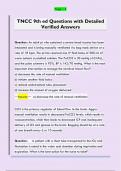
TNCC 9th ed Questions with Detailed
Verified Answers
Question: An adult pt who sustained a severe head trauma has been
intubated and is being manually ventilated via bag-mask device at a
rate of 18 bpm. The pt has received one IV fluid bolus of 500 mL of
warm isotonic crystalloid solution. The PaCO2 is 30 mmHg (4.0 kPa),
and the pulse oximetry is 92%. BP is 142/70 mmHg. What is the most
important intervention to manage the cerebral blood flow?
a) decrease the rate of manual ventilation
b) initiate another fluid bolus
c) recheck endotracheal tube placement
d) increase the amount of oxygen delivered
⼀Answer:⼀ a) decrease the rate of manual ventilation
CO2 is the primary regulator of blood flow to the brain. Aggro
manual ventilation results in decreased PaCO2 levels, which results in
vasoconstriction, which then leads to decreased ICP and inadequate
delivery of O2 and glucose to the brain. Bagging should be at a rate
of one breath every 6 or 10 seconds
Question: A patient with a chest tube transported to the ICU and
fluctuation is noted in the water seal chamber during inspiration and
expiration. What is the best action for the nurse to take?
, Page | 2
a) clamp the chest tube
b) return to the ED
c) assist with ventilation via bag-mask device
d) continue to ICU
⼀Answer:⼀ d) continue to ICU
fluctuation of the water seal chamber during insp and expr is a normal
finding
Question: Caregivers carry a 2-year old into the ED who fell out of
2nd story window. The patient is awake and crying with increased
work of breathing and pale skin. which of the following interventions
has the highest priority?
a) stabilizing the cervical spine
b) applying a nonrebreather mask
c) establishing IV access
d) preparing for drug-assisted intubation
⼀Answer:⼀ a) stabilizing the cervical spine
Question: A retained driver involved in a motor vehicle collision is
being brought to the ED with abdominal, pelvic, and bilateral lower
extremity pain. Vital signs are BP 147/78, HR 98 bpm. A FAST exam
is negative for fluid in the abdominal and peritoneal cavities. Which of
the following should the nurse anticipate?
a) diagnostic peritoneal lavage
, Page | 3
b) angiography
c) non-contrast abdominal CT
d) serial abdominal assessments
⼀Answer:⼀ d) serial abdominal assessments
The FAST exam is done at the bedside to identify pathological fluid in
the abdominal and pelvic cavities and reduces the need for more
invasive testing. However, a negative FAST exam does not rule out
injury, so serial abdominal assessments should occur. If a CT scan is
indicated, it should be done with contrast
Question: A patient arrives with a 3-inch laceration to their forearm
from a tree branch. Which of the following methods will the nurse use
to remove small pieces of bark and debris from the wound?
a) low pressure irrigation
b) high pressure irrigation
c) scrubbing with normal saline
d) scrubbing with tap water
⼀Answer:⼀ b) high pressure irrigation
low pressure irrigation used for larger wounds
Question: Three adults present at different times during a one-hour
period with high fever, fatigue, and headache. All three patients have
a rash which started on their mouth, face, and arms with progression to
TNCC 9th ed Questions with Detailed
Verified Answers
Question: An adult pt who sustained a severe head trauma has been
intubated and is being manually ventilated via bag-mask device at a
rate of 18 bpm. The pt has received one IV fluid bolus of 500 mL of
warm isotonic crystalloid solution. The PaCO2 is 30 mmHg (4.0 kPa),
and the pulse oximetry is 92%. BP is 142/70 mmHg. What is the most
important intervention to manage the cerebral blood flow?
a) decrease the rate of manual ventilation
b) initiate another fluid bolus
c) recheck endotracheal tube placement
d) increase the amount of oxygen delivered
⼀Answer:⼀ a) decrease the rate of manual ventilation
CO2 is the primary regulator of blood flow to the brain. Aggro
manual ventilation results in decreased PaCO2 levels, which results in
vasoconstriction, which then leads to decreased ICP and inadequate
delivery of O2 and glucose to the brain. Bagging should be at a rate
of one breath every 6 or 10 seconds
Question: A patient with a chest tube transported to the ICU and
fluctuation is noted in the water seal chamber during inspiration and
expiration. What is the best action for the nurse to take?
, Page | 2
a) clamp the chest tube
b) return to the ED
c) assist with ventilation via bag-mask device
d) continue to ICU
⼀Answer:⼀ d) continue to ICU
fluctuation of the water seal chamber during insp and expr is a normal
finding
Question: Caregivers carry a 2-year old into the ED who fell out of
2nd story window. The patient is awake and crying with increased
work of breathing and pale skin. which of the following interventions
has the highest priority?
a) stabilizing the cervical spine
b) applying a nonrebreather mask
c) establishing IV access
d) preparing for drug-assisted intubation
⼀Answer:⼀ a) stabilizing the cervical spine
Question: A retained driver involved in a motor vehicle collision is
being brought to the ED with abdominal, pelvic, and bilateral lower
extremity pain. Vital signs are BP 147/78, HR 98 bpm. A FAST exam
is negative for fluid in the abdominal and peritoneal cavities. Which of
the following should the nurse anticipate?
a) diagnostic peritoneal lavage
, Page | 3
b) angiography
c) non-contrast abdominal CT
d) serial abdominal assessments
⼀Answer:⼀ d) serial abdominal assessments
The FAST exam is done at the bedside to identify pathological fluid in
the abdominal and pelvic cavities and reduces the need for more
invasive testing. However, a negative FAST exam does not rule out
injury, so serial abdominal assessments should occur. If a CT scan is
indicated, it should be done with contrast
Question: A patient arrives with a 3-inch laceration to their forearm
from a tree branch. Which of the following methods will the nurse use
to remove small pieces of bark and debris from the wound?
a) low pressure irrigation
b) high pressure irrigation
c) scrubbing with normal saline
d) scrubbing with tap water
⼀Answer:⼀ b) high pressure irrigation
low pressure irrigation used for larger wounds
Question: Three adults present at different times during a one-hour
period with high fever, fatigue, and headache. All three patients have
a rash which started on their mouth, face, and arms with progression to