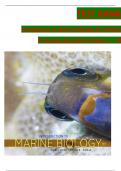
TEST BANK
Introduction to Marine Biology 4th Edition
by George Karleskint Chapter 1 - 20
,Contents Overview. Preface.
PART I: THE OCEAN ENVIRONMENT.
1. Science and Marine Biology.
2. Fundamentals of Ecology.
3. Geology of the Ocean.
4. 4. Water, Waves, and Tides.
PART II: MARINE ORGANISMS.
5. Biological Concepts.
6. Marine Microbes.
7. Multicellular Primary Producers.
8. Lower Invertebrates.
9. Higher Invertebrates.
10. Marine Fishes.
11. Marine Reptiles and Birds.
12. Marine Mammals.
PART III: MARINE ECOSYSTEMS.
13. Intertidal Communities.
14. Estuaries.
15. Coral Reef Communities.
16. Continental Shelves and Neritic Zone.
17. The Open Sea.
18. Life in the Ocean's Depths.
PART IV: HUMANS AND THE SEA.
19. Harvesting the Ocean's Resources.
20. Oceans in Jeopardy.
,Chapter 1—Science and Marine Biology
MULTIPLE CHOICE
1. What percentage of the surface of the earth is covered by seawater?
a. 46%
b. 55%
c. 64%
d. 71%
e. 83%
ANS: D PTS: 1 DIF: Recall REF: 1
2. Oceans are important in all but the following ways:
a. solar-powered engines that drive weather patterns.
b. provide a substantial amount of the world's food supply.
c. marine organisms are important for scientific research.
d. a direct source of fresh water for arid lands.
e. a source of industrial and medicinal materials.
ANS: D PTS: 1 DIF: Synthesis REF: 1-2
3. Oceanography is the study of:
a. the living organisms that inhabit the sea.
b. the oceans and their phenomena.
c. the oceans and living organisms.
d. the chemical makeup of the oceans.
e. the interactions of marine organisms with their environment.
ANS: B PTS: 1 DIF: Recall REF: 2
4. Marine biology is the study of:
a. the living organisms that inhabit the sea.
b. the oceans and their phenomena.
c. the oceans and living organisms.
d. the chemical makeup of the oceans.
e. biogeochemical processes.
ANS: A PTS: 1 DIF: Recall REF: 2
5. The most complete scientific picture of the oceans comes from:
a. thorough oceanographic studies.
b. thorough marine biology studies.
c. combining oceanography and marine biology information.
d. having ocean usage policies.
e. the popular media.
ANS: C PTS: 1 DIF: Synthesis REF: 3
, 6. Knowledge Sof Sthe Socean Scan Scome Sfrom Sall Sexcept:
a. robotics.
b. ocean Slaw.
c. deep Ssubmersibles.
d. SCUBA Sstudies.
e. computers Sand Snew Stechnologies.
ANS: S S B PTS: S S S 1 DIF: Synthesis REF: S S 3
7. The Searliest Srecorded Sdirect Sstudies S of S marine Sbiology Sare Sattributed Sto:
a. the SGreeks.
b. the SCatholic SChurch.
c. Arabian Sphilosophers.
d. Micronesian Smariners.
e. the SChinese.
ANS: S S A PTS: S S S 1 DIF: Recall REF: S S 3
8. The Sfollowing Smarine Sbiologist Swas Saboard Sthe SHMS SBeagle Sin S1831:
a. Edward SForbes.
b. Charles SWyville SThomson.
c. Alexander S Agassiz.
d. Charles SDarwin.
e. Jean-Baptiste SLamarck.
ANS: S S D PTS: S S S 1 DIF: Recall REF: S S 4
9. Charles SDarwin's Sobservations S while Saboard Sthe SHMS SBeagle Sled Seventually Sto Sthe:
a. idea Sthat Slife Sstarted Son Sland.
b. theory Sthat Slife's Sorigin Swas Sin Sfresh Swater.
c. theory Sfor Sthe Sprocess Sthat Scauses Sevolution.
d. re-birth Sof S marine Sbiology.
e. idea Sthat Slife Scould Snot Ssurvive Sin Sthe Sdeep Ssea.
ANS: S S C PTS: S S S 1 DIF: Recall REF: S S 4
10. Charles SDarwin Sproposed Sthe Stheory Sof S evolution Sbased Son Sdata She Scollected Sduring:
a. the SBeagle Sexpedition.
b. the SChallenger Sexpedition.
c. the Sobservations Sof SAgassiz.
d. Alvin's Sdives.
e. his Stime Sspent Son Sthe Srocky Scoastline Sof SEngland.
ANS: S S A PTS: S S S 1 DIF: Recall REF: S S 4
11. Darwin Sproduced Sa S well Srespected Smonograph Son:
a. mussels.
b. sea S lizards.
c. Galapagos Sturtles.
d. barnacles.
e. marine Sfossils.
ANS: S S D PTS: S S S 1 DIF: Recall REF: S S 5
Introduction to Marine Biology 4th Edition
by George Karleskint Chapter 1 - 20
,Contents Overview. Preface.
PART I: THE OCEAN ENVIRONMENT.
1. Science and Marine Biology.
2. Fundamentals of Ecology.
3. Geology of the Ocean.
4. 4. Water, Waves, and Tides.
PART II: MARINE ORGANISMS.
5. Biological Concepts.
6. Marine Microbes.
7. Multicellular Primary Producers.
8. Lower Invertebrates.
9. Higher Invertebrates.
10. Marine Fishes.
11. Marine Reptiles and Birds.
12. Marine Mammals.
PART III: MARINE ECOSYSTEMS.
13. Intertidal Communities.
14. Estuaries.
15. Coral Reef Communities.
16. Continental Shelves and Neritic Zone.
17. The Open Sea.
18. Life in the Ocean's Depths.
PART IV: HUMANS AND THE SEA.
19. Harvesting the Ocean's Resources.
20. Oceans in Jeopardy.
,Chapter 1—Science and Marine Biology
MULTIPLE CHOICE
1. What percentage of the surface of the earth is covered by seawater?
a. 46%
b. 55%
c. 64%
d. 71%
e. 83%
ANS: D PTS: 1 DIF: Recall REF: 1
2. Oceans are important in all but the following ways:
a. solar-powered engines that drive weather patterns.
b. provide a substantial amount of the world's food supply.
c. marine organisms are important for scientific research.
d. a direct source of fresh water for arid lands.
e. a source of industrial and medicinal materials.
ANS: D PTS: 1 DIF: Synthesis REF: 1-2
3. Oceanography is the study of:
a. the living organisms that inhabit the sea.
b. the oceans and their phenomena.
c. the oceans and living organisms.
d. the chemical makeup of the oceans.
e. the interactions of marine organisms with their environment.
ANS: B PTS: 1 DIF: Recall REF: 2
4. Marine biology is the study of:
a. the living organisms that inhabit the sea.
b. the oceans and their phenomena.
c. the oceans and living organisms.
d. the chemical makeup of the oceans.
e. biogeochemical processes.
ANS: A PTS: 1 DIF: Recall REF: 2
5. The most complete scientific picture of the oceans comes from:
a. thorough oceanographic studies.
b. thorough marine biology studies.
c. combining oceanography and marine biology information.
d. having ocean usage policies.
e. the popular media.
ANS: C PTS: 1 DIF: Synthesis REF: 3
, 6. Knowledge Sof Sthe Socean Scan Scome Sfrom Sall Sexcept:
a. robotics.
b. ocean Slaw.
c. deep Ssubmersibles.
d. SCUBA Sstudies.
e. computers Sand Snew Stechnologies.
ANS: S S B PTS: S S S 1 DIF: Synthesis REF: S S 3
7. The Searliest Srecorded Sdirect Sstudies S of S marine Sbiology Sare Sattributed Sto:
a. the SGreeks.
b. the SCatholic SChurch.
c. Arabian Sphilosophers.
d. Micronesian Smariners.
e. the SChinese.
ANS: S S A PTS: S S S 1 DIF: Recall REF: S S 3
8. The Sfollowing Smarine Sbiologist Swas Saboard Sthe SHMS SBeagle Sin S1831:
a. Edward SForbes.
b. Charles SWyville SThomson.
c. Alexander S Agassiz.
d. Charles SDarwin.
e. Jean-Baptiste SLamarck.
ANS: S S D PTS: S S S 1 DIF: Recall REF: S S 4
9. Charles SDarwin's Sobservations S while Saboard Sthe SHMS SBeagle Sled Seventually Sto Sthe:
a. idea Sthat Slife Sstarted Son Sland.
b. theory Sthat Slife's Sorigin Swas Sin Sfresh Swater.
c. theory Sfor Sthe Sprocess Sthat Scauses Sevolution.
d. re-birth Sof S marine Sbiology.
e. idea Sthat Slife Scould Snot Ssurvive Sin Sthe Sdeep Ssea.
ANS: S S C PTS: S S S 1 DIF: Recall REF: S S 4
10. Charles SDarwin Sproposed Sthe Stheory Sof S evolution Sbased Son Sdata She Scollected Sduring:
a. the SBeagle Sexpedition.
b. the SChallenger Sexpedition.
c. the Sobservations Sof SAgassiz.
d. Alvin's Sdives.
e. his Stime Sspent Son Sthe Srocky Scoastline Sof SEngland.
ANS: S S A PTS: S S S 1 DIF: Recall REF: S S 4
11. Darwin Sproduced Sa S well Srespected Smonograph Son:
a. mussels.
b. sea S lizards.
c. Galapagos Sturtles.
d. barnacles.
e. marine Sfossils.
ANS: S S D PTS: S S S 1 DIF: Recall REF: S S 5