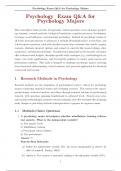
Psychology Exam Questions &
Answers for Graduate Students
,Psychology Exam Questions & Answers for Graduate Students Prepared for Stuvia
Abstract
This comprehensive document provides an extensive Q&A resource for graduate students
preparing for psychology exams, covering core subfields, research methods, applied
psychology, theories, ethics, and an expanded practice exam. Designed to meet Stuvias high
standards, it offers over 35 pages of in-depth, scenario-based questions and answers to ensure
academic rigor and practical utility.
1
, Table of Contents
1 Introduction 6
1.1 Tips for Exam Success . . . . . . . . . . . . . . . . . . . . . . . . . . . . . . 6
2 Core Areas of Psychology 6
2.1 Cognitive Psychology . . . . . . . . . . . . . . . . . . . . . . . . . . . . . . . 6
2.1.1 Question 1.1: How does the dual-process theory explain decision-making
errors in high-pressure situations, such as emergency medical diag-
noses, and what interventions can mitigate these errors? . . . . . . . . . 6
2.1.2 Question 1.2: Discuss the role of working memory in complex problem-
solving, including its limitations as outlined in Baddeleys model, and
provide a real-world example. . . . . . . . . . . . . . . . . . . . . . . 7
2.1.3 Question 1.3: How does selective attention shape perception in high-
stakes environments, and what are the implications for eyewitness tes-
timony in legal settings? . . . . . . . . . . . . . . . . . . . . . . . . . 7
2.1.4 Question 1.4: Explain cognitive load theory and its impact on designing
effective educational interventions for graduate students. . . . . . . . . 7
2.1.5 Question 1.5: How do schemas influence memory reconstruction in
clinical settings, and what are the potential risks for therapeutic outcomes? 7
2.1.6 Question 1.6: How does the Stroop effect illustrate cognitive control,
and what are its implications for attention disorders like ADHD? . . . . 8
2.1.7 Question 1.7: Discuss the role of metacognition in learning and its ap-
plication in academic settings. . . . . . . . . . . . . . . . . . . . . . . 8
2.2 Developmental Psychology . . . . . . . . . . . . . . . . . . . . . . . . . . . . 8
2.2.1 Question 1.8: How does Vygotskys sociocultural theory differ from
Piagets cognitive development theory in explaining cognitive growth,
and what are their educational implications? . . . . . . . . . . . . . . . 8
2.2.2 Question 1.9: Discuss the impact of attachment styles on adult romantic
relationships, including Ainsworths contributions and therapeutic inter-
ventions. . . . . . . . . . . . . . . . . . . . . . . . . . . . . . . . . . . 8
2.2.3 Question 1.10: How does bullying in adolescence impact long-term
mental health, and what evidence-based interventions mitigate these ef-
fects? . . . . . . . . . . . . . . . . . . . . . . . . . . . . . . . . . . . 9
2.2.4 Question 1.11: Explain Eriksons psychosocial stages, focusing on iden-
tity vs. role confusion, and their relevance to adolescent mental health
interventions. . . . . . . . . . . . . . . . . . . . . . . . . . . . . . . . 9
2.2.5 Question 1.12: How does neuroplasticity influence cognitive develop-
ment in early childhood, and what are the implications for early inter-
vention programs? . . . . . . . . . . . . . . . . . . . . . . . . . . . . 9
2.2.6 Question 1.13: How does parenting style influence child development,
and what are the cultural variations in its impact? . . . . . . . . . . . . 9
2.3 Biological/Neuropsychology . . . . . . . . . . . . . . . . . . . . . . . . . . . 9
2.3.1 Question 1.14: How do neurotransmitters influence mood disorders,
and what are the challenges in pharmacological treatments? . . . . . . . 9
2.3.2 Question 1.15: Discuss the amygdalas role in emotional processing and
its dysfunction in anxiety disorders, including treatment implications. . 10
2
Answers for Graduate Students
,Psychology Exam Questions & Answers for Graduate Students Prepared for Stuvia
Abstract
This comprehensive document provides an extensive Q&A resource for graduate students
preparing for psychology exams, covering core subfields, research methods, applied
psychology, theories, ethics, and an expanded practice exam. Designed to meet Stuvias high
standards, it offers over 35 pages of in-depth, scenario-based questions and answers to ensure
academic rigor and practical utility.
1
, Table of Contents
1 Introduction 6
1.1 Tips for Exam Success . . . . . . . . . . . . . . . . . . . . . . . . . . . . . . 6
2 Core Areas of Psychology 6
2.1 Cognitive Psychology . . . . . . . . . . . . . . . . . . . . . . . . . . . . . . . 6
2.1.1 Question 1.1: How does the dual-process theory explain decision-making
errors in high-pressure situations, such as emergency medical diag-
noses, and what interventions can mitigate these errors? . . . . . . . . . 6
2.1.2 Question 1.2: Discuss the role of working memory in complex problem-
solving, including its limitations as outlined in Baddeleys model, and
provide a real-world example. . . . . . . . . . . . . . . . . . . . . . . 7
2.1.3 Question 1.3: How does selective attention shape perception in high-
stakes environments, and what are the implications for eyewitness tes-
timony in legal settings? . . . . . . . . . . . . . . . . . . . . . . . . . 7
2.1.4 Question 1.4: Explain cognitive load theory and its impact on designing
effective educational interventions for graduate students. . . . . . . . . 7
2.1.5 Question 1.5: How do schemas influence memory reconstruction in
clinical settings, and what are the potential risks for therapeutic outcomes? 7
2.1.6 Question 1.6: How does the Stroop effect illustrate cognitive control,
and what are its implications for attention disorders like ADHD? . . . . 8
2.1.7 Question 1.7: Discuss the role of metacognition in learning and its ap-
plication in academic settings. . . . . . . . . . . . . . . . . . . . . . . 8
2.2 Developmental Psychology . . . . . . . . . . . . . . . . . . . . . . . . . . . . 8
2.2.1 Question 1.8: How does Vygotskys sociocultural theory differ from
Piagets cognitive development theory in explaining cognitive growth,
and what are their educational implications? . . . . . . . . . . . . . . . 8
2.2.2 Question 1.9: Discuss the impact of attachment styles on adult romantic
relationships, including Ainsworths contributions and therapeutic inter-
ventions. . . . . . . . . . . . . . . . . . . . . . . . . . . . . . . . . . . 8
2.2.3 Question 1.10: How does bullying in adolescence impact long-term
mental health, and what evidence-based interventions mitigate these ef-
fects? . . . . . . . . . . . . . . . . . . . . . . . . . . . . . . . . . . . 9
2.2.4 Question 1.11: Explain Eriksons psychosocial stages, focusing on iden-
tity vs. role confusion, and their relevance to adolescent mental health
interventions. . . . . . . . . . . . . . . . . . . . . . . . . . . . . . . . 9
2.2.5 Question 1.12: How does neuroplasticity influence cognitive develop-
ment in early childhood, and what are the implications for early inter-
vention programs? . . . . . . . . . . . . . . . . . . . . . . . . . . . . 9
2.2.6 Question 1.13: How does parenting style influence child development,
and what are the cultural variations in its impact? . . . . . . . . . . . . 9
2.3 Biological/Neuropsychology . . . . . . . . . . . . . . . . . . . . . . . . . . . 9
2.3.1 Question 1.14: How do neurotransmitters influence mood disorders,
and what are the challenges in pharmacological treatments? . . . . . . . 9
2.3.2 Question 1.15: Discuss the amygdalas role in emotional processing and
its dysfunction in anxiety disorders, including treatment implications. . 10
2