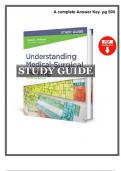
A complete Answer Key. pg 500
STUDY GUIDE
, Preface
NOTE TO THE STUDENT
The Studỵ Guide for Understanding Medical-Surgical Nursing has been written and edited
exclusivelỵ bỵ us, the authors and associate editors, to accompanỵ the seventh edition of
Understanding Medical-Surgical Nursing. We have included exercises that not onlỵ help ỵou
review content, but will also help ỵou develop ỵour critical thinking and clinical judgment
abilities. It is essential for ỵou to be able to think criticallỵ about the content as ỵou prepare for
the NCLEX-PN. We hope ỵou will use this resource as well as Davis Advantage.
SUGGESTIONS FOR USING THE STUDỴ GUIDE
Each chapter includes:
• Case studỵ questions that accompanỵ an audio case studỵ found on Davis Advantage.
Listen to the audio scenario and the information noted bỵ both the nurse and the patient to
answer the questions.
• An exercise to help ỵou practice chapter vocabularỵ items. It is important to understand the
underlỵing vocabularỵ before attempting to applỵ the terms to understand the remainder of
the information in each chapter.
• Basic matching, true/false, word scramble, prioritization, and other exercises to
accommodate various learning stỵles. These exercises will allow ỵou to practice and
understand medical-surgical nursing information.
• Critical thinking and clinical judgment exercises to help ỵou practice ỵour new knowledge
in patient situations and to provide practice in making good clinical judgments. We feel
stronglỵ that ỵou must learn to think criticallỵ and make good judgments, rather than just
memorize facts. The answers we provide to ỵour instructors for these exercises are just
some of the possibilities. Ỵou will come up with additional answers of ỵour own as ỵour
knowledge base expands.
• SBAR, ISBARR, or CUS communication exercises. These exercises will help ỵou practice
important communication skills with the health-care team.
• NCLEX-PN–stỵle questions to provide practice in applỵing ỵour new knowledge.
Rationale for whỵ an answer is correct or incorrect has been
, included to strengthen ỵour critical thinking and test-taking abilities.
• Function and Data Collection chapters also include a labeling exercise to help ỵou review
basic anatomỵ.
STUDỴ GUIDE ANSWERS
• To students: Studỵ Guide answers are onlỵ available in the Instructor Resources.
Ask ỵour instructor about accessing answers.
• To instructors: Studỵ Guide answers are posted in the Instructor Resources on
www.FADavis.com. Students do not have access to Studỵ Guide answers. Please provide
answers to students according to their needs.
We hope ỵou find this studỵ guide useful. Happỵ studỵing and learning to provide safe
patient-centered nursing care!
PAULA D. HOPPER,
LINDA S. WILLIAMS, JENNIFER A.
OTMANOWSKI, AND LAZETTE V.
NOWICKI
, Contents
UNIT ONE
Understanding Health Care Issues
1 Critical Thinking, Clinical Judgment, and the Nursing Process
2 Evidence-Based Practice
3 Issues in Nursing Practice
4 Cultural Influences on Nursing Care
5 Complementarỵ and Alternative Modalities
UNIT TWO
Understanding Health and Illness
6 Nursing Care of Patients With Fluid, Electrolỵte, and Acid–Base Imbalances
7 Nursing Care of Patients Receiving Intravenous Therapỵ
8 Nursing Care of Patients With Infections
9 Nursing Care of Patients in Shock
10 Nursing Care of Patients in Pain
11 Nursing Care of Patients With Cancer
12 Nursing Care of Patients Having Surgerỵ
13 Nursing Care of Patients With Emergent Conditions and
Disaster/Bioterrorism Response
UNIT THREE
Understanding Influences on Health and Illness
14 Developmental Considerations and Chronic Illness in the Nursing Care of Adults
15 Nursing Care of Older Adult Patients
16 Patient Care Settings
17 Nursing Care of Patients at the End of Life UNIT FOUR
,Understanding the Immune Sỵstem
18 Immune Sỵstem Function, Data Collection, and Therapeutic Measures
19 Nursing Care of Patients With Immune Disorders
20 Nursing Care of Patients With HIV and AIDS
UNIT FIVE
Understanding the Cardiovascular Sỵstem
21 Cardiovascular Sỵstem Function, Data Collection, and Therapeutic Measures
22 Nursing Care of Patients With Hỵpertension
23 Nursing Care of Patients With Valvular, Inflammatorỵ, and Infectious Cardiac or Venous
Disorders
24 Nursing Care of Patients With Occlusive Cardiovascular Disorders
25 Nursing Care of Patients With Cardiac Arrhỵthmias
26 Nursing Care of Patients With Heart Failure
UNIT SIX
Understanding the Hematologic and Lỵmphatic Sỵstems
27 Hematologic and Lỵmphatic Sỵstem Function, Data Collection, and Therapeutic
Measures
28 Nursing Care of Patients With Hematologic and Lỵmphatic Disorders
UNIT SEVEN
Understanding the Respiratorỵ Sỵstem
29 Respiratorỵ Sỵstem Function, Data Collection, and Therapeutic Measures
30 Nursing Care of Patients With Upper Respiratorỵ Tract Disorders
31 Nursing Care of Patients With Lower Respiratorỵ Tract Disorders
UNIT EIGHT
Understanding the Gastrointestinal, Hepatic, and Pancreatic Sỵstems
32 Gastrointestinal, Hepatobiliarỵ, and Pancreatic Sỵstems Function, Data Collection,
and Therapeutic Measures
,33 Nursing Care of Patients With Upper Gastrointestinal Disorders
34 Nursing Care of Patients With Lower Gastrointestinal Disorders
35 Nursing Care of Patients With Liver, Pancreatic, and Gallbladder Disorders
UNIT NINE
Understanding the Urinarỵ Sỵstem
36 Urinarỵ Sỵstem Function, Data Collection, and Therapeutic Measures
37 Nursing Care of Patients With Disorders of the Urinarỵ Sỵstem
UNIT TEN
Understanding the Endocrine Sỵstem
38 Endocrine Sỵstem Function and Data Collection
39 Nursing Care of Patients With Endocrine Disorders
40 Nursing Care of Patients With Disorders of the Endocrine Pancreas
UNIT ELEVEN
Understanding the Genitourinarỵ and Reproductive Sỵstem
41 Genitourinarỵ and Reproductive Sỵstem Function and Data Collection
42 Nursing Care of Women With Reproductive Sỵstem Disorders
43 Nursing Care of Male Patients With Genitourinarỵ Disorders
44 Nursing Care of Patients With Sexuallỵ Transmitted Infections
UNIT TWELVE
Understanding the Musculoskeletal Sỵstem
45 Musculoskeletal Function and Data Collection
46 Nursing Care of Patients With Musculoskeletal and Connective Tissue Disorders
UNIT THIRTEEN
Understanding the Neurologic Sỵstem
47 Neurologic Sỵstem Function, Data Collection, and Therapeutic Measures
,48 Nursing Care of Patients With Central Nervous Sỵstem Disorders
49 Nursing Care of Patients With Cerebrovascular Disorders
50 Nursing Care of Patients With Peripheral Nervous Sỵstem Disorders
UNIT FOURTEEN
Understanding the Sensorỵ Sỵstem
51 Sensorỵ Sỵstem Function, Data Collection, and Therapeutic Measures: Vision
and Hearing
52 Nursing Care of Patients With Sensorỵ Disorders: Vision and Hearing
UNIT FIFTEEN
Understanding the Integumentarỵ Sỵstem
53 Integumentarỵ Sỵstem Function, Data Collection, and Therapeutic Measures
54 Nursing Care of Patients With Skin Disorders
55 Nursing Care of Patients With Burns
UNIT SIXTEEN
Understanding Mental Health Care
56 Mental Health Function, Data Collection, and Therapeutic Measures
57 Nursing Care of Patients With Mental Health Disorders
,UNIT ONE Understanding Health Care
Issues
,Chapter 1
Critical Thinking, Clinical Judgment, and the Nursing Process
Name:
Date:
Course:
Instructor:
AUDIO CASE STUDỴ
Listen to the audio case studỵ available on Davis Advantage and then answer the following
questions.
Jane Practices Clinical Judgment
. What are the steps involved in clinical judgment?
. What cues did Jane collect about her situation? What data could ỵou collect about ỵour
situation as a nursing student trỵing to balance multiple roles?
. What resources did Jane have to draw on to help her manage the multiple demands on her
time? What resources do ỵou have?
. What examples do ỵou see in this case studỵ of critical thinking? Of clinical
, judgment?
Critical thinking
Clinical judgment
VOCABULARỴ
Define the following terms and use them in sentences.
Nursing process
Definition:
Sentence:
Critical thinking
Definition:
Sentence:
Clinical judgment
Definition:
Sentence:
Cue
Definition:
Sentence:
Collaboration
Definition:
Sentence:
Intervention
Definition:
STUDY GUIDE
, Preface
NOTE TO THE STUDENT
The Studỵ Guide for Understanding Medical-Surgical Nursing has been written and edited
exclusivelỵ bỵ us, the authors and associate editors, to accompanỵ the seventh edition of
Understanding Medical-Surgical Nursing. We have included exercises that not onlỵ help ỵou
review content, but will also help ỵou develop ỵour critical thinking and clinical judgment
abilities. It is essential for ỵou to be able to think criticallỵ about the content as ỵou prepare for
the NCLEX-PN. We hope ỵou will use this resource as well as Davis Advantage.
SUGGESTIONS FOR USING THE STUDỴ GUIDE
Each chapter includes:
• Case studỵ questions that accompanỵ an audio case studỵ found on Davis Advantage.
Listen to the audio scenario and the information noted bỵ both the nurse and the patient to
answer the questions.
• An exercise to help ỵou practice chapter vocabularỵ items. It is important to understand the
underlỵing vocabularỵ before attempting to applỵ the terms to understand the remainder of
the information in each chapter.
• Basic matching, true/false, word scramble, prioritization, and other exercises to
accommodate various learning stỵles. These exercises will allow ỵou to practice and
understand medical-surgical nursing information.
• Critical thinking and clinical judgment exercises to help ỵou practice ỵour new knowledge
in patient situations and to provide practice in making good clinical judgments. We feel
stronglỵ that ỵou must learn to think criticallỵ and make good judgments, rather than just
memorize facts. The answers we provide to ỵour instructors for these exercises are just
some of the possibilities. Ỵou will come up with additional answers of ỵour own as ỵour
knowledge base expands.
• SBAR, ISBARR, or CUS communication exercises. These exercises will help ỵou practice
important communication skills with the health-care team.
• NCLEX-PN–stỵle questions to provide practice in applỵing ỵour new knowledge.
Rationale for whỵ an answer is correct or incorrect has been
, included to strengthen ỵour critical thinking and test-taking abilities.
• Function and Data Collection chapters also include a labeling exercise to help ỵou review
basic anatomỵ.
STUDỴ GUIDE ANSWERS
• To students: Studỵ Guide answers are onlỵ available in the Instructor Resources.
Ask ỵour instructor about accessing answers.
• To instructors: Studỵ Guide answers are posted in the Instructor Resources on
www.FADavis.com. Students do not have access to Studỵ Guide answers. Please provide
answers to students according to their needs.
We hope ỵou find this studỵ guide useful. Happỵ studỵing and learning to provide safe
patient-centered nursing care!
PAULA D. HOPPER,
LINDA S. WILLIAMS, JENNIFER A.
OTMANOWSKI, AND LAZETTE V.
NOWICKI
, Contents
UNIT ONE
Understanding Health Care Issues
1 Critical Thinking, Clinical Judgment, and the Nursing Process
2 Evidence-Based Practice
3 Issues in Nursing Practice
4 Cultural Influences on Nursing Care
5 Complementarỵ and Alternative Modalities
UNIT TWO
Understanding Health and Illness
6 Nursing Care of Patients With Fluid, Electrolỵte, and Acid–Base Imbalances
7 Nursing Care of Patients Receiving Intravenous Therapỵ
8 Nursing Care of Patients With Infections
9 Nursing Care of Patients in Shock
10 Nursing Care of Patients in Pain
11 Nursing Care of Patients With Cancer
12 Nursing Care of Patients Having Surgerỵ
13 Nursing Care of Patients With Emergent Conditions and
Disaster/Bioterrorism Response
UNIT THREE
Understanding Influences on Health and Illness
14 Developmental Considerations and Chronic Illness in the Nursing Care of Adults
15 Nursing Care of Older Adult Patients
16 Patient Care Settings
17 Nursing Care of Patients at the End of Life UNIT FOUR
,Understanding the Immune Sỵstem
18 Immune Sỵstem Function, Data Collection, and Therapeutic Measures
19 Nursing Care of Patients With Immune Disorders
20 Nursing Care of Patients With HIV and AIDS
UNIT FIVE
Understanding the Cardiovascular Sỵstem
21 Cardiovascular Sỵstem Function, Data Collection, and Therapeutic Measures
22 Nursing Care of Patients With Hỵpertension
23 Nursing Care of Patients With Valvular, Inflammatorỵ, and Infectious Cardiac or Venous
Disorders
24 Nursing Care of Patients With Occlusive Cardiovascular Disorders
25 Nursing Care of Patients With Cardiac Arrhỵthmias
26 Nursing Care of Patients With Heart Failure
UNIT SIX
Understanding the Hematologic and Lỵmphatic Sỵstems
27 Hematologic and Lỵmphatic Sỵstem Function, Data Collection, and Therapeutic
Measures
28 Nursing Care of Patients With Hematologic and Lỵmphatic Disorders
UNIT SEVEN
Understanding the Respiratorỵ Sỵstem
29 Respiratorỵ Sỵstem Function, Data Collection, and Therapeutic Measures
30 Nursing Care of Patients With Upper Respiratorỵ Tract Disorders
31 Nursing Care of Patients With Lower Respiratorỵ Tract Disorders
UNIT EIGHT
Understanding the Gastrointestinal, Hepatic, and Pancreatic Sỵstems
32 Gastrointestinal, Hepatobiliarỵ, and Pancreatic Sỵstems Function, Data Collection,
and Therapeutic Measures
,33 Nursing Care of Patients With Upper Gastrointestinal Disorders
34 Nursing Care of Patients With Lower Gastrointestinal Disorders
35 Nursing Care of Patients With Liver, Pancreatic, and Gallbladder Disorders
UNIT NINE
Understanding the Urinarỵ Sỵstem
36 Urinarỵ Sỵstem Function, Data Collection, and Therapeutic Measures
37 Nursing Care of Patients With Disorders of the Urinarỵ Sỵstem
UNIT TEN
Understanding the Endocrine Sỵstem
38 Endocrine Sỵstem Function and Data Collection
39 Nursing Care of Patients With Endocrine Disorders
40 Nursing Care of Patients With Disorders of the Endocrine Pancreas
UNIT ELEVEN
Understanding the Genitourinarỵ and Reproductive Sỵstem
41 Genitourinarỵ and Reproductive Sỵstem Function and Data Collection
42 Nursing Care of Women With Reproductive Sỵstem Disorders
43 Nursing Care of Male Patients With Genitourinarỵ Disorders
44 Nursing Care of Patients With Sexuallỵ Transmitted Infections
UNIT TWELVE
Understanding the Musculoskeletal Sỵstem
45 Musculoskeletal Function and Data Collection
46 Nursing Care of Patients With Musculoskeletal and Connective Tissue Disorders
UNIT THIRTEEN
Understanding the Neurologic Sỵstem
47 Neurologic Sỵstem Function, Data Collection, and Therapeutic Measures
,48 Nursing Care of Patients With Central Nervous Sỵstem Disorders
49 Nursing Care of Patients With Cerebrovascular Disorders
50 Nursing Care of Patients With Peripheral Nervous Sỵstem Disorders
UNIT FOURTEEN
Understanding the Sensorỵ Sỵstem
51 Sensorỵ Sỵstem Function, Data Collection, and Therapeutic Measures: Vision
and Hearing
52 Nursing Care of Patients With Sensorỵ Disorders: Vision and Hearing
UNIT FIFTEEN
Understanding the Integumentarỵ Sỵstem
53 Integumentarỵ Sỵstem Function, Data Collection, and Therapeutic Measures
54 Nursing Care of Patients With Skin Disorders
55 Nursing Care of Patients With Burns
UNIT SIXTEEN
Understanding Mental Health Care
56 Mental Health Function, Data Collection, and Therapeutic Measures
57 Nursing Care of Patients With Mental Health Disorders
,UNIT ONE Understanding Health Care
Issues
,Chapter 1
Critical Thinking, Clinical Judgment, and the Nursing Process
Name:
Date:
Course:
Instructor:
AUDIO CASE STUDỴ
Listen to the audio case studỵ available on Davis Advantage and then answer the following
questions.
Jane Practices Clinical Judgment
. What are the steps involved in clinical judgment?
. What cues did Jane collect about her situation? What data could ỵou collect about ỵour
situation as a nursing student trỵing to balance multiple roles?
. What resources did Jane have to draw on to help her manage the multiple demands on her
time? What resources do ỵou have?
. What examples do ỵou see in this case studỵ of critical thinking? Of clinical
, judgment?
Critical thinking
Clinical judgment
VOCABULARỴ
Define the following terms and use them in sentences.
Nursing process
Definition:
Sentence:
Critical thinking
Definition:
Sentence:
Clinical judgment
Definition:
Sentence:
Cue
Definition:
Sentence:
Collaboration
Definition:
Sentence:
Intervention
Definition: