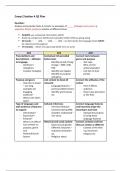
1.6 evaluate methods of collecting statistics
about crime (6 marks) (30 mins)
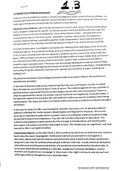
There are two procedures when evaluating crime trends in the UK. These two procedures that
gather statistics are the CSEW which is a survey for England and Wales, the other method is the
police via the Home Office. Collecting crime data enables patterns and trends in crime to become
known and from this it enables the development of crime reduction by the police to become
possible. These procedures are in action to prevent future crimes and lower the number of
victims.
CSEW:
The CSEW is a survey aimed at victims of crime called a victim survey where a survey is sent out
to random individuals of a sample of people in England and Wales and asks them what their
experiences are with crime which includes a wide variety of crimes.
This method has its strengths and weaknesses. For example this survey reaches 50,000
households 4 times a year so therefore can be applied to a wide population so there are more
accurate averages. It can also be used to show the statistics of certain types of crime. For
example in 2022 it showed there were 1.1 million violent offences. This method also gathers
support for victims of crime as participants could reface trauma. For example a victim of
domestic abuse could be refacing their experience when answering the questions.
Although when using this procedure it doesn’t capture victimless crime, for example prostitution
or vagrancy.
Reliability:
Using the CSEW can be seen as a reliable way to collect statistics because having such a large
sample size when collecting data means they have more representative and reliable data.
Another way this method is reliable is that they have a separate survey for 10-16 year olds due
to 10 being the age of criminal responsibility, having such a wide age range increases reliability.
This is a strength of reliability as the survey issues the same questions to everyone so is reliable
proving it is consistent in that aspect also the same amount of questions with the exact same
questions given to everyone who participates in the survey.
about crime (6 marks) (30 mins)
There are two procedures when evaluating crime trends in the UK. These two procedures that
gather statistics are the CSEW which is a survey for England and Wales, the other method is the
police via the Home Office. Collecting crime data enables patterns and trends in crime to become
known and from this it enables the development of crime reduction by the police to become
possible. These procedures are in action to prevent future crimes and lower the number of
victims.
CSEW:
The CSEW is a survey aimed at victims of crime called a victim survey where a survey is sent out
to random individuals of a sample of people in England and Wales and asks them what their
experiences are with crime which includes a wide variety of crimes.
This method has its strengths and weaknesses. For example this survey reaches 50,000
households 4 times a year so therefore can be applied to a wide population so there are more
accurate averages. It can also be used to show the statistics of certain types of crime. For
example in 2022 it showed there were 1.1 million violent offences. This method also gathers
support for victims of crime as participants could reface trauma. For example a victim of
domestic abuse could be refacing their experience when answering the questions.
Although when using this procedure it doesn’t capture victimless crime, for example prostitution
or vagrancy.
Reliability:
Using the CSEW can be seen as a reliable way to collect statistics because having such a large
sample size when collecting data means they have more representative and reliable data.
Another way this method is reliable is that they have a separate survey for 10-16 year olds due
to 10 being the age of criminal responsibility, having such a wide age range increases reliability.
This is a strength of reliability as the survey issues the same questions to everyone so is reliable
proving it is consistent in that aspect also the same amount of questions with the exact same
questions given to everyone who participates in the survey.