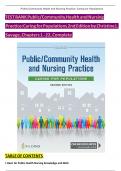
Public/Community Health and Nursing Practice: Caring for Populations
q q q q q q q
TEST BANK Public/Community Health and Nursing
q q q q q
q Practice:Caring for Populations 2nd Edition by Christine L.
q q q q q q q
q Savage, Chapters 1 - 22, Complete
q q q q q q
TABLE OF CONTENTS
q q q
I. Basis for Public Health Nursing Knowledge and Skills
q q q q q q q q
, Public/Community Health and Nursing Practice: Caring for Populations q q q q q q q
1. Public Health and Nursing Practice
q q q q q
2. Optimizing Population Health
q q q
3. Epidemiology and Nursing Practice
q q q q
4. Introduction to Community Assessment
q q q q
5. Health Program Planning
q q q
6. Environmental Health
q q
II. Community Health Across Populations: Public Health Issues
q q q q q q q
7. Health Disparities and the Social Determinants of Health
q q q q q q q q
8. Health and Vulnerable Populations
q q q q
9. Communicable Diseases
q q
10. Noncommunicable Diseases
q q
11. Mental Health
q q
12. Substance Use and the Health of Communities
q q q q q q q
13. Injury and Violence
q q q
III. Public Health Planning
q q q
14. Health Planning for Local Public Health Departments
q q q q q q q
15. Health Planning for Acute Care Settings
q q q q q q
16. Health Planning for Primary Care Settings
q q q q q q
17. Health Planning with Rural and Urban Communities
q q q q q q q
18. Health Planning for Maternal-Infant and Child Health Settings
q q q q q q q q
19. Health Planning for School Settings
q q q q q
20. Health Planning for Occupational and Environmental Health
q q q q q q q
21. Health Planning, Public Health Policy, and Finance
q q q q q q q
22. Health Planning for Emergency Preparedness and Disaster Management
q q q q q q q q
, Public/Community Health and Nursing Practice: Caring for Populations q q q q q q q
Chapter 1: Public Health and NursingPractice
q q q q q q q
Multiple Choice q q
Answers are at the end of Each chapter
q q q q q q q
Identify the choice that best completes the statement or answers the question.
q q q q q q q q q q q
q 1. Public health nurses (PHNs) know they must approach a public health
q q q q q q q q q q q
issuewith an understanding of the related underlying risk factors to
q q q q q q q q q q q
develop effective nursing interventions. They evaluate these risk factors
q q q q q q q q q
from two perspectives:
q q q
1. Disease; individual q
2. Intervention; government q
3. Epidemic; population q
4. Individual; population q
q 2. A nursing student is studying public health. She learns that, according to
q q q q q q q q q q q q
C.E.A. Winslow’s definition, some of the goals of public health include
q q q q q q q q q q
disease prevention, promoting health, control of communicable
q q q q q q q
infections,and
q q _.
1. Risk assessment for disease
q q q
2. Promotion of primary care q q q
, Public/Community Health and Nursing Practice: Caring for Populations q q q q q q q
3. Organization of medical and nursing services for the q q q q q q q
earlydiagnosis and preventive treatment of disease
q q q q q q q
4. Governmental safety regulations q q
q 3. If the international medical community was working to contain several
q q q q q q q q q q
worldwide pandemics, they would look to the World Health
q q q q q q q q q
Organization(WHO), which is:
q q q q
1. The public health arm of the United Nations.
q q q q q q q
2. Working to improve health and well-being for the q q q q q q q
globalpopulation.
q q
3. Working with nurses to promote public health interventions.
q q q q q q q
4. All of the above.
q q q
q 4. The Institute of Medicine (IOM), now known as the Health and Medicine
q q q q q q q q q q q q
Division (HMD) of the National Academies of Sciences, Engineering, and
q q q q q q q q q q
Medicine, stated in their report, The Future of the Public’s Health, that
q q q q q q q q q q q q
there are three core functions that society carries out to collectively
q q q q q q q q q q q
supportthe optimum conditions for public health. Which one of the
q q q q q q q q q q q
following is notone of these functions?
q q q q q q q
1. Prevention
2. Assessment
q q q q q q q
TEST BANK Public/Community Health and Nursing
q q q q q
q Practice:Caring for Populations 2nd Edition by Christine L.
q q q q q q q
q Savage, Chapters 1 - 22, Complete
q q q q q q
TABLE OF CONTENTS
q q q
I. Basis for Public Health Nursing Knowledge and Skills
q q q q q q q q
, Public/Community Health and Nursing Practice: Caring for Populations q q q q q q q
1. Public Health and Nursing Practice
q q q q q
2. Optimizing Population Health
q q q
3. Epidemiology and Nursing Practice
q q q q
4. Introduction to Community Assessment
q q q q
5. Health Program Planning
q q q
6. Environmental Health
q q
II. Community Health Across Populations: Public Health Issues
q q q q q q q
7. Health Disparities and the Social Determinants of Health
q q q q q q q q
8. Health and Vulnerable Populations
q q q q
9. Communicable Diseases
q q
10. Noncommunicable Diseases
q q
11. Mental Health
q q
12. Substance Use and the Health of Communities
q q q q q q q
13. Injury and Violence
q q q
III. Public Health Planning
q q q
14. Health Planning for Local Public Health Departments
q q q q q q q
15. Health Planning for Acute Care Settings
q q q q q q
16. Health Planning for Primary Care Settings
q q q q q q
17. Health Planning with Rural and Urban Communities
q q q q q q q
18. Health Planning for Maternal-Infant and Child Health Settings
q q q q q q q q
19. Health Planning for School Settings
q q q q q
20. Health Planning for Occupational and Environmental Health
q q q q q q q
21. Health Planning, Public Health Policy, and Finance
q q q q q q q
22. Health Planning for Emergency Preparedness and Disaster Management
q q q q q q q q
, Public/Community Health and Nursing Practice: Caring for Populations q q q q q q q
Chapter 1: Public Health and NursingPractice
q q q q q q q
Multiple Choice q q
Answers are at the end of Each chapter
q q q q q q q
Identify the choice that best completes the statement or answers the question.
q q q q q q q q q q q
q 1. Public health nurses (PHNs) know they must approach a public health
q q q q q q q q q q q
issuewith an understanding of the related underlying risk factors to
q q q q q q q q q q q
develop effective nursing interventions. They evaluate these risk factors
q q q q q q q q q
from two perspectives:
q q q
1. Disease; individual q
2. Intervention; government q
3. Epidemic; population q
4. Individual; population q
q 2. A nursing student is studying public health. She learns that, according to
q q q q q q q q q q q q
C.E.A. Winslow’s definition, some of the goals of public health include
q q q q q q q q q q
disease prevention, promoting health, control of communicable
q q q q q q q
infections,and
q q _.
1. Risk assessment for disease
q q q
2. Promotion of primary care q q q
, Public/Community Health and Nursing Practice: Caring for Populations q q q q q q q
3. Organization of medical and nursing services for the q q q q q q q
earlydiagnosis and preventive treatment of disease
q q q q q q q
4. Governmental safety regulations q q
q 3. If the international medical community was working to contain several
q q q q q q q q q q
worldwide pandemics, they would look to the World Health
q q q q q q q q q
Organization(WHO), which is:
q q q q
1. The public health arm of the United Nations.
q q q q q q q
2. Working to improve health and well-being for the q q q q q q q
globalpopulation.
q q
3. Working with nurses to promote public health interventions.
q q q q q q q
4. All of the above.
q q q
q 4. The Institute of Medicine (IOM), now known as the Health and Medicine
q q q q q q q q q q q q
Division (HMD) of the National Academies of Sciences, Engineering, and
q q q q q q q q q q
Medicine, stated in their report, The Future of the Public’s Health, that
q q q q q q q q q q q q
there are three core functions that society carries out to collectively
q q q q q q q q q q q
supportthe optimum conditions for public health. Which one of the
q q q q q q q q q q q
following is notone of these functions?
q q q q q q q
1. Prevention
2. Assessment